
 布面油画墙面艺术品Romanticism
 185619世纪
 47.0 x 38.0 cm
 冬宫博物馆 (Hermitage Museum)
由我们的艺术家按需定制,为您提供您所选尺寸及画框的布面手工油画。 ( 切换至版画销售渠道 切换至数字图像销售渠道)





























从与原作比例一致的预设尺寸中进行选择。

您可以输入自定义尺寸,以适配特定的画框或空间。如果所选尺寸与原图比例不符,我们将通过裁剪作品或添加手绘元素来扩展画面。数字样稿将在制作开始前发送给您确认。
请注意,屏幕预览无法准确反映实际的裁剪或扩展效果,只有样稿才能真实呈现最终的构图。
虽然我们提供定制尺寸服务,但为了保留原作比例,建议您从预设列表中选择尺寸。

花卉
复制品尺寸

In the grand tapestry of French art history, few threads are as delicate or as luminous as those woven by Simon Saint Jean. Born in Millery, France, in 1743, Saint Jean emerged not as a painter of sweeping historical dramas or turbulent landscapes, but as a master of the miniature soul. His life, though marked early on by the profound tragedy of his father's untimely death, became a testament to the beauty found in the quietest corners of nature. This early encounter with loss perhaps instilled in him a deep reverence for the ephemeral, leading him to dedicate his life to capturing the fleeting splendor of the botanical world—a pursuit that would eventually earn him the poetic moniker, The Poet of Flowers.
His artistic journey was shaped by the rigorous academic traditions of his era. Seeking to refine his innate talent for drawing, Saint Jean entered the École de beaux-arts de Lyon, where he studied under the esteemed masters Pierre Révoil and Augustin Alexandre Thierriat. From these mentors, he absorbed the precision of Neoclassical idealism, yet he possessed a spirit that leaned toward the burgeoning Romantic movement. This unique duality allowed him to marry scientific botanical accuracy with an unprecedented emotional depth. His work was never merely a record of species; it was an exploration of the spiritual essence residing within every petal and stem.
To gaze upon a Saint Jean original is to witness a mastery of light that transcends the medium itself. While many of his contemporaries relied on heavy brushstrokes and dramatic chiaroscuro to command attention, Saint Jean moved in the opposite direction. He favored a technique defined by meticulous observation and the use of translucent watercolor washes. By layering thin, delicate pigments, he allowed light to pass through the paint and reflect off the surface, creating an internal glow that made his floral arrangements appear almost self-illuminated.
His compositions are characterized by a sense of weightless grace. He eschewed the cluttered, dense still lifes common in the Baroque tradition, opting instead for arrangements that breathed with space and air. This technique allowed him to capture the subtle complexities of texture—the velvety softness of a rose, the waxy sheen of a lily, or the fragile transparency of a petal. Through this method, he transformed botanical illustration into a high art form, where the subject matter served as an emblem of virtue, spirituality, and the sublime beauty of the natural order.
The reach of Saint Jean’s influence extended far beyond the studios of Lyon, finding resonance within the highest echelons of French society. His ability to imbue nature with moral and religious symbolism caught the attention of significant patrons, most notably Louis XVIII, who commissioned a monumental watercolor of lilies for the church of Sainte-Marie-Madeleine. Such works solidified his reputation as an artist capable of expressing the divine through the earthly.
Even figures as controversial as the Marquis de Sade found a connection to his art, recognizing in Saint Jean’s delicate compositions a profound sense of contemplation and purity. His historical significance lies in this ability to bridge the gap between the scientific and the sentimental. As the centuries progressed, his work remained a vital link between the structured elegance of the 18th century and the emotive freedom of Romanticism. Today, the legacy of Simon Saint Jean lives on through his captivating floral still lifes, which continue to offer viewers a sanctuary of peace and a profound meditation on the fleeting beauty of life.

1743 - 1811 , France

Discover the exquisite intersection of science and fine art. Explore the history of scientific illustration, from botanical watercolor masters to nature's intricate geometry, through an expert lens of art history and technical precision.

Explore the exquisite intersection of science and art in botanical illustration. Discover the history, technical mastery, and timeless beauty of scientific floral studies from Renaissance masters to modern collectors.
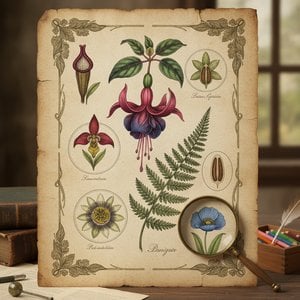
Discover the exquisite world of Victorian botanical art. Explore the intersection of scientific precision and luxury aesthetics through masterfully curated floral illustrations and hand-painted oil reproductions for discerning collectors and fine interiors.


 效果预览
效果预览
 分享
分享 分享
分享
 详情
详情

 下载
下载
 相似作品
相似作品 X射线
X射线 幻灯片播放
幻灯片播放 统计数据
统计数据 展开详情
展开详情









 玻璃选项仅适用于110厘米以下的尺寸。


