购买高分辨率增强版数字图像,其品质远超在线预览。
每一份文件都由我们的内部专家使用先进工具与专业的后期润色技术精心打造。我们确保每一张图像都具备卓越的清晰度、精准的色彩还原度以及细腻的细节表现。
最终文件将在 72 小时内通过电子邮件交付,并针对专业、编辑及印刷用途进行了优化。其品质与顶级设计工作室、出版社和画廊所信赖的标准完全一致。
选择 WahooArt.com,您获得的不仅仅是一张图像——您收到的是经过专业级增强、精雕细琢的数字艺术作品,并享有满意保证。以下是您的订单中自动包含的所有内容:

您的高分辨率数字图像文件将在下单后 72 小时内通过电子邮件发送给您 —— 即可立即使用。

您的艺术品经过专业优化,结合先进的 AI 技术与人工修饰,确保呈现极致的细节、清晰度与色彩准确度。

不小心删除了文件或找不到了?没关系——我们将随时为您免费重发。

即刻拥有您的艺术作品,无需支付任何关税、税费或运费——数字下载始终免税。

我们通过专业工具与色彩管理技术,确保您的数字图像尽可能真实地还原原作色彩。

如果您对所购数字图像不满意,我们将在100天内为您进行修改或提供100%的全额退款——无需任何理由。

不满意?在收到数字文件后的100天内,您可以申请全额退款——无需任何理由。

购买 3 张图片可享 10% 折扣 - 购买 5 张可享 15% 折扣 - 购买 10+ 张可享 20% 折扣。非常适合创意项目、画廊和机构使用。
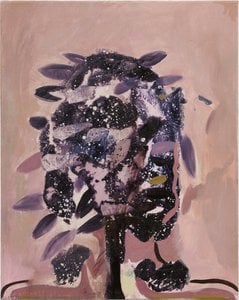
Sergey Nikolayevich Kolosov's "No Title," painted in 2020, presents a compelling and quietly profound meditation on nature, observation, and perhaps, the human condition. This large-scale artwork immediately draws the viewer into a scene dominated by a monumental tree – its branches reaching outwards like supplicating arms, its leaves a dense tapestry of green that seems to absorb light itself. The composition is deliberately ambiguous; the tree occupies the central space with an almost unsettling dominance, yet it’s framed by a carefully considered arrangement of rocks and a solitary chair, inviting contemplation rather than immediate interpretation. Kolosov's work resonates with a timeless quality, reminiscent of Romantic landscape painting while retaining a distinctly contemporary sensibility.
Sergey Nikolayevich Kolosov (1921-2012) was a multifaceted figure in Russian cultural history, primarily recognized for his contributions to film direction and screenwriting. Born in Moscow into a family with theatrical roots – his parents were actors – Kolosov’s artistic journey spanned decades, encompassing both the cinematic world and visual arts. His background as a director informed his approach to composition and narrative space, even within this seemingly still-life painting. While primarily known for his work in film, particularly television serials like "Call Fire For Ourselves," Kolosov's artistic sensibilities clearly extended into landscape painting, demonstrating a lifelong engagement with themes of nature and human experience.
Historical Significance: Kolosov’s work reflects the broader trends within Soviet-era art – a continued interest in realism and social commentary, albeit often expressed through subtle symbolism rather than overt political messaging. His artistic output aligns with a period of experimentation and evolving aesthetic sensibilities within Russian art.“No Title” showcases Kolosov’s skillful technique, characterized by a meticulous attention to detail and a mastery of oil paint. The brushwork is generally smooth and blended, creating an illusion of depth and texture that enhances the realism of the tree and its surroundings. Close inspection reveals subtle variations in color and tone – highlights on the leaves, shadows beneath the branches – which contribute significantly to the painting’s overall luminosity. The artist's use of light is particularly noteworthy, casting a soft, diffused glow across the scene, further emphasizing the sense of tranquility and isolation. This technique aligns with traditional landscape painting methods while demonstrating a contemporary understanding of color and form.
"No Title" is not a painting that offers easy answers. Instead, it invites the viewer to engage in a personal dialogue with its imagery. The tree’s imposing presence evokes feelings of awe, respect, and perhaps even a sense of vulnerability. The solitary chair suggests contemplation, while the unseen figure adds an element of mystery and intrigue. Ultimately, the painting's power lies in its ambiguity – it is a space for individual interpretation, reflecting our own relationship with nature, time, and the unknown.

The life of Sergey Nikolayevich Kolosov was a profound tapestry woven from the threads of Soviet history, dramatic artistry, and an unwavering dedication to the moving image. Born on December 27, 1921, in the heart of Moscow, Russia, Kolosov entered a world that would soon be reshaped by the monumental shifts of the twentieth century. Coming from a lineage steeped in the performing arts—the son of Nikolai Alekseyevich Kolosov-Mayevsky and Lyubov Isidorovna Frank—the language of drama was his first inheritance. His early years were not merely shaped by the theater, but by the harrowing realities of the Winter War and the Great Patriotic War, experiences that would later imbue his cinematic vision with a deep, resonant understanding of human resilience and the weight of memory.
Following the turbulence of war, Kolosov sought to refine his innate creative instincts through formal study. From 1948 to 1951, he balanced the rigors of studying at GITIS with practical experience as an assistant director in the Russian Army Theatre. This period of apprenticeship was crucial, allowing him to bridge the gap between classical theatrical discipline and the burgeoning possibilities of film. His ascent within the cultural landscape was swift; by 1952, he had taken the helm as the director of the Moscow Theater of Satire, a position he held until 1955, where he honed his ability to manipulate tone, timing, and social commentary.
The year 1955 marked a pivotal transition in Kolosov's career as he joined the legendary Mosfilm studio, a move that would allow him to translate his theatrical expertise into the expansive medium of cinema. His directorial debut, Soldier's Heart (1958), signaled the arrival of a director capable of profound emotional depth. As his career progressed, Kolosov became a master of the narrative arc, particularly in works that explored the intersection of personal destiny and historical upheaval. He possessed a unique ability to capture the intimacy of human struggle against the backdrop of grand, often tragic, historical movements.
One of his most enduring contributions to the medium was the direction of the first Soviet television serial film, Call Fire for Ourselves (1964). This landmark production, which featured his wife, the esteemed actress Lyudmila Kasatkina, demonstrated his ability to pioneer new formats for storytelling that could reach the very hearths of Soviet homes. His filmography continued to flourish with poignant works such as Remember Your Name (1974) and Mother Mary (1982), each film serving as a testament to his skill in weaving complex themes of identity, sacrifice, and the enduring strength of the human spirit.
The significance of Sergey Kolosov extends far beyond the silver screen; he was a pedagogue who believed in the continuity of artistic excellence. By teaching at the Faculty of Journalism of Moscow State University, he ensured that his insights into narrative structure and visual storytelling would be passed down to future generations of creators. His contributions to the Soviet and Russian cultural identity were formally recognized in 1988 when he was bestowed with the prestigious title of People's Artist of the USSR, a crowning achievement for a man whose life’s work had become so deeply embedded in the national consciousness.
Today, the legacy of Kolosov is preserved not only in the archives of Mosfilm but also through the broader historical record of Russian art. While his primary medium was film, his influence resonates within the halls of institutions like the Tretyakov Gallery, where the spirit of Russian dramatic history lives on. His life remains a powerful narrative of how the scars of war and the discipline of the stage can be transformed into a cinematic language that speaks to the universal truths of the human condition.

1921 - 2012 , Russia


 效果预览
效果预览
 切换至版画销售渠道
 分享
分享 分享
分享
 详情
详情 指南
指南

 下载
下载
 相似作品
相似作品 X射线
X射线 幻灯片播放
幻灯片播放 统计数据
统计数据


 展开详情
展开详情