
博物馆级艺术微喷或帆布版画,制作高效,并提供多种饰面选择。 ( 订购纯手工绘制画作 切换至数字图像销售渠道)





























您可以从与原作比例一致的预设尺寸中进行选择。

请输入您所需的宽度和高度,以适配您的画框或墙面。由于印刷品只能进行裁剪,无法超出原图尺寸,因此若比例不一致,画面的一部分将会被裁切。在正式印刷之前,我们会为您发送一份数字效果图供您确认。本页面显示的图片并非最终裁剪后的效果——只有效果图才能展示真实的裁剪情况。
Self-Portrait with White Cap
复刻品尺寸
Step closer and observe the man before us. In this 1935 oil portrait, we encounter an elderly figure caught in a moment of profound stillness. He is positioned slightly off-center, his presence felt through a medium close-up that brings us face-to-face with his weathered features. A dark hat sits low upon his brow, and his gaze, framed by spectacles, suggests a mind turned inward. There is a certain dignity in his composure, even as he holds a thin cigarette, the rising wisps of smoke adding a vertical movement to an otherwise stationary scene. The background remains a pale, desaturated greenish-beige, providing a muted stage that allows the darker tones of his suit and the textures of his white beard to emerge with clarity.
The artist has moved away from precise, clinical lines in favor of a more painterly approach. You can see the physical weight of the paint here; thick, impasto strokes create a tactile surface, particularly where light catches the highlights of the face and the drifting smoke. This heavy application of pigment gives the portrait an almost sculptural quality. The lighting is soft, appearing to descend from the upper left to cast gentle shadows that define the contours of the man's cheek and the structure of his clothing. Through these earthy tones—deep browns, blacks, and grays—the work achieves a sense of weight and character. It is a study in light manipulation, where the focus remains on the emotional gravity of the subject rather than mere anatomical accuracy.
Max Kaus 的《Self-Portrait with White Cap》 中的色彩呈现出 Balanced 的强度。
鉴于其创作于1935年,作品《Self-Portrait with White Cap》属于Max Kaus的Surrealist Period时期。
"Self-Portrait with White Cap"创作于1935年,采用Oil On Canvas技法。

Max Kaus was a German painter, printmaker, graphic artist, and lithographer. Born in Berlin, Germany, his early training took place at the Study Institute of the Decorative Arts Museum in Berlin between 1908 and 1913. During the First World War, he served as a medical orderly and ambulance driver in western Flanders. It was during this time in Ostend that he learned to make lithograph prints, utilizing a printing press constructed from timber recovered from a destroyed railway station. Upon returning to Berlin in 1918, he acquired his own lithography equipment, which became a foundation for much of his subsequent artistic output.
His career saw significant shifts in subject matter and style. While he was widely recognized for his landscape works—drawing inspiration from travels within Germany, Austria, and northern Italy—he also worked extensively on portraiture. His post-war output was characterized by a shift where form began to dominate content. His later creative years included several distinct categories of work:
Beyond his personal practice, Kaus was an influential teacher. He held a professorship teaching landscape art at the Kunstgewerbe- und Handwerkerschule in Berlin, and later served as a professor and head of the department for "Freie Kunst" at the Hochschule für Bildende Künste in Berlin. He also served as the deputy director at the academy.
Kaus was a member of the German Artists' Association, serving on its executive board and as deputy chair. His surviving works are catalogued and indexed, with his literary estate held at the German National Arts Archive in Nuremberg.

1891 - 1977 , Germany

Explore the profound connection between technique and emotion. From the sculptural depth of impasto to classical mastery, decode the language of brushstrokes through an expert lens of art history and fine art connoisseurship.

Explore the profound emotional depth of Van Gogh's impasto technique. Discover how his sculptural brushstrokes and textured oil layers define Post-Impressionism through an expert art-historical lens, perfect for discerning collectors and fine art enthusiasts.

Discover the exquisite mastery of pastel and chalk in fine art. Explore how texture, light, and softness create depth in Impressionist masterpieces and learn to curate these velvety textures for sophisticated, luxury interiors with expert guidance.

Discover how custom historical portraits transcend decor to become profound expressions of identity. Explore the artistry of bespoke oil reproductions, from Renaissance mastery to modern reimagining, and learn to transform personal legacies into museum-quality fine art masterpieces.
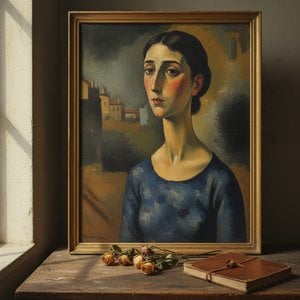
Delve into the haunting beauty of Amedeo Modigliani's portraits. Explore the intersection of Expressionism and Modernism through an expert analysis of his iconic elongated forms, melancholic gazes, and profound influence on art history.

 实景预览

 分享
 分享
 详情
 指南


 下载作品
 相似作品
 X射线
 幻灯片播放
 问答

 统计数据


 展开全文









 玻璃选项仅适用于110厘米以下的尺寸。


