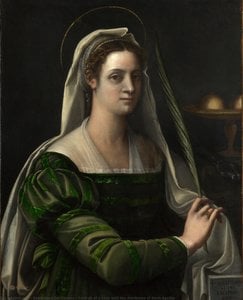
Acrylic On CanvasWallArtRenaissance
 1516
1516 270.0 x 225.0 cm
 Museo Civico
博物馆级艺术微喷或帆布版画,制作高效,并提供多种饰面选择。 ( 购买手绘画作 切换至数字图像销售渠道)





























从与原作比例一致的预设尺寸中进行选择。

您可以输入自定义尺寸,以适配特定的画框或空间。如果您选择的尺寸与原图比例不符,我们将对作品进行裁剪,或通过镜像填充/纯色填充边缘的方式来扩展图像。在开始制作之前,我们会向您发送一份数字效果图供您确认。
请注意,屏幕上的预览并不能反映实际的裁剪或扩展效果。只有效果图才能准确展示最终的构图。
虽然我们提供定制尺寸,但为了保持原图比例,我们建议您从预设列表中选择尺寸。

Pietà
复制品尺寸
The Pietà, executed in 1516 by Sebastiano del Piombo and housed at the Museo Civico in Viterbo, Italy, stands as a monumental testament to the artistic fervor of the High Renaissance. More than just a depiction of grief—the Virgin Mary cradling the lifeless body of Jesus Christ—it embodies profound theological contemplation and masterful execution, cementing its place among the most iconic images of Christian iconography.
Del Piombo’s genius lay in his ability to synthesize Venetian colorism with Roman grandeur. Trained under Giovanni Bellini and Giorgione, he absorbed the luminous palettes and atmospheric perspective characteristic of Venice while simultaneously embracing the monumental scale and sculptural dynamism favored by Rome’s artistic elite. This dual influence is immediately apparent in “Pietà,” where a rich tapestry of blues and whites dominates the composition—a deliberate nod to Venetian tradition—yet simultaneously conveys an overwhelming sense of solemnity.
The Pietà represents a pivotal collaboration between Del Piombo and Michelangelo Buonarroti, marking the zenith of Renaissance artistic innovation. Michelangelo provided the cartoon for the painting—a preparatory sketch that meticulously outlined the figures and their poses—demonstrating his unwavering commitment to capturing human emotion with unparalleled accuracy. This partnership underscores the interconnectedness of artistic circles during the period and exemplifies the shared pursuit of sublime beauty.
Furthermore, “Pietà” embodies the Venetian legacy of expressive colorism, a stylistic approach championed by Giorgione and Bellini that prioritized emotional resonance over strict realism. Del Piombo’s masterful use of pigment—particularly blues and whites—captures the essence of sorrow and reverence—a testament to his artistic vision and enduring influence on subsequent generations of painters.
The Pietà transcends mere visual representation; it speaks to fundamental theological concepts. Mary’s grief symbolizes divine compassion and maternal love—the embodiment of Christian virtues—while Jesus's lifeless body represents sacrifice and redemption. The painting invites contemplation on themes of mortality and immortality, prompting viewers to grapple with questions of faith and spirituality.
Its placement in the Museo Civico Viterbo ensures that this masterpiece continues to inspire awe and admiration, offering a timeless glimpse into the artistic brilliance of the Renaissance—a period defined by its profound engagement with human emotion and spiritual aspiration.


1485 - 1547 , 意大利

Discover the enduring legacy of oil on board painting. Explore how historical techniques, rich impasto textures, and structural durability create timeless masterpieces that bridge Renaissance grandeur with modern art collecting excellence.

Discover the enduring allure of hand-painted oil reproductions. WahooArt offers museum-quality, archival masterpieces designed for discerning collectors seeking timeless beauty and a lasting legacy. Invest in fine art that transcends generations with our expert craftsmanship.

Discover the enduring allure of oil on canvas. Explore how master techniques like impasto and glazing create the depth, texture, and emotional resonance found in the world's greatest masterpieces. An essential guide for fine art enthusiasts and discerning collectors.

Discover the profound allure of oil on canvas. Explore the mastery of impasto textures, the science of pigment longevity, and expert guides to selecting museum-quality reproductions that elevate your collection with timeless elegance and tactile depth.

Explore the profound secrets of classical oil painting. From the delicate mastery of glazing to the dramatic depth of chiaroscuro, discover the timeless techniques used by Old Masters to create enduring, museum-quality masterpieces that capture light and emotion.


 效果预览
效果预览
 分享
分享 分享
分享
 详情
详情 指南
指南

 下载
下载
 相似作品
相似作品 X射线
X射线 幻灯片播放
幻灯片播放 统计数据
统计数据 展开详情
展开详情









 玻璃选项仅适用于110厘米以下的尺寸。