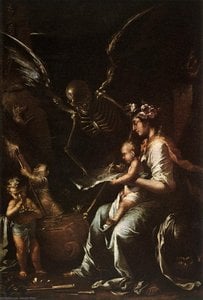
博物馆级艺术微喷或帆布版画,制作高效,并提供多种饰面选择。 ( 购买手绘画作 切换至数字图像销售渠道)





























从与原作比例一致的预设尺寸中进行选择。

您可以输入自定义尺寸,以适配特定的画框或空间。如果您选择的尺寸与原图比例不符,我们将对作品进行裁剪,或通过镜像填充/纯色填充边缘的方式来扩展图像。在开始制作之前,我们会向您发送一份数字效果图供您确认。
请注意,屏幕上的预览并不能反映实际的裁剪或扩展效果。只有效果图才能准确展示最终的构图。
虽然我们提供定制尺寸,但为了保持原图比例,我们建议您从预设列表中选择尺寸。

Monks Fishing
复制品尺寸
Salvator Rosa’s “Monks Fishing” isn't merely a depiction of two figures casting lines into a river; it’s a profound meditation on humanity’s relationship with the untamed forces of nature, rendered through the lens of the Baroque painter’s distinctive vision. Painted circa 1646-1648, this oil on canvas captures a moment suspended in time – a quiet ritual performed within a landscape that simultaneously invites and threatens the viewer. The scene unfolds against a dramatic backdrop of towering rock formations, a brooding sky pregnant with clouds, and a dense, almost claustrophobic forest, all rendered with an intensity characteristic of Rosa’s mature style.
Rosa, a figure perpetually at odds with the established artistic conventions of his day, rejected the polished elegance favored by many of his contemporaries. Instead, he embraced a raw, emotive approach, prioritizing naturalism and psychological depth over idealized beauty. “Monks Fishing” exemplifies this philosophy; it’s not a picturesque scene designed for easy consumption but rather a complex tableau brimming with symbolic weight and emotional resonance. The figures themselves – two weathered monks, their faces etched with contemplation – are dwarfed by the immensity of the landscape, emphasizing their vulnerability and suggesting a profound connection to something far greater than themselves.
Rosa’s technical skill is immediately apparent in his masterful manipulation of light and shadow. The painting is dominated by a diffused, atmospheric light that seems to emanate from an unseen source, casting long, dramatic shadows across the rocks and foliage. This chiaroscuro effect – a hallmark of Baroque art – not only creates a sense of depth and volume but also imbues the scene with a palpable mood of melancholy and introspection. Notice how he uses subtle highlights to draw attention to the texture of the bark on the trees, the rough surface of the rocks, and the folds in the monks’ garments, inviting us to engage with the painting on a tactile level.
Beyond its immediate visual appeal, “Monks Fishing” is rich in symbolic meaning. The solitary monks, engaged in their humble task, can be interpreted as metaphors for humanity’s search for spiritual enlightenment within the context of a challenging and often unforgiving world. Their isolation underscores the difficulty of achieving inner peace amidst the chaos of existence. The river itself – a recurring motif in Rosa's work – represents both sustenance and danger, life and death. The towering trees, with their gnarled branches reaching towards the sky, symbolize resilience and endurance, while the rocky terrain suggests the obstacles that must be overcome on the path to spiritual growth.
Rosa’s choice of subject matter—monks fishing in a wild landscape—was deliberately provocative. It challenged the prevailing artistic conventions of his time, which typically favored grand historical scenes or mythological narratives. By depicting a simple, everyday activity within an extraordinary setting, Rosa elevated the mundane to the level of profound contemplation.
“Monks Fishing” stands as a testament to Salvator Rosa’s unique artistic vision and his enduring influence on subsequent generations of artists. It's a painting that rewards careful observation, inviting viewers to lose themselves in its atmospheric depth and contemplate the timeless themes of solitude, spirituality, and the relationship between humanity and nature. Reproductions of this powerful work capture much of the original’s emotional intensity, offering a window into the soul of one of Italy’s most enigmatic and compelling Baroque masters.


1615 - 1673 , 意大利

Master the art of drama with our ultimate guide to Baroque landscapes. Discover the power of chiaroscuro, explore legendary masters, and learn how to curate epic, dark-vibe masterpieces for your collection with expert insights from WahooArt.

Explore the breathtaking drama of Baroque landscapes. From Rubens's grand vistas to the mastery of chiaroscuro, discover how 17th-century artists transformed nature into a theatrical stage of emotion and light. A deep dive for true art enthusiasts.

探索浪漫主义风景画的巅峰!本文精选十部经典名作,带您领略莫奈、库尔贝等大师的艺术魅力。感受色彩与光影的诗意,重温自然风光的震撼。WahooArt.com为您提供博物馆级别的艺术复制品和个性化家居装饰方案。尽在WahooArt.com!

Explore the rich history of landscape art with WahooArt. Discover renowned artists, movements like Impressionism & Romanticism, and expert guidance for collecting timeless pieces. Find your perfect serene escape today!

Explore the captivating world of Salvator Rosa, a rebellious Baroque master. Discover his dramatic landscapes, allegorical paintings & lasting influence on Romanticism. Hand-painted reproductions available at WahooArt.


 效果预览
效果预览
 分享
分享 分享
分享
 详情
详情 指南
指南

 下载
下载
 相似作品
相似作品 X射线
X射线 幻灯片播放
幻灯片播放 统计数据
统计数据


 展开详情
展开详情









 玻璃选项仅适用于110厘米以下的尺寸。