购买高分辨率增强版数字图像,其品质远超在线预览。
每一份文件都由我们的内部专家使用先进工具与专业的后期润色技术精心打造。我们确保每一张图像都具备卓越的清晰度、精准的色彩还原度以及细腻的细节表现。
最终文件将在 72 小时内通过电子邮件交付,并针对专业、编辑及印刷用途进行了优化。其品质与顶级设计工作室、出版社和画廊所信赖的标准完全一致。
选择 WahooArt.com,您获得的不仅仅是一张图像——您收到的是经过专业级增强、精雕细琢的数字艺术作品,并享有满意保证。以下是您的订单中自动包含的所有内容:

您的高分辨率数字图像文件将在下单后 72 小时内通过电子邮件发送给您 —— 即可立即使用。

您的艺术品经过专业优化,结合先进的 AI 技术与人工修饰,确保呈现极致的细节、清晰度与色彩准确度。

不小心删除了文件或找不到了?没关系——我们将随时为您免费重发。

即刻拥有您的艺术作品,无需支付任何关税、税费或运费——数字下载始终免税。

我们通过专业工具与色彩管理技术,确保您的数字图像尽可能真实地还原原作色彩。

如果您对所购数字图像不满意,我们将在100天内为您进行修改或提供100%的全额退款——无需任何理由。

不满意?在收到数字文件后的100天内,您可以申请全额退款——无需任何理由。

购买 3 张图片可享 10% 折扣 - 购买 5 张可享 15% 折扣 - 购买 10+ 张可享 20% 折扣。非常适合创意项目、画廊和机构使用。
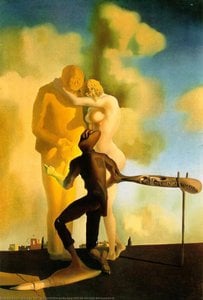
Salvador Dalí's "Phosphene," painted in 1979, isn’t merely a visual composition; it’s an intensely personal exploration of perception and memory. This captivating work, rendered in oil on canvas, plunges the viewer into a swirling vortex of yellow and blue spirals punctuated by strategically placed circles – a deliberate orchestration designed to evoke the unsettling yet strangely beautiful experience of phosphenes, those fleeting flashes of light perceived without external illumination.
The genesis of this piece lies within Dalí’s lifelong fascination with dreams, psychology, and the subconscious. He famously collaborated closely with Sigmund Freud, seeking to translate the hidden landscapes of the mind into tangible imagery. “Phosphene” directly reflects this approach, mirroring the disorienting and fragmented nature of dream states. The swirling forms, reminiscent of nebulae or perhaps even the chaotic energy of a brain in activity, suggest a world unbound by logic, where familiar shapes dissolve and recombine in unpredictable ways. The circles, acting as anchors within the chaos, could represent moments of clarity or isolated memories struggling to surface.
Dalí’s technical mastery is immediately apparent. The painting showcases his signature meticulous detail – a hallmark of his surrealist style. Each spiral is rendered with painstaking precision, the concentric circles perfectly defined, creating an illusion of depth and movement despite the overall dreamlike quality. The color palette—a vibrant interplay of yellows and blues—is both striking and emotionally resonant. Yellow often symbolizes enlightenment, joy, or even madness, while blue frequently represents introspection, melancholy, or the infinite. The juxtaposition creates a compelling tension, mirroring the complex emotional landscape explored within the artwork.
Noticeably, Dalí employs a technique that blends realism with abstraction. While the forms are recognizable – spirals and circles – they’re presented in an exaggerated scale and arrangement, pushing them beyond the realm of ordinary representation. This deliberate distortion contributes to the painting's unsettling yet alluring effect, inviting viewers to question their own perceptions of reality.
The very title, “Phosphene,” immediately anchors the work within a specific sensory experience – the fleeting flashes of light that can occur when eyes are closed or after experiencing intense stimulation. Dalí’s choice of this term suggests a deeper meditation on memory, perception, and the fragility of consciousness. Some art historians interpret the spirals as representing the cyclical nature of time and thought, while others see them as visual metaphors for the labyrinthine pathways of the subconscious mind.
The placement of circles within the design is particularly intriguing. They could symbolize moments of recognition or connection—isolated islands of clarity amidst a sea of disorientation. Considering Dalí’s personal history – marked by loss and displacement – it's not surprising that “Phosphene” explores themes of duality, replacement, and the struggle to maintain a sense of self in the face of overwhelming experience.
“Phosphene” remains a powerfully evocative work, demonstrating Dalí’s unparalleled ability to translate the intangible into visual form. It's more than just a painting; it’s an invitation to delve into the depths of the human psyche and contemplate the subjective nature of reality. Reproductions of this piece offer a remarkable opportunity to bring this surrealist masterpiece into any interior space, sparking conversation and inviting viewers to lose themselves in its mesmerizing patterns and profound symbolism.

萨尔瓦多·多明戈·费利佩·雅辛托·达利 i 多梅内奇,一个与超现实主义紧密相连的名字,于1904年5月11日诞生在阳光普照的西班牙菲格拉斯小镇。他的生命注定非同寻常,仿佛一场精心策划的表演,通过令人震惊的意象和精湛的技术,将潜意识探索为可见之物。早年的阴影笼罩着他;与他同名的哥哥在他出生九个月前就去世了,这一创伤使他的艺术作品充满了二元性和替代性的主题。 结合他对严厉而务实的父亲的复杂关系以及母亲的溺爱关怀,塑造了一个既张扬又深刻内省的人格。自幼年起,达利就展现出非凡的艺术天赋,通过在马德里圣费尔南多美术学院接受了正规训练加以培养。然而,与现代绘画——特别是文艺复兴大师的作品——的一次关键相遇点燃了他内心对打破传统和开辟自己独特道路的强烈愿望。
1926年前往巴黎的旅程具有变革意义,将达利沉浸在先锋运动的核心。他被戴达主义的反叛精神所吸引,其对逻辑的拒绝和对荒诞的拥抱引起了他自己日益增长的艺术倾向的回响。更重要的是,正是在巴黎,他完全接受了超现实主义,并与安德烈·布雷东、巴勃罗·毕加索(达利深切敬仰)和何塞·米罗等关键人物建立了联系。这次相遇不仅仅是风格的采用;达利彻底革新了这个运动。他发展了他称之为“偏执-批判法”的技术,这是一种旨在释放潜意识中隐藏意象的自我诱导的精神错乱状态。这种技术使他能够用惊人的清晰度和一丝不苟的细节将梦境、焦虑和深深个人化的符号转化为画布。
达利的艺术风格在不断发展,从早期的印象派影响到超现实主义高峰,再到后来的古典主义时期,都展现出一种持续增长和进化的艺术家。记忆的持久(1931)无疑是他最著名的作品之一,它捕捉了对时间流逝的探索、记忆的脆弱以及不可避免的衰败。除了绘画之外,达利的创作范围还包括雕塑、电影——特别是与阿尔弗雷德·希区柯克和沃尔特·迪士尼的合作——版画艺术、珠宝设计甚至舞台布景。他反复使用蚂蚁象征腐烂、鸡蛋代表孕育生命和希望、拐杖暗示支持和脆弱以及融化的物体体现现实的不稳定性等主题,这些符号并非随意选择;它们深深植根于他的焦虑、欲望和记忆之中。朱丽叶的墓,对失去的感人探索,曼尼肯(巴塞罗那曼尼肯),反映了对虚假性和身份的痴迷,以及风景中的苍蝇,对死亡的令人不安的描绘,都展示了他主题关注的广度和深度。他磨练多年的精湛技术使他能够用照片般的逼真度来呈现这些奇幻景象,进一步放大了它们令人不安的力量。
在整个生活中,达利培养了一种与他的艺术一样张扬和古怪的人格。他拥抱自我推销,认识到宣传在吸引公众注意力方面所具有的力量。自1934年起与加拉·埃卢瓦的婚姻对他的艺术产生了重要影响,她不仅是他的精神伴侣,也是他的商业经理和坚定不移的支持者。尽管晚年受到日益增长的商业活动以及对弗朗哥政权的有时备受争议的支持的影响,但他的艺术遗产仍然巨大。他于1989年1月23日去世,留下了一系列作品,这些作品继续挑战、激怒并激励着人们。位于佛罗里达州圣彼得堡的萨尔瓦多·达利博物馆是其持久吸引力的证明,收藏了大量作品,让游客可以沉浸在这个非凡艺术家的世界中。达利超越了艺术的界限,成为一个文化偶像,他的影响可以在时尚、电影、广告和流行文化中看到。他仍然是20世纪最具代表性和最有影响力的一位艺术家——一位敢于探索潜意识的深渊并将它的奥秘为所有人呈现到画布上的真正远见者。

1904 - 1989 , 西班牙


 效果预览
效果预览
 切换至版画销售渠道
 分享
分享 分享
分享
 详情
详情

 下载
下载
 相似作品
相似作品 X射线
X射线 幻灯片播放
幻灯片播放 统计数据
统计数据

 展开详情
展开详情