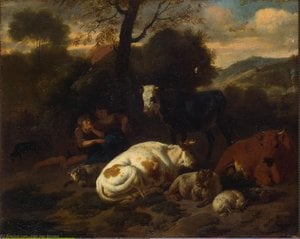
A Master of Flemish Still Life: The World of Geerard Rysbrack
Geerard Rysbrack, a name perhaps less immediately recognizable than some of his Dutch and Flemish contemporaries, nevertheless occupies a significant place in the pantheon of 18th-century still life painters. Born in Antwerp (though precise dates remain elusive), Rysbrack flourished during a period when meticulous observation of nature, coupled with an increasingly sophisticated understanding of light and texture, defined artistic excellence. While biographical details are scarce – a common fate for artists working within established genres – the surviving corpus of his work speaks volumes about his skill, dedication, and the refined tastes of his clientele. Rysbrack’s paintings weren't merely depictions of dead game or lush landscapes; they were carefully constructed statements about wealth, status, and humanity’s relationship with the natural world. He was a product of the Baroque tradition, yet his style subtly anticipates the more delicate sensibilities of the Rococo era.
Early Influences and Artistic Development
Rysbrack's artistic journey began in a city steeped in painting traditions. Antwerp, a major center for art production throughout the 17th and 18th centuries, provided fertile ground for aspiring artists. He likely received his initial training within a local workshop, absorbing the techniques of established masters specializing in still life and animalier paintings. The influence of painters like Frans Snyders, renowned for his dynamic market scenes teeming with game and provisions, is readily apparent in Rysbrack’s early works. However, Rysbrack quickly moved beyond mere imitation. He demonstrated a particular aptitude for rendering the subtle nuances of plumage, fur, and feather – qualities that would become hallmarks of his mature style.
His landscapes, though less numerous than his still lifes, reveal an appreciation for the atmospheric effects pioneered by artists like Jacob van Ruisdael, suggesting a broader engagement with the wider Dutch painting tradition. He wasn’t simply copying nature; he was interpreting it through a lens of refined observation and technical mastery.
The Art of Detail: Still Lifes of Game, Fruit & Flowers
Rysbrack's most celebrated works are undoubtedly his still lifes featuring game birds, rabbits, fruit, and occasionally flowers. These paintings are characterized by an extraordinary level of detail – each feather meticulously rendered, each piece of fruit glistening with moisture, each fold of fur conveying a sense of tactile realism.
He possessed an uncanny ability to capture the textures and colors of his subjects, creating compositions that were both visually stunning and remarkably lifelike. Beyond technical skill, Rysbrack’s still lifes are imbued with symbolic meaning. Game birds often represented abundance and prosperity, while fruit alluded to themes of temptation and mortality. The careful arrangement of objects within the composition wasn't arbitrary; it was a deliberate attempt to convey specific messages about wealth, status, and the fleeting nature of earthly pleasures. His compositions frequently feature rich, dark backgrounds that serve to accentuate the vibrancy of the foreground elements, drawing the viewer’s eye directly to the meticulously rendered details of his subjects.
Landscapes & Broader Artistic Scope
While primarily known for his still lifes, Rysbrack also produced a number of landscapes, often incorporating animals into the scenes. These works demonstrate his versatility as an artist and reveal a keen eye for atmospheric effects.
- His landscapes typically feature wooded areas, rolling hills, and tranquil waterways.
- Animals, such as deer or rabbits, are often depicted in naturalistic poses, adding a sense of life and movement to the compositions.
- The color palettes employed in his landscapes tend to be muted and harmonious, creating a sense of serenity and tranquility.
These landscape paintings, though less frequently encountered than his still lifes, offer valuable insights into Rysbrack’s broader artistic interests and demonstrate his ability to adapt his skills to different genres. They also highlight the interconnectedness of artistic traditions during this period – the blurring of boundaries between still life, animal painting, and landscape art.
Legacy & Historical Significance
Geerard Rysbrack’s work represents a high point in Flemish Baroque still life painting. While he didn't achieve the widespread fame of some of his contemporaries, his paintings were highly sought after by collectors during his lifetime and continue to be admired today for their technical brilliance and refined aesthetic sensibility.
His meticulous attention to detail, coupled with his subtle use of symbolism, set him apart from other artists working in the genre. Rysbrack’s legacy lies not only in the beauty and artistry of his individual paintings but also in his contribution to the broader tradition of still life painting – a tradition that continues to inspire artists and captivate audiences centuries later. His works offer a glimpse into the world of 18th-century Flanders, revealing the tastes, values, and artistic sensibilities of a bygone era. He stands as a testament to the enduring power of observation, skill, and the pursuit of beauty in art.



 效果预览
效果预览
 切换至版画销售渠道
 分享
分享 分享
分享
 详情
详情

 下载
下载
 相似作品
相似作品 X射线
X射线 幻灯片播放
幻灯片播放 统计数据
统计数据

 展开详情
展开详情