Oil On CanvasWallArtPop Art
 1962Modern
 106.0 x 106.0 cm
博物馆级艺术微喷或帆布版画,制作高效,并提供多种饰面选择。 ( 订购此收藏品的纯手工复刻画作 切换至数字图像销售渠道)





























您可以从与原作比例一致的预设尺寸中进行选择。

您可以输入自定义尺寸,以适配特定的画框或空间。如果您选择的尺寸与原图比例不符,我们将对作品进行裁剪,或通过镜像填充/纯色填充边缘的方式来扩展图像。在开始制作之前,我们会向您发送一份数字效果图供您确认。
请注意,屏幕上的预览并不能反映实际的裁剪或扩展效果。只有效果图才能准确展示最终的构图。
虽然我们提供定制尺寸,但为了保持原图比例,我们建议您从预设列表中选择尺寸。
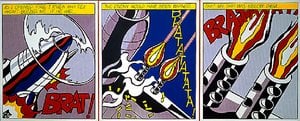
Brattata
复刻品尺寸说明
1962 年的创作日期将《Brattata》置于 罗伊·利希滕斯坦 艺术发展的 Mature Period 时期。
罗伊·利希滕斯坦 在 1962 年创作《Brattata》时,年龄为 39 岁。该年龄是根据艺术家的出生年份 1923 计算得出的。
"Brattata" 代表了 罗伊·利希滕斯坦 的 Mature Period 时期。
罗伊·利希滕斯坦 的《Brattata》 的视觉亮度为 bright。它可以与目标空间的灯光完美匹配。
罗伊·利希滕斯坦 的《Brattata》 的创作年份为 1962。
罗伊·利希滕斯坦 的《Brattata》 描绘了 comic book, aerial combat, pilot helmet, ben-day dots, dialogue balloon, neon colors, military imagery,呈现出 Dramatic 的意境。其主题与氛围共同构成了这件作品的精髓。
"Brattata" 由 罗伊·利希滕斯坦 创作。本页面的信息旨在介绍 罗伊·利希滕斯坦 的原作。

1923 - 1997 , 美国

Explore the profound impact of the Pop Art Revolution on modern aesthetics. From Lichtenstein’s dots to Warhol’s icons, gain expert insights into how this vibrant movement redefined culture through consumerism and mass media. A definitive guide for art lovers and collectors.

Dive into the vibrant world of Ben-Day dots. Explore how Roy Lichtenstein transformed mass media imagery into high art, redefining modern aesthetics through the iconic textures of Pop Art and its enduring impact on contemporary visual culture.

Explore the profound psychological depth of Roy Lichtenstein's color theory. An expert analysis for art collectors on how bold palettes and Ben-Day dots redefine modern aesthetics and luxury interior curation.

Explore the profound impact of Pop Art on modern aesthetics. From Warhol’s icons to Lichtenstein's bold dots, discover how mass media redefined the masterpiece and continues to inspire sophisticated art collectors and contemporary interior design.

Explore the industrial artistry of Pop Art. Delve into the sophisticated history of Ben-Day dots and silk screen techniques that transformed mass media into high art, perfect for discerning collectors seeking deep historical insight and aesthetic excellence.


 实景预览
实景预览
 发送
发送 分享
分享
 详情
详情 指南
指南

 下载图片
下载图片
 相似作品
相似作品 X射线
X射线 幻灯片播放
幻灯片播放 统计数据
统计数据 阅读全文
阅读全文









 玻璃选项仅适用于110厘米以下的尺寸。