博物馆级艺术微喷或帆布版画,制作高效,并提供多种饰面选择。 ( 订购纯手工绘制画作 切换至数字图像销售渠道)
您可以从与原作比例一致的预设尺寸中进行选择。

请输入您所需的宽度和高度,以适配您的画框或墙面。由于印刷品只能进行裁剪,无法超出原图尺寸,因此若比例不一致,画面的一部分将会被裁切。在正式印刷之前,我们会为您发送一份数字效果图供您确认。本页面显示的图片并非最终裁剪后的效果——只有效果图才能展示真实的裁剪情况。
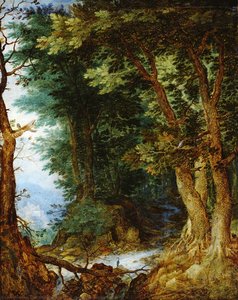
Forest Landscape with hut
复刻品尺寸

Born in Amsterdam in 1627, Roelandt Roghman emerged from a distinguished artistic lineage – a family deeply rooted in the world of engraving and painting. His father, Hendrick Lambertsz. Roghman, was himself an engraver, establishing a foundation of technical skill and artistic sensibility that profoundly shaped his son’s career. While details about his early life remain somewhat sparse, it's clear that Roghman benefited from exposure to established artistic practices within this influential family circle. This familial connection provided not only practical training but also a network of contacts and an understanding of the prevailing aesthetic values of the Dutch Golden Age.
Roghman’s artistic journey unfolded primarily in Amsterdam, where he spent much of his life working as a landscape painter, etcher, and draughtsman. Unlike some of his contemporaries who specialized in specific genres – such as portraiture or still life – Roghman embraced the burgeoning interest in depicting the natural world with increasing realism and psychological depth. This shift was driven by several factors: the rise of scientific observation, the growing appreciation for the beauty of the Dutch countryside, and a desire to capture fleeting moments of light and atmosphere. His work reflects this evolving artistic landscape, moving beyond mere topographical representation towards a more nuanced exploration of nature’s moods and textures.
Roghman's paintings are immediately recognizable for their masterful use of light and shadow – a technique he honed through meticulous observation and a deep understanding of atmospheric perspective. He frequently depicted scenes of the Dutch countryside, often featuring elements like wooded areas, rivers, and distant mountains. These landscapes weren’t simply rendered as picturesque backdrops; they were imbued with a sense of drama and emotion. Roghman skillfully employed chiaroscuro – the dramatic contrast between light and dark – to create a palpable sense of depth and volume, drawing the viewer into the heart of the scene.
His compositions often incorporated elements of biblical narrative, reflecting the religious themes prevalent in Dutch art during this period. Works like “Landscape (Christ on the Road to Emmaus)” demonstrate his ability to seamlessly integrate these stories within a realistic landscape setting. The figures are subtly placed within the natural environment, creating a powerful visual metaphor for faith and redemption. Roghman’s approach was not to impose religious symbolism onto the landscape but rather to allow the scene itself to evoke spiritual contemplation.
Roghman's artistic style can be characterized by a combination of meticulous detail and expressive brushwork. He employed a technique known as “pointillé,” using numerous small, closely spaced dots to create texture and suggest form – particularly evident in his depictions of foliage and water surfaces. This method allowed him to achieve remarkable realism while maintaining a sense of atmospheric haze and depth. His etching skills were equally impressive, contributing significantly to the clarity and precision of his drawings.
While Roghman’s work is often associated with the Dutch Golden Age, it was undoubtedly influenced by several key artists. The influence of Rembrandt van Rijn is particularly evident in his use of light and shadow, as well as his ability to convey psychological depth within his subjects. Furthermore, he drew inspiration from the works of earlier landscape painters like Jan van Goyen and Salomon van Ruysdael, adapting their techniques while developing a distinctly personal style. The legacy of Flemish masters such as Peter Bruegel the Elder also played a role in shaping his artistic vision.
Roelandt Roghman’s contribution to Dutch art lies primarily in his masterful depiction of the landscape – a genre that was undergoing a profound transformation during the 17th century. He helped to establish a new standard for realism and psychological depth, paving the way for subsequent generations of landscape painters. His works are now held in prestigious collections around the world, including the National Gallery in London and the Rijksmuseum in Amsterdam, testament to their enduring artistic merit.
Roghman’s work reflects a broader cultural shift – a growing appreciation for nature and a desire to capture its beauty and complexity. His landscapes offer a window into the Dutch countryside of his time, providing valuable insights into the social, economic, and spiritual values of the Golden Age. He remains a significant figure in the history of Dutch art, celebrated for his technical skill, artistic sensitivity, and ability to evoke the spirit of the natural world.

1627 - 1692 , Netherlands

Explore the evolution of pine forest art from Sorolla to Van Gogh through expert analysis. Discover the soul of the woodland canvas today.

Explore a masterclass on atmospheric landscapes from Patinir to Monet. Discover the evolution of light and texture in art history.

Discover the serenity of nature with premium, hand-painted woodland landscapes. From Impressionist masterpieces to bespoke forest murals, WahooArt offers museum-quality oil reproductions and expert art consultation for sophisticated interiors.

 实景预览
实景预览
 分享
分享 分享
分享
 详情
详情 指南
指南

 下载作品
下载作品
 相似作品
相似作品 X射线
X射线 幻灯片播放
幻灯片播放 问答
问答
 统计数据
统计数据 展开全文
展开全文






































 玻璃选项仅适用于110厘米以下的尺寸。