
 1850
1850 127.0 x 105.0 cm
获取远超网页预览效果的印刷级文件。我们销售的每一张数字图像均源自库存数据库中的高分辨率母版——宽度通常在 5,000 至 15,000 像素之间——因此您可以放心地进行大幅打印、局部裁剪或还原细腻的细节。
每一件作品在离开我们的工作室前都经过了精心的处理。数字影像专家会对照原作核对色彩,并在必要时进行校正,随后利用专业修图工具提升清晰度与细节表现——且始终忠实于艺术家的笔触与风格。最终呈现的图像宛如原作本身,而非仅仅是一张加了滤镜的扫描件。
您可以在完成前进行审核:我们的专家将在 72 小时内通过电子邮件向您发送图像以供审阅。如果不满意?您可以要求改进或修正,若质量未达预期,亦可申请退款。
这也是出版商、设计工作室、画廊及印刷厂所信赖的品质。
下载高分辨率文件,用于个人展示、打印及创意项目。 ( 切换至版画销售渠道 订购此收藏品的纯手工复刻画作)
选择 WahooArt.com,您获得的不仅仅是一张图像——您收到的是经过专业级增强、精雕细琢的数字艺术作品,并享有满意保证。以下是您的订单中自动包含的所有内容:
您的高分辨率数字图像文件将在下单后 72 小时内通过电子邮件发送给您 —— 即可立即使用。
您的艺术品经过专业优化,结合先进的 AI 技术与人工修饰,确保呈现极致的细节、清晰度与色彩准确度。
不小心删除了文件或找不到了?没关系——我们将随时为您免费重发。
即刻拥有您的艺术作品,无需支付任何关税、税费或运费——数字下载始终免税。
我们通过专业工具与色彩管理技术,确保您的数字图像尽可能真实地还原原作色彩。
如果您对所购数字图像不满意,我们将在100天内为您进行修改或提供100%的全额退款——无需任何理由。
不满意?在收到数字文件后的100天内,您可以申请全额退款——无需任何理由。
购买 3 张享 10% 折扣 - 购买 5 张享 15% 折扣 - 购买 10 张以上享 20% 折扣。非常适合创意项目、画廊及机构使用。
In the heart of nineteenth-century Edinburgh, a period defined by a profound reverence for heritage and the sweeping emotions of the Romantic movement, Robert Scott Lauder emerged as a vital voice in Scottish art. Born on June 25, 1803, at Silvermills, Lauder was the son of John Lauder, a respected proprietor of a local tannery. His upbringing in a prominent Edinburgh family provided him with a foundation of stability and cultural access that would eventually propel him toward the heights of academic recognition. While his early life was rooted in the industrious landscape of Scotland, his artistic soul was destined for the grander stages of Europe, seeking to translate the dramatic literary spirit of his era into enduring visual narratives.
Lauder’s intellectual formation began at the Royal High School, but it was his subsequent travels that truly refined his aesthetic sensibilities. Seeking to master the complexities of light and form, he immersed himself in the great artistic hubs of the continent, including Rome, Florence, Bologna, Venice, and Munich. These extended periods of study abroad allowed him to absorb the classical traditions of Italy and the rigorous academic techniques of Germany, blending them with a uniquely Scottish sensibility. This cosmopolitan education prepared him for his pivotal moment in 1830, when he was elected as one of the original members of the Royal Scottish Academy, a distinction that solidified his status among the intellectual and artistic elite of his nation.
The true essence of Lauder’s work lies in its deep, symbiotic relationship with the literature of Sir Walter Scott. As the novelist’s tales of chivalry, tragedy, and national identity captured the Victorian imagination, Lauder sought to give these words a physical, painterly presence. He did not merely illustrate stories; he attempted to capture the very atmosphere of Scott's romanticized history. His canvases often serve as windows into a bygone era, where the boundaries between historical fact and poetic myth become beautifully blurred.
His oeuvre is marked by several monumental achievements that showcase his ability to handle grand-scale drama:
To observe a Lauder painting is to witness the tactile power of the impasto technique. He favored a thick, vigorous application of paint, which allowed him to manipulate light and shadow in a way that heightened the emotional stakes of his subjects. This textured approach lent a sense of immediacy and life to his historical scenes, making the dust of battle or the soft glow of a pastoral afternoon feel palpable to the viewer. His brushwork was never merely decorative; it was an expressive tool used to convey the turbulent emotions central to the Romantic movement.
Beyond his technical prowess, Lauder’s significance resides in his role as a bridge between the classical traditions of the past and the burgeoning national identity of Scotland. Through his dedication to historical painting, he helped codify a visual language for Scottish heroism and romanticism. Though he passed away in 1869, leaving behind a legacy intertwined with the very fabric of the Royal Scottish Academy, his ability to breathe life into the legends of Sir Walter Scott ensures that his work remains a captivating testament to the power of the imagination.
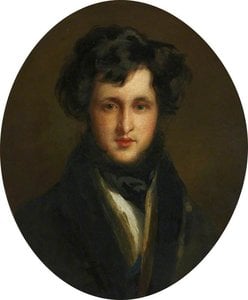
1803 - 1869


 实景预览
实景预览
 发送
发送 分享
分享
 详情
详情 指南
指南

 下载图片
下载图片
 相似作品
相似作品 X射线
X射线 幻灯片播放
幻灯片播放 Q&A
Q&A 统计数据
统计数据 阅读全文
阅读全文


