
 Oil On CanvasWallArtCubism
 1910Modern
 116.0 x 81.0 cm
 卡尔斯鲁厄州立美术馆
由我们的艺术家按需定制,为您提供您所选尺寸及画框的布面手工油画。 ( 切换至版画销售渠道 切换至数字图像销售渠道)





























您可以从与原作比例一致的预设尺寸中进行选择。

请输入您需要的宽度和高度,以适配您的画框或墙面。由于作品为手工绘制,若您选择不同的尺寸比例,艺术家可能会在画面边缘多画一些或稍作裁剪 —— 由您决定。在开始绘画之前,我们会为您发送一份数字效果图供您确认。本页面上展示的图片并非最终实物 —— 只有效果图才能反映真实结果。
The Eiffel Tower
复刻品尺寸说明
In the heart of early twentieth-century Paris, a radical transformation was unfolding, one that sought to dismantle the traditional boundaries of sight and perception. Robert Delaunay’s The Eiffel Tower stands as a breathtaking monument to this era of profound change. Rather than offering a mere photographic record of the iron lattice structure, Delaunay invites us into a world where architecture dissolves into rhythm. The painting is not simply a depiction of a landmark; it is a pulsating tapestry of light and movement, capturing the very soul of modernity. Through his pioneering use of Orphism, Delaunay transcends the physical weight of the steel, replacing it with a dynamic interplay of geometric forms that seem to vibrate against the canvas.
The composition functions like a visual musical score, where every line and plane contributes to a larger, melodic whole. The tower itself is fragmented into a series of interlocking triangles and rectangles, a technique deeply rooted in the Cubist revolution. This fragmentation allows the viewer to experience the structure from multiple perspectives simultaneously, creating an illusion of depth that feels both structural and ethereal. As the eye wanders across the canvas, it encounters a deliberate tension between the grounded, earthy tones of the tower’s base and the explosive, luminous energy of the sky. It is a masterful balance of stability and motion, making the piece an ideal focal point for any space seeking a sense of sophisticated dynamism.
To gaze upon this work is to experience the artist's fascination with synesthesia—the enchanting blurring of the senses. Delaunay did not merely paint what he saw; he painted what he felt through color. While the palette is anchored by the muted, weathered greys and browns that echo the industrial reality of the Eiffel Tower, it is frequently interrupted by sudden, brilliant bursts of crimson, sapphire, and lemon yellow. These chromatic accents act as rhythmic pulses, injecting a sense of urban vitality into the scene. This use of color serves to evoke the sensory overload of Parisian life, mirroring the clatter of streets and the shimmering light of the Seine.
For the discerning collector or interior designer, this painting offers more than just aesthetic beauty; it provides an emotional atmosphere. The interplay of light and shadow creates a sense of atmospheric depth that can transform a room, bringing with it the romantic yet avant-garde spirit of 1914 Paris. Whether placed in a minimalist contemporary setting to provide a bold pop of color or integrated into a classic study to add historical weight, a high-quality reproduction of this masterpiece serves as a window into a moment when art first learned to dance with light. It is an invitation to contemplate the beauty of abstraction and the enduring power of the modern spirit.
罗伯特·德劳内 (Luó Bótè Dé Lào Néi) 在作品《The Eiffel Tower》中运用了 Oil On Canvas 技法。该技法界定了原作的材质特性。
罗伯特·德劳内 (Luó Bótè Dé Lào Néi) 的《The Eiffel Tower》创作于1910年,属于Cubism流派。
"The Eiffel Tower" 的指南位于作品的 指南 页面 —— 这是一份可打印的信息单,展示了该作品及其说明、署名以及详细信息表(艺术家、日期、媒介、原尺寸、馆藏)。


1885 - 1941 , 法国

Journey through the bold shapes and vibrant colors of geometric abstraction. Explore the stories behind 10 iconic masterpieces that redefined modern art. Find museum-quality reproductions and decor inspiration for your space. Discover all masterpieces on WahooArt.com.
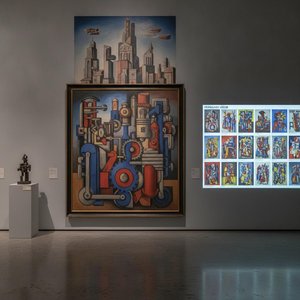
Immerse yourself in the vibrant world of Fernand Léger. Explore 25 iconic masterpieces of Cubism and Tubism, from bold geometric forms to machine-age energy. Find inspiration for your decor with museum-quality reproductions. Discover all masterpieces on WahooArt.com.

Journey through the revolutionary world of Georges Braque. Explore 25 iconic Cubist masterpieces, from geometric abstractions to timeless still lifes. Find inspiration for your collection with museum-quality art reproductions. Discover all masterpieces on WahooArt.com.

Immerse yourself in the luminous world of Laurent Fabre. Explore 25 iconic Neo-Abstract masterpieces defined by geometric precision and chromatic harmony. Find inspiration for your space with museum-quality art reproductions. Discover all masterpieces on WahooArt.com.


 实景预览
实景预览
 发送
发送 分享
分享
 详情
详情 指南
指南

 下载图片
下载图片
 相似作品
相似作品 X射线
X射线 幻灯片播放
幻灯片播放 统计数据
统计数据 阅读全文
阅读全文









 玻璃选项仅适用于110厘米以下的尺寸。


