
 Sculpture BronzeContemporary Realism
 2005Contemporary
 102.0 x 102.0 cm
 国立美术馆 (NGV)
购买高分辨率增强版数字图像,其品质远超在线预览。
每一份文件都由我们的内部专家使用先进工具与专业的后期润色技术精心打造。我们确保每一张图像都具备卓越的清晰度、精准的色彩还原度以及细腻的细节表现。
最终文件将在 72 小时内通过电子邮件交付,并针对专业、编辑及印刷用途进行了优化。其品质与顶级设计工作室、出版社和画廊所信赖的标准完全一致。
下载高分辨率文件,用于个人展示、打印及创意项目。 ( 切换至版画销售渠道 订购此收藏品的纯手工复刻画作)
选择 WahooArt.com,您获得的不仅仅是一张图像——您收到的是经过专业级增强、精雕细琢的数字艺术作品,并享有满意保证。以下是您的订单中自动包含的所有内容:

您的高分辨率数字图像文件将在下单后 72 小时内通过电子邮件发送给您 —— 即可立即使用。

您的艺术品经过专业优化,结合先进的 AI 技术与人工修饰,确保呈现极致的细节、清晰度与色彩准确度。

不小心删除了文件或找不到了?没关系——我们将随时为您免费重发。

即刻拥有您的艺术作品,无需支付任何关税、税费或运费——数字下载始终免税。

我们通过专业工具与色彩管理技术,确保您的数字图像尽可能真实地还原原作色彩。

如果您对所购数字图像不满意,我们将在100天内为您进行修改或提供100%的全额退款——无需任何理由。

不满意?在收到数字文件后的100天内,您可以申请全额退款——无需任何理由。

购买 3 张享 10% 折扣 - 购买 5 张享 15% 折扣 - 购买 10 张以上享 20% 折扣。非常适合创意项目、画廊及机构使用。
Richard Swallow’s work invites us into a deeply personal yet universally resonant contemplation of existence itself. In pieces like Salad days, the artist masterfully weaves together the ephemeral nature of life with the enduring weight of art history. It is an encounter that feels both intimately familiar—like sifting through cherished childhood memories—and profoundly academic, drawing upon centuries of artistic tradition to frame a very modern meditation on mortality. Swallow’s signature style lies in its ability to take the mundane and elevate it to the realm of the symbolic, forcing the viewer to pause and consider what remains when time inevitably passes.
The core resonance of this artwork stems from its engagement with the vanitas tradition. Historically, these still lifes served as memento mori—reminders of the inevitability of death. Swallow updates this ancient discourse for a contemporary audience. Here, the arrangement is rich with symbolic weight: the depiction of various deceased animals, such as the hare, magpie, and duck, are presented in a manner echoing 17th-century Dutch still life painting. These creatures, deeply rooted in Australian natural history, become poignant emblems of life’s cycle. Further deepening the narrative are the scattered elements—the fox skull, rats, and lizards—which collectively whisper tales of transience, while the small swallow, perhaps a nod to the artist himself, acts as our guide, surveying this beautiful yet undeniably macabre tableau.
While Swallow’s practice often involves an interplay between everyday objects and meticulous casting techniques, Salad days presents a complex visual narrative that transcends simple material description. The composition itself, contained within the tondo format, creates a sense of cyclical completeness, much like life itself. The juxtaposition of these carefully arranged forms against the implied space gives the piece a sculptural presence, even when viewed as a painting or reproduction. It is this dialogue between the organic subject matter and the controlled artistic presentation that lends the work its sophisticated tension.
For the collector or designer seeking art with intellectual depth, Swallow offers more than mere decoration; he offers conversation. The emotional impact of Salad days is one of poignant acceptance. It does not wallow in despair but rather acknowledges the beauty found within impermanence. Reproducing this work allows a space to breathe contemplation into a room—a sophisticated focal point that speaks volumes without uttering a single word. It suggests an appreciation for history, a connection to nature, and a mature understanding of life’s beautiful, fleeting moments.

Born in 1974 in the coastal town of San Remo, Australia, Ricky Swallow has spent his career performing a kind of modern alchemy. His practice is rooted in a profound fascination with the transformation of the mundane into the monumental. By taking the most ephemeral and disposable materials—cardboard, masking tape, glue, and rope—and subjecting them to the rigorous, permanent process of bronze casting, Swallow creates a tension between the fleeting nature of daily life and the enduring weight of art history. This metamorphosis allows him to capture the "preserved gestures" of objects that would otherwise be lost to time, lending a sense of immortality to the humble debris of our existence.
Swallow’s artistic journey gained significant international momentum during his representation of the Australian pavilion at the 2005 Venice Biennale. It was here that his ability to blend personal memory with pop iconography began to resonate on a global stage. His work does not merely replicate reality; it interrogates it through a lens of surrealist wit and meticulous craft. Whether it is a disembodied pair of hands emerging from a wall or snakes slithering through a common bicycle helmet, his sculptures possess a trompe-l'œil quality that traps the eye, forcing the viewer to question the boundary between what is real and what is constructed.
At the heart of Swallow’s oeuvre lies a deep engagement with the concept of vanitas—the classical art tradition that uses symbols to remind us of our mortality and the transience of life. His sculptures often function as contemporary memento mori, utilizing the textures of decay and the aesthetics of the discarded to evoke themes of evolution, survival, and the passage of time. There is a poignant melancholy in his work; a lone skeleton fused to a chair or the delicate creases of cardboard rendered in heavy metal serves as a stark reminder of the evanescence of all things.
The technical brilliance of his process is central to his narrative. Swallow’s method is a dual exploration of hands-on construction and the mediated potential of the foundry. He begins with the raw, tactile immediacy of assembly, creating fragile configurations that reflect their own material imperfections. These works are then translated through the "beautiful alchemical wizardry" of bronze casting. This transition from the light, porous nature of cardboard to the dense, dark permanence of patinated bronze creates a stylistic paradox: the sculptures appear both incredibly heavy and strangely weightless, simultaneously grounded in reality and floating in a dreamlike state.
Throughout his career, Swallow has bridged the gap between diverse artistic movements, drawing inspiration from the geometric abstraction of Bauhaus design, the conceptual provocations of Marcel Duchamp, and the profound stillness of Dutch still-life painting. His ability to integrate these influences into a cohesive, contemporary language has earned him prestigious recognition, including exhibitions at MoMA PS1 in New York, the Whitney Museum of American Art, and the Museum of Contemporary Art Australia.
As his practice continues to evolve, Swallow remains dedicated to the idea that art can elevate the ordinary. His recent achievements, such as the 2025 Loti Smorgon Sculpture Terrace Commission in Sydney, underscore his enduring significance in the contemporary landscape. By finding beauty in the broken and permanence in the temporary, Ricky Swallow does more than just sculpt objects; he sculpts our perception of reality itself, inviting us to find wonder in the very fabric of our everyday lives.
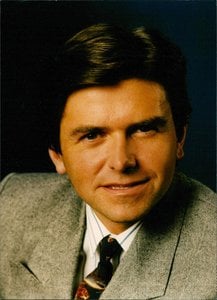
1974 - , Australia


 发送
发送 分享
分享
 详情
详情 指南
指南

 下载图片
下载图片
 相似作品
相似作品 幻灯片播放
幻灯片播放 统计数据
统计数据 阅读全文
阅读全文


