


x

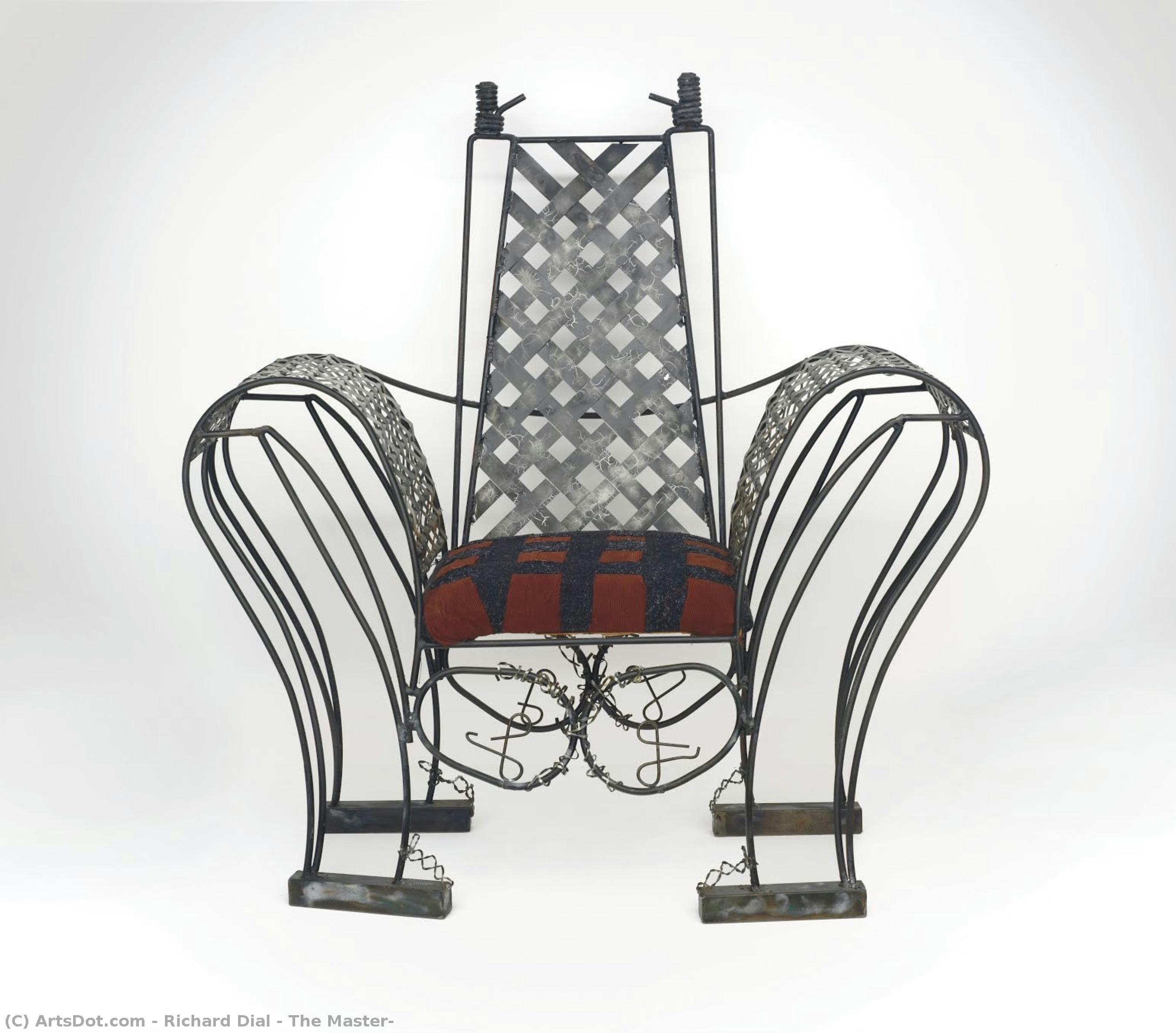
 2007
2007 144.0 x 134.0 cm
 Souls Grown Deep
从与原作比例一致的预设尺寸中进行选择。

您可以输入自定义尺寸,以适配特定的画框或空间。如果您选择的尺寸与原图比例不符,我们将对作品进行裁剪,或通过镜像填充/纯色填充边缘的方式来扩展图像。在开始制作之前,我们会向您发送一份数字效果图供您确认。
请注意,屏幕上的预览并不能反映实际的裁剪或扩展效果。只有效果图才能准确展示最终的构图。
虽然我们提供定制尺寸,但为了保持原图比例,我们建议您从预设列表中选择尺寸。

The Master
复制品尺寸
Born in Bessemer, Alabama, in 1955, Richard Dial’s artistic journey is inextricably linked to the rich, complex tapestry of his upbringing – a landscape shaped by industrial decline, African American heritage, and a deep connection to the traditions of the American South. His life began within a family already steeped in creative expression; his father, Thornton Dial, was a renowned furniture maker known for his distinctive, often whimsical designs, while his mother, Clara Mae Dial, contributed her own artistic talents. This familial legacy provided an invaluable foundation, fostering a spirit of experimentation and a profound understanding of material – particularly metal – that would become the cornerstone of Dial’s unique practice.
Dial's early years were spent amidst the remnants of Bessemer’s steel industry, a community grappling with economic hardship. This environment instilled in him a keen awareness of discarded materials and the potential for transformation. He honed his skills as a machinist at Pullman Standard, absorbing technical expertise while simultaneously observing the rhythms of industrial production – a process that would later inform his sculptural approach. Crucially, he learned to work with metal not merely as a functional material but as a medium capable of embodying narrative and emotion. This pragmatic training combined with an innate artistic sensibility created a distinctive voice.
Dial’s breakthrough came in the late 1980s with his "Comfort" series, a collection of anthropomorphic chairs that transcended the traditional definition of furniture. These weren't simply seats; they were meticulously crafted figures imbued with personality and often carrying poignant narratives drawn from Southern folklore, history, and social commentary. Dial’s process involved painstakingly welding together discarded metal parts – remnants from his machinist work and salvaged materials – to create recognizable human forms. The chairs themselves became vessels for storytelling, each piece a miniature drama unfolding in three dimensions.
The series is characterized by its deliberate ambiguity. Dial rarely offers explicit explanations of the figures’ identities or their stories. Instead, he relies on subtle details—a bent arm suggesting struggle, a tilted head conveying contemplation, a carefully positioned hand hinting at action—to invite viewers to project their own interpretations onto the sculptures. His use of contrasting textures and finishes – smooth metal juxtaposed with rough welds – further enhances this sense of layered meaning. The chairs are not merely objects; they’re portals into narratives that resonate deeply with the complexities of Southern identity.
Dial's work is profoundly rooted in the traditions of African American folk art, particularly the “outsider” tradition – artists who create independently of established artistic institutions. He shares a kinship with his father, Thornton Dial, whose furniture often incorporates symbolic imagery drawn from African-American spiritual beliefs and cultural narratives. Furthermore, Dial’s sculptures echo the work of other Southern self-taught artists like Bessie Harvey and Archie Byron, who similarly utilized found objects to create evocative figures that captured the essence of their communities.
Beyond these direct influences, Dial's practice is informed by a broader engagement with American history and social issues. His sculptures frequently address themes of race, poverty, resilience, and the enduring legacy of slavery. The deliberate use of uncomfortable or challenging narratives—a chair depicting a weary laborer, another portraying a figure burdened by injustice—reflects Dial’s commitment to confronting difficult truths through art. He doesn't shy away from exploring the darker aspects of Southern history, but he does so with a nuanced understanding and a profound respect for the human spirit.
Richard Dial’s work has garnered significant recognition within the contemporary art world. His sculptures have been exhibited in prestigious venues such as the Souls Grown Deep Foundation, the High Museum of Art, and the American Folk Art Museum. His pieces are now included in permanent collections across the United States, ensuring that his unique vision will continue to be appreciated for generations to come. Dial’s work stands as a testament to the power of self-taught art—a reminder that creativity can flourish outside the confines of traditional artistic institutions and that profound narratives can emerge from unexpected sources.
Dial's legacy extends beyond his individual creations; he has fostered a vibrant artistic community in Bessemer, Alabama, providing opportunities for other local artists to showcase their work. His commitment to preserving and celebrating Southern folk art traditions is an enduring contribution to the cultural landscape of the region. He continues to create, refining his craft and deepening his exploration of Southern stories—a testament to a life dedicated to transforming discarded materials into powerful works of art.

1955 - , United States of America


第一时间获取最新的艺术新闻、独家优惠及装饰灵感。
向我们介绍您的项目需求,我们的艺术专家将为您提供 3 个个性化的艺术品推荐。
由我们的专家为您精选 3 款心仪之作 —— 完全免费!
 定制手绘复刻品
 分享
分享 分享
分享
 详情
详情

 下载
下载
 相似作品
相似作品 X射线
X射线 幻灯片播放
幻灯片播放 展开详情
展开详情






































 玻璃选项仅适用于110厘米以下的尺寸。


