由我们的艺术家按需定制,为您提供您所选尺寸及画框的布面手工油画。 ( 切换至版画销售渠道 切换至数字图像销售渠道)





























从与原作比例一致的预设尺寸中进行选择。

您可以输入自定义尺寸,以适配特定的画框或空间。如果所选尺寸与原图比例不符,我们将通过裁剪作品或添加手绘元素来扩展画面。数字样稿将在制作开始前发送给您确认。
请注意,屏幕预览无法准确反映实际的裁剪或扩展效果,只有样稿才能真实呈现最终的构图。
虽然我们提供定制尺寸服务,但为了保留原作比例,建议您从预设列表中选择尺寸。

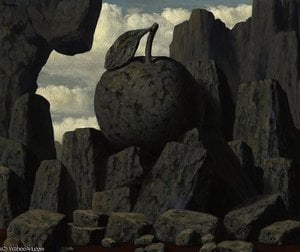
This is Not an Apple
复制品尺寸
In the vast landscape of Surrealism, few images possess the deceptive simplicity and profound intellectual weight of René Magritte’s 1964 masterpiece, "This Is Not an Apple." At first glance, the viewer is presented with a scene that feels almost mundane—a single, vibrant apple resting upon a surface, accompanied by a cryptic inscription. Yet, to look at this painting is to enter a psychological labyrinth where the boundaries between object and language begin to dissolve. Magritte, the Belgian master of the uncanny, does not merely paint fruit; he paints the tension between what we see and what we know. The composition serves as a deliberate provocation, designed to unsettle the viewer’s most basic assumptions about reality and the reliability of our own senses.
The painting operates through a brilliant linguistic trap. By pairing the realistic depiction of an apple with the French phrase “Ceci n'est pas une pomme” (“This is not an apple”), Magritte forces a confrontation between the physical world and the symbols we use to describe it. He reminds us that the painted image is merely oil on canvas, a representation that can never truly be the object itself. This philosophical inquiry into the nature of representation has made his work a cornerstone of modern thought, influencing everything from conceptual art to contemporary pop culture. For the collector or the lover of fine art, this piece offers more than visual beauty; it offers a continuous intellectual dialogue that evolves every time one gazes upon it.
Magritte’s technical approach in "This Is Not an Apple" is characterized by a meticulous, almost academic precision. Eschewing the frantic brushwork of the Impressionists, he employed a smooth, controlled oil technique that lends the apple a startlingly tactile quality. One can almost sense the crispness of its skin and the subtle weight of its form. This hyper-realistic rendering is essential to his strategy; by making the subject appear undeniably "real," he makes the subsequent subversion of that reality all the more jarring. The lighting is soft yet purposeful, casting gentle shadows that ground the object in a tangible space, even as the starkness of the background pushes it toward the realm of the dream.
The composition is a study in calculated balance. The placement of the apple and the accompanying text creates a visual rhythm that guides the eye across the canvas, inviting a slow, meditative observation. This level of detail makes the work an exceptional choice for high-quality reproductions intended for sophisticated interiors. Whether placed in a minimalist modern gallery or a classic study, the painting’s clean lines and striking color palette—the deep reds and vibrant greens against a neutral backdrop—provide a focal point that is both aesthetically pleasing and intellectually stimulating. It is a piece that commands attention through its quietude rather than through noise.
Beyond its technical merits, "This Is Not an Apple" carries an emotional resonance that speaks to the universal human experience of mystery and loss. Magritte’s life, marked by early childhood tragedies, often infused his work with a sense of the hidden and the veiled. In this painting, that sense of mystery is channeled into a cerebral curiosity. It does not demand an emotional outburst; instead, it invites a quiet, contemplative state of mind. For interior designers seeking to add depth to a space, this artwork provides a "conversation piece" in the truest sense—a work that stimulates thought and adds a layer of sophisticated intrigue to any room.
Owning a reproduction of such a seminal Surrealist work allows one to bring a piece of art history into the domestic sphere. It is an investment in a legacy of creativity that challenges the status quo. As we navigate an era increasingly dominated by digital illusions, Magritte’s exploration of truth and falsehood feels more relevant than ever. To display this painting is to celebrate the enduring power of the human imagination and to honor the beautiful, unsettling paradoxes that define our existence.
勒内·马格里特(René Magritte,1898-1967)是比利时最负盛名的超现实主义画家之一。他并非像某些超现实主义者那样沉溺于潜意识的狂热探索,而是以一种冷静、精确的方式,将日常事物置于奇异的环境中,引发人们对现实本质和视觉认知的深刻思考。他的作品充满了谜语般的意象,挑战着我们习以为常的世界观,如同在平静的水面上投下一颗石子,激起涟漪般,触动着我们内心深处的疑问。
马格里特的童年经历对他的艺术创作产生了深远的影响。1898年出生于列松的小镇,他目睹了母亲的自杀事件,这个悲剧性的记忆在他心中留下了难以磨灭的阴影。关于母亲的死亡,流传着一个说法是她被发现时,衣物遮蔽了面容,这或许也解释了他晚期作品中频繁出现的蒙面人物形象,象征着隐藏、神秘和无法触及的真相。早年的经历塑造了他对现实的怀疑态度,并促使他寻求一种能够超越表象,揭示事物内在联系的方式。
马格里特的早期绘画受到印象派的影响,描绘着风景和人物,但很快他就意识到这种风格无法满足他对艺术表达的需求。在经历了短暂的未来主义和立体主义探索之后,1922年他偶然发现了乔治奥·德·基里科的作品,这对他产生了巨大的启发。德·基里科那充满梦幻色彩、超现实主义氛围的场景,如同打开了一扇通往未知世界的大门,彻底改变了马格里特的艺术方向。他开始尝试将日常事物以一种出人意料的方式组合在一起,创造出既熟悉又陌生的视觉体验。
1920年代中期,马格里特正式加入了超现实主义运动,但他的作品却与当时主流的超现实主义风格有所不同。他拒绝了自由联想和自动书写的技巧,而是坚持以一种冷静、客观的方式来描绘超现实的场景。他笔下的事物并非扭曲变形或充满象征意义,而是保持着其原有的形态,只是被放置在不恰当的环境中,从而产生了一种令人不安的疏离感。这种独特的风格使马格里特成为超现实主义运动中最具个性的艺术家之一。
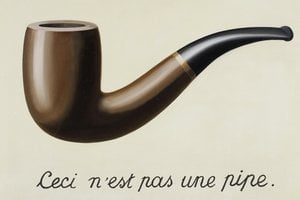
马格里特的代表作包括《人造风景》(The Human Condition)、《时间凝固》(Time Transfixed)和《这个不是烟斗》(This is Not a Pipe)。《人造风景》巧妙地将一幅画框置于现实场景中,模糊了绘画与现实之间的界限,引发人们对艺术的本质进行思考。而《时间凝固》则描绘了一列火车穿透砖墙的情景,打破了我们对时间和空间的固有认知。《这个不是烟斗》是最具代表性的作品之一,它直接挑战了语言和图像之间的关系,提醒我们绘画只是对事物的象征性表达,而非事物本身。这些作品都体现了马格里特对现实的质疑和对视觉认知的反思。
马格里特的艺术理念的核心在于“诗意”。他认为艺术不应该仅仅是情感的宣泄或潜意识的投射,而应该是一种能够唤起人们思考、激发想象力的诗意表达。他通过将日常事物置于奇异的环境中,创造出一种充满谜语般的氛围,引导观众进入一个充满疑问和探索的世界。他的作品并非提供明确的答案,而是引发人们对现实本质进行持续的思考。
尽管马格里特在生前并未获得广泛的认可,但他在去世后逐渐获得了国际声誉,成为20世纪最具影响力的艺术家之一。他的作品不仅对波普艺术、极简主义和观念艺术产生了深远的影响,也启发了无数的电影导演、设计师和作家。他独特的艺术风格和深刻的思想,至今仍吸引着世界各地的观众,并激励着人们以一种全新的视角去审视周围的世界。
马格里特的作品不仅仅是绘画,更是一种哲学思考,一种对现实的反叛,一种对诗意的追求。他用画笔构建了一个充满谜团和想象力的世界,邀请我们一同探索现实的边界,并重新定义我们对世界的认知。他的艺术遗产将继续激励着一代又一代的艺术家和观众,在超现实主义的领域中留下永恒的光辉。

1898 - 1967 , 比利时

Discover the profound beauty of abstract art. Our expert guide explores geometric abstraction, Op Art, and Expressionism, offering connoisseurs deep insights into collecting and curating powerful, non-representational masterpieces for sophisticated interiors.


 效果预览
效果预览
 分享
分享 分享
分享
 详情
详情

 下载
下载
 相似作品
相似作品 X射线
X射线 幻灯片播放
幻灯片播放 统计数据
统计数据

 展开详情
展开详情









 玻璃选项仅适用于110厘米以下的尺寸。