藏品详情
A Surreal Collision of Antiquity and Constraint
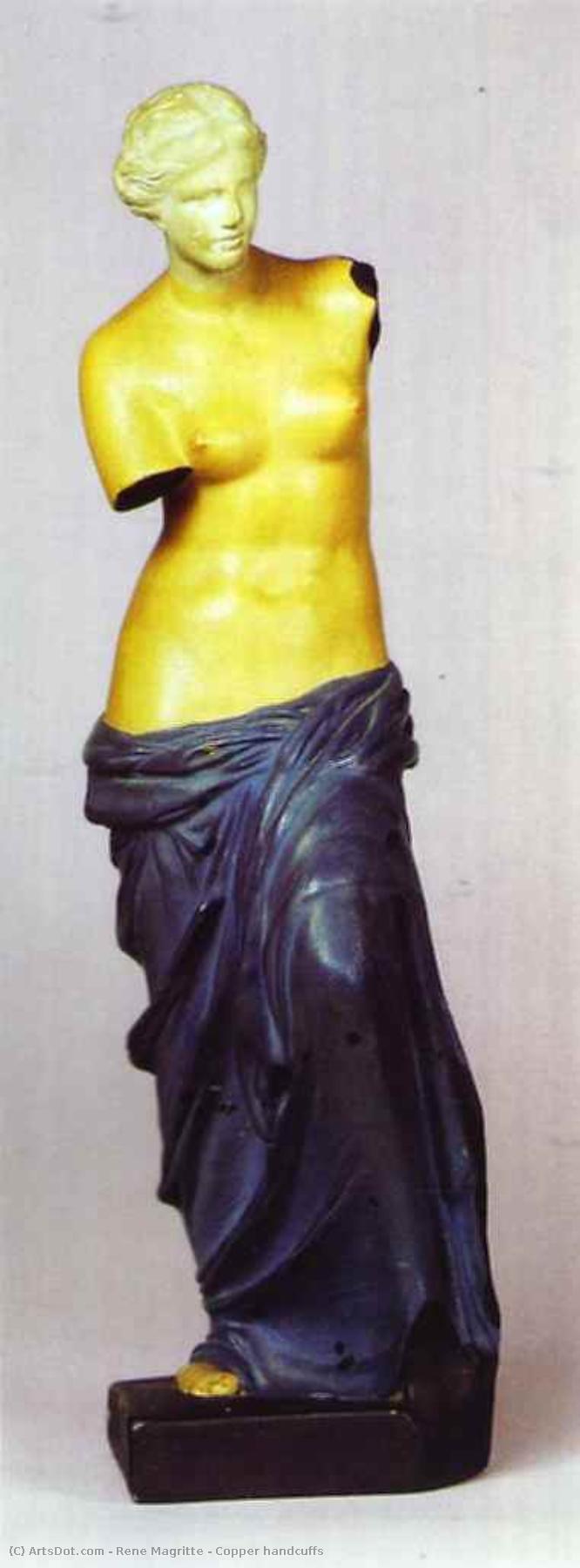
In 1931, René Magritte captured a moment of profound visual tension in his evocative work, Copper Handcuffs. At first glance, the viewer is met with the familiar, dignified grace of classical antiquity—the upper torso and flowing drapery of the iconic Venus de Milo. Yet, this reverence for the past is abruptly interrupted by a jarring, modern intrusion: a pair of copper handcuffs tightly binding the bronze figure. This is not merely a depiction of sculpture, but a masterful manipulation of reality through the lens of Surrealism. Magritte utilizes a meticulous, almost photographic realism to render the textures of the aged bronze and the subtle play of light across the surface, making the illogical presence of the metal restraints feel disturbingly tangible. The composition is tightly focused, pulling the eye toward the center where beauty and bondage meet in an unsettling embrace.
The Poetics of the Unconscious
To understand Copper Handcuffs is to step into the dreamlike logic that defined the Surrealist movement. Emerging from the psychological shadows of the post-World War I era, Magritte sought to bypass rational thought and tap into the raw power of the unconscious mind. Here, the symbolism operates on a plane of deep ambiguity, inviting the observer to look beyond the surface. The Venus de Milo stands as an eternal emblem of beauty, freedom, and artistic perfection, while the handcuffs serve as a stark reminder of restriction, imprisonment, and the weight of societal control. By placing these two opposing forces in such close, intimate contact, Magritte creates a visual riddle that prompts contemplation on the struggle between the ideal and the real, and the invisible constraints placed upon even the most magnificent forms of existence.
An Evocative Presence for the Discerning Collector
For the art enthusiast or interior designer, a high-quality reproduction of this piece offers far more than mere decoration; it provides a profound intellectual anchor for any curated space. The work’s dramatic use of light and shadow—accentuating the rich patina of the bronze against a dark, undefined background—allows it to command attention in even the most minimalist contemporary settings. Whether integrated into a sophisticated gallery-style room or used as a focal point in a classic study, the piece acts as an enduring conversation starter. The interplay of organic human forms with the cold, industrial texture of copper creates a sensory experience that is both unsettling and deeply captivating, making it an essential acquisition for those seeking to infuse their environment with mystery, history, and a touch of the unexpected.



 购买手绘画作
 分享
分享 分享
分享
 详情
详情

 下载
下载
 相似作品
相似作品 幻灯片播放
幻灯片播放


 展开详情
展开详情






































 玻璃选项仅适用于110厘米以下的尺寸。


![Buste De Charles Garnier — 让-巴蒂斯特·卡波”, "artist_names_other": [ "让-巴蒂斯特-卡波", "让-巴蒂斯特·卡波" ], Neoclassicism](/media/artworks/images/thumbnails/47/25/472590fa7285426ba451ce998613dfe3.jpg)