
x


 Oil On BoardWallArtNeoclassical American
 1639Early Modern
 81.0 x 63.0 cm
 卢浮宫
卢浮宫




























从与原作比例一致的预设尺寸中进行选择。

您可以输入自定义尺寸,以适配特定的画框或空间。如果所选尺寸与原图比例不符,我们将通过裁剪作品或添加手绘元素来扩展画面。数字样稿将在制作开始前发送给您确认。
请注意,屏幕预览无法准确反映实际的裁剪或扩展效果,只有样稿才能真实呈现最终的构图。
虽然我们提供定制尺寸服务,但为了保留原作比例,建议您从预设列表中选择尺寸。

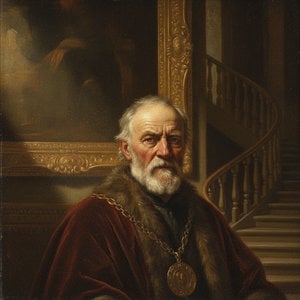
Self-portrait
复制品尺寸
In the quiet, shadowed corners of early American history, few images capture the burgeoning identity of a new nation as poignantly as Rembrandt Peale’s Self-Portrait. This is not merely a record of a face, but a profound window into the psyche of an artist navigating the intersection of European tradition and American ambition. Executed with a masterful command of light and shadow, the portrait presents Peale seated before a draped doorway, a compositional choice that suggests a threshold between the private self and the public persona. The soft, directional light bathes his features, highlighting a gaze that is both intense and deeply contemplative, inviting the viewer to step into his personal sanctuary.
The painting serves as a cornerstone of American Neoclassicism, a style that sought to marry the clarity and precision of classical ideals with a burgeoning sense of realism. Peale’s technique, rendered in oil on board, demonstrates an extraordinary ability to manipulate tonal gradations. Through subtle transitions of pigment, he achieves a lifelike texture—from the soft skin of his visage to the heavy, tactile presence of the drapery behind him. This meticulous attention to detail reflects the influence of the Baroque masters, yet it is infused with a uniquely American spirit of scientific observation and psychological depth.
Every element within this frame carries a weight of meaning far beyond its aesthetic value. The hat worn by Peale is more than a mere accessory; it serves as a visual declaration of status, dignity, and professional ambition. It anchors him in his time, presenting him as a man of distinction and intellectual standing. Furthermore, the presence of the doorway acts as a powerful metaphor for introspection. It symbolizes the artist’s role as a mediator between worlds—the internal world of thought and the external world of nature and society.
To understand this work, one must also consider the fertile ground from which Peale grew. As the son of the legendary Charles Willson Peale, Rembrandt was raised in an environment where art, science, and museum curation were inextricably linked. This familial ethos—the belief that art could illuminate the natural world and the human condition alike—is palpable in the painting’s execution. There is a quiet, scholarly gravity to the piece, a sense that the artist is not just painting himself, but documenting the very evolution of American cultural identity.
For the art lover, the collector, or the interior designer, a high-quality reproduction of this Self-Portrait offers much more than visual elegance. It brings a sense of historical gravity and intellectual sophistication to any space. The painting’s muted palette and dramatic chiaroscuro make it an incredibly versatile piece for curated interiors, providing a focal point that commands attention without overwhelming the room. Whether placed in a private study, a library, or a grand salon, Peale’s work acts as a conversation starter, evoking themes of legacy, identity, and the enduring power of the human spirit.
Investing in such a piece is an opportunity to possess a fragment of the American Renaissance. It is an invitation to engage with a moment in time when the foundations of American art were being laid with precision, passion, and an unwavering eye for the truth of the human experience.


1778 - 1860 , 美国
Immerse yourself in the dramatic chiaroscuro of Rembrandt van Rijn’s greatest works. Explore 25 iconic Dutch Golden Age masterpieces, perfect for inspiring fine art decor and museum-quality reproductions. Elevate your space with timeless beauty. Discover all masterpieces on WahooArt.com.

Elevate your collection with the tactile elegance of hand-painted oil masterpieces. From bespoke reproductions to custom portraits from photography, discover museum-quality artistry crafted by academy-trained experts for discerning collectors and designers worldwide.


第一时间获取最新的艺术新闻、独家优惠及装饰灵感。
向我们介绍您的项目需求,我们的艺术专家将为您提供 3 个个性化的艺术品推荐。
由我们的专家为您精选 3 款心仪之作 —— 完全免费!


 效果预览
效果预览
 购买印刷品
购买印刷品 分享
分享 分享
分享
 详情
详情

 下载
下载
 相似作品
相似作品 X射线
X射线 幻灯片播放
幻灯片播放 展开详情
展开详情









 玻璃选项仅适用于110厘米以下的尺寸。


