

博物馆级艺术微喷或帆布版画,制作高效,并提供多种饰面选择。 ( 订购纯手工绘制画作 切换至数字图像销售渠道)
您可以从与原作比例一致的预设尺寸中进行选择。

请输入您所需的宽度和高度,以适配您的画框或墙面。由于印刷品只能进行裁剪,无法超出原图尺寸,因此若比例不一致,画面的一部分将会被裁切。在正式印刷之前,我们会为您发送一份数字效果图供您确认。本页面显示的图片并非最终裁剪后的效果——只有效果图才能展示真实的裁剪情况。
Portrait Study August v. Mackensen, Prussian General
复刻品尺寸

The air in Berlin during the late nineteenth century carries the weight of a burgeoning empire. In this atmosphere, Friedrich Georg William Pape moves through the Academy of Arts, transitioning from the abstract logic of philosophy and natural sciences toward the tangible, heavy brushstrokes of history painting. He does not merely observe; he records. His early training under Hermann Prell and later in Paris under Jules-Joseph Lefebvre and Jean-Joseph Benjamin-Constant provides him with a technical rigor that defines his entire output. He seeks the detail in the grand scale, a skill that leads him toward the creation of vedutas—highly detailed, large-scale paintings that capture the essence of urban life and architectural grandeur.
The turning point arrives not in a studio, but in the halls of power. His work One Empire, One People, One God captures the 1896 celebration of the German Empire's 25th anniversary with such fidelity that it catches the eye of the Kaiser. Wilhelm II does not merely admire the work; he purchases it. This connection to the German court transforms Pape from a skilled illustrator into a painter of the state. He becomes the visual chronicler of a dynasty, tasked with translating the prestige of the monarchy into permanent pigment.
Pape’s brush becomes a tool for the elite. He navigates the social hierarchies of the German Empire, moving between the private studies of academics and the public ceremonies of the throne. His ability to render the specificities of rank and character makes him a sought-after hand for those who wish to be remembered. His subjects include:
The scale of his influence extends even to the currency of the nation. His compositions are so deeply embedded in the national identity that they serve as the templates for the 5 and 3 Reichsmarks. He is no longer just an artist; he is a designer of the visual language used by the state to communicate its own stability and history.
The momentum of a career built on the rigid structures of Berlin and the imperial court meets an abrupt, violent end in Sweden. In 1920, Pape travels to Stockholm to document the presentation of the Nobel prizes, a task suited to his talent for capturing significant historical moments. The transition from the controlled environments of the Academy to the streets of a foreign city proves fatal. He is struck by a car, a sudden and modern end to a life dedicated to the meticulous preservation of the past. He dies in Stockholm, leaving behind a body of work that remains a primary visual record of the German Empire's zenith.

1859 - 1920 , Germany

Explore the captivating world of Oswald Birley, Britain’s premier society portraitist. Discover his iconic paintings of royalty & leaders. Expert insights for collectors and art enthusiasts.

Explore the elegant portraits of Friedrich von Amerling, a master of Viennese Biedermeier art. Discover his life, style, and lasting influence on 19th-century Austrian painting. Find high-quality reproductions at WahooArt.
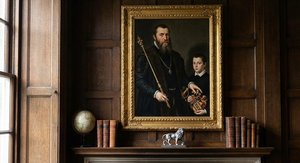
Explore the fascinating history of aristocratic portraiture & its reflection of power, wealth, and dynastic ambition. Expert insights for discerning collectors at WahooArt.

Explore the compelling work of Ukrainian artist Pavlo Makov, renowned for his conceptual photography deconstructing Soviet legacy. Discover his unique artistic process and investment potential.
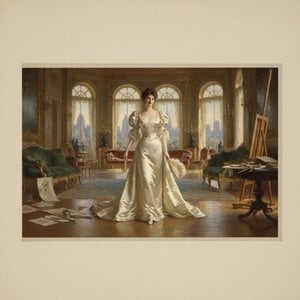
Explore the life & art of John Singer Sargent, premier portraitist of the Gilded Age. Discover his Impressionistic masterpieces, technical brilliance, and enduring legacy. Expert insights for collectors.

 实景预览

 分享
 分享
 详情
 指南


 下载作品
 相似作品
 X射线
 幻灯片播放
 问答

 统计数据


 展开全文






































 玻璃选项仅适用于110厘米以下的尺寸。


