实景预览 AR 试挂 切换至版画销售渠道 切换至数字图像销售渠道 发送
详情 指南 加入收藏 下载图片 相似作品 X射线 幻灯片播放 Q&A 统计数据

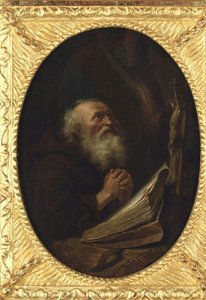
Saint Peter

A dramatic 1650 portrait of Saint Peter by Pietro Ricchi captures the saint with intense spatial projection and a weathered face, offering a profound glimpse into Baroque devotion that you can bring to your collection.

Explore the captivating works of Pietro Ricchi – Venetian painter known for religious scenes, biblical narratives & classical figures. Discover his art in Venice & Rome!

本页面展示的作品受版权法保护,这意味着我们无法合法地制作或销售与其完全相同的复制品。此项保护依据包括以下国际协议等: 伯尔尼公约 以及各国法律,包括下文所述的法律: 美国版权法第17编。

作为一种既合规又充满敬意的替代方案,我们提供以原作为灵感定制的手绘艺术作品。我们的资深专业艺术家会仔细研读原作的风格、韵味与艺术精髓,以此创作出能够唤起相同情感的新颖且独特的作品——同时确保其本身是一件原创之作。

这种方法完全符合版权法规,因为它并不涉及对受保护艺术品的复制或翻录。相反,它是一种富有创意的重新诠释——是一件受原作启发、但与原作并不相同的全新绘画作品。

手工油画复制品

由我们的艺术家按需定制,为您提供您所选尺寸及画框的布面手工油画。 ( 切换至版画销售渠道 切换至数字图像销售渠道)

Corner sample of the P118B picture frame: 模压聚苯乙烯, 5 cm wide and 3 cm thick
P118B ¥10
Corner sample of the P118H picture frame: 模压聚苯乙烯, 5 cm wide and 3 cm thick
P118H ¥10
Corner sample of the P118W picture frame: 模压聚苯乙烯, 5 cm wide and 3 cm thick
P118W ¥10
Corner sample of the P438Z picture frame: 模压聚苯乙烯, 5.5 cm wide and 3.5 cm thick
P438Z ¥10
Corner sample of the P508JH picture frame: 模压聚苯乙烯, 7 cm wide and 3.5 cm thick
P508JH ¥12
Corner sample of the P508YH picture frame: 模压聚苯乙烯, 7 cm wide and 3.5 cm thick
P508YH ¥12
Corner sample of the P805H picture frame: 模压聚苯乙烯, 5 cm wide and 3.5 cm thick
P805H ¥10
Corner sample of the P805Z picture frame: 模压聚苯乙烯, 5 cm wide and 3.5 cm thick
P805Z ¥10
Corner sample of the P919BZ picture frame: 模压聚苯乙烯, 7 cm wide and 3.5 cm thick
P919BZ ¥10
Corner sample of the P919G picture frame: 模压聚苯乙烯, 7 cm wide and 3.5 cm thick
P919G ¥10
Corner sample of the P919XJ picture frame: 模压聚苯乙烯, 7 cm wide and 3.5 cm thick
P919XJ ¥10
Corner sample of the P959ZH picture frame: 模压聚苯乙烯, 5 cm wide and 3 cm thick
P959ZH ¥10
Corner sample of the P968JZ picture frame: 模压聚苯乙烯, 6 cm wide and 4 cm thick
P968JZ ¥12
Corner sample of the W106C picture frame: 实木, 5 cm wide and 3 cm thick
W106C ¥8
Corner sample of the W218G picture frame: 实木, 5 cm wide and 3 cm thick
W218G ¥10
Corner sample of the W218JH picture frame: 实木, 5 cm wide and 3 cm thick
W218JH ¥8
Corner sample of the W218Y picture frame: 实木, 5 cm wide and 3 cm thick
W218Y ¥10
Corner sample of the W307PJ picture frame: 实木, 6 cm wide and 3 cm thick
W307PJ ¥10
Corner sample of the W316G picture frame: 实木, 6 cm wide and 3 cm thick
W316G ¥10
Corner sample of the W316PJ picture frame: 实木, 6 cm wide and 3 cm thick
W316PJ ¥8
Corner sample of the W316Y picture frame: 实木, 6 cm wide and 3 cm thick
W316Y ¥10
Corner sample of the W398PJ picture frame: 实木, 5 cm wide and 3 cm thick
W398PJ ¥8
Corner sample of the W4111J picture frame: 实木, 6.5 cm wide and 3.5 cm thick
W4111J ¥10
Corner sample of the W500HY picture frame: 实木, 7 cm wide and 5 cm thick
W500HY ¥15
Corner sample of the W500JH picture frame: 实木, 7 cm wide and 5 cm thick
W500JH ¥15
Corner sample of the W692G picture frame: 实木, 8 cm wide and 4 cm thick
W692G ¥12
Corner sample of the W849H picture frame: 实木, 5 cm wide and 3 cm thick
W849H ¥8
Corner sample of the W940BG picture frame: 实木, 7.5 cm wide and 4.5 cm thick
W940BG ¥15
Corner sample of the W953PJ picture frame: 实木, 6 cm wide and 3.5 cm thick
W953PJ ¥8

标准尺寸
定制
CM
INCH

您可以从与原作比例一致的预设尺寸中进行选择。

宽度
高度

请输入您需要的宽度和高度,以适配您的画框或墙面。由于作品为手工绘制,若您选择不同的尺寸比例,艺术家可能会在画面边缘多画一些或稍作裁剪 —— 由您决定。在开始绘画之前,我们会为您发送一份数字效果图供您确认。本页面上展示的图片并非最终实物 —— 只有效果图才能反映真实结果。

可定制示例:将面部替换为客户照片;添加宠物(例如,将猫替换为狗);在背景中加入隐藏信息;更改背景风景或元素。
下单后,WahooArt.com 团队将通过电子邮件联系客户获取具体要求,并提供效果预览图

全球配送(),仅需 3-4 周即可送达,无需等待标准时效的 5 周。(28 October)。品质绝不妥协。

全球免运费特快专递服务
优质亚麻画布
全程运输保险
关税退款保证
色彩还原度保证
100天退货保障(仅限制造缺陷)
100% 退款保证
多件购买优惠

总计金额

¥ 1827

Saint Peter

复制品材质

复刻品尺寸说明

-

总计金额

¥ 1827

基本信息

  • Artist: Pietro Ricchi
  • Title: Saint Peter
  • Artistic style: Baroque and Renaissance traditions
The painting represents Saint Peter half-length with his face turned to the right and the key in his hand. The usual expedient of spatial projection is applied to the image, which dilates the hands and heads in the foreground, overwhelming the entire visual field with them. On the back the panel bears a curious late-18th century

问答详情

Pietro Ricchi 的《Saint Peter》 使用的是强烈的对比,还是柔和的和谐?

在“Saint Peter”中,Gentle的对比与Unified Palette的和谐相得益彰。

在哪里可以观赏到 Pietro Ricchi 的《Saint Peter》 的原作?

Pietro Ricchi 的《Saint Peter》 目前正在 卡斯特韦基奥博物馆, 维罗纳, 意大利 展出。博物馆列表所指为原作,而非复制品。

如何将 Pietro Ricchi 的《Saint Peter》 应用于家居装饰中?

建议将“Saint Peter”用于Focal,推荐摆放空间为Living Room。


艺术家简介

A Brush with Devotion: The Life and Art of Pietro Ricchi

Pietro Ricchi, a name resonating within the artistic heart of Venice and Rome, embodies a fascinating continuation of the Italian Renaissance tradition well into the 17th and 18th centuries. While biographical details remain somewhat elusive – a common trait for artists operating within the prolific workshops and patronage networks of the period – his surviving works speak volumes about his dedication to religious narrative, masterful technique, and a keen understanding of classical form. Ricchi wasn’t merely replicating styles; he was actively participating in a vibrant artistic dialogue that sought to reinvigorate sacred themes with dramatic intensity and emotional depth. His career unfolded during a time when the Baroque had begun its ascendance, yet his paintings reveal a deliberate balance between the dynamism of the new style and the enduring principles of Renaissance composition and idealized beauty.

Early Training and Venetian Roots

Born in Venice (the exact year remains unconfirmed), Ricchi’s artistic journey likely began within one of the city's numerous ateliers. Venice, a republic steeped in visual splendor, provided an unparalleled education for aspiring painters. The influence of masters like Titian, Veronese, and Tintoretto was inescapable – their use of color, light, and grand scale permeated the artistic atmosphere. It’s reasonable to assume Ricchi received training in drawing, anatomy, and fresco techniques, skills essential for a painter destined to adorn both canvases and ceilings with elaborate compositions. The lagoon city's unique environment also shaped his aesthetic sensibility; the interplay of water, light, and architecture likely informed his spatial arrangements and atmospheric effects. While specific mentors are undocumented, it’s clear that Ricchi absorbed the Venetian tradition of rich colorism and dramatic storytelling. His early works demonstrate a proficiency in depicting textures – silks, velvets, and flesh tones rendered with remarkable realism – hallmarks of the Venetian school.

Roman Commissions and Artistic Development

Ricchi's artistic trajectory took him to Rome, a pivotal move that broadened his horizons and exposed him to a different set of influences. The Eternal City was a magnet for artists from across Europe, drawn by the patronage of powerful families like the Barberini and the Farnese. Here, he encountered the works of Caravaggio and the High Baroque masters, witnessing firsthand the power of *tenebrism* – the dramatic use of light and shadow to create emotional impact. However, Ricchi didn’t simply adopt these new techniques wholesale. Instead, he synthesized them with his Venetian background, creating a distinctive style characterized by a harmonious blend of classical composure and Baroque dynamism. His Roman commissions often focused on religious subjects, particularly scenes from the lives of saints and biblical narratives. Paintings like those depicting Saint Paul showcase his ability to convey both physical action and spiritual fervor. The attention to detail in portraying architectural settings also suggests an engagement with the city’s rich historical landscape.

Themes and Techniques: A Synthesis of Tradition and Innovation

The core of Ricchi's artistic output lies in religious painting, specifically depictions of biblical stories and the lives of saints. He frequently chose subjects that allowed him to explore themes of faith, sacrifice, and divine intervention. His *Judith Painting* exemplifies his skill in portraying complex psychological states – Judith’s determination juxtaposed with Holofernes’ vulnerability. Beyond individual portraits of piety, Ricchi also undertook larger-scale projects, decorating churches and chapels with elaborate frescoes and altarpieces. A notable example is his work within the Basilica di San Pietro in Rome, where he contributed to the ongoing embellishment of this iconic structure. His technique reveals a meticulous approach to composition, often employing diagonal lines to create a sense of movement and drama. He was also adept at using color to guide the viewer’s eye and emphasize key elements within his paintings. The *Morra Players Art* demonstrates his ability to capture fleeting moments of tension and anticipation. Ricchi's engagement with classical sculpture – particularly Michelangelo’s work, as evidenced in studies after *Moses* – is apparent in the anatomical accuracy and idealized forms of his figures.

Historical Significance and Enduring Legacy

Pietro Ricchi occupies a unique position within the history of Italian art. He wasn't a revolutionary innovator like Caravaggio, but rather a skilled practitioner who successfully bridged the gap between Renaissance ideals and Baroque sensibilities. His work reflects a conscious effort to uphold artistic traditions while embracing new stylistic developments. While not as widely celebrated as some of his contemporaries, Ricchi’s paintings continue to captivate viewers with their technical brilliance, emotional depth, and compelling narratives. His contributions to the decoration of significant religious sites – particularly in Venice and Rome – ensure that his legacy endures. He represents a vital link in the chain of artistic transmission, demonstrating how Renaissance principles were adapted and reinterpreted by subsequent generations of painters. The continued appreciation for his art speaks to the timeless power of devotional imagery and the enduring appeal of masterful craftsmanship.