
 布面丙烯墙面艺术品Neoplasticism
 47.0 x 63.0 cm
博物馆级艺术微喷或帆布版画,制作高效,并提供多种饰面选择。 ( 购买手绘画作 切换至数字图像销售渠道)





























从与原作比例一致的预设尺寸中进行选择。

您可以输入自定义尺寸,以适配特定的画框或空间。如果您选择的尺寸与原图比例不符,我们将对作品进行裁剪,或通过镜像填充/纯色填充边缘的方式来扩展图像。在开始制作之前,我们会向您发送一份数字效果图供您确认。
请注意,屏幕上的预览并不能反映实际的裁剪或扩展效果。只有效果图才能准确展示最终的构图。
虽然我们提供定制尺寸,但为了保持原图比例,我们建议您从预设列表中选择尺寸。

Geinrust Farm with Isolated Tree
复制品尺寸
Piet Mondrian, a titan of modern abstraction, irrevocably altered the trajectory of painting. His journey from representational art to pure geometric form is brilliantly encapsulated in “Geinrust Farm with Isolated Tree,” a canvas that embodies the core tenets of Neoplasticism—a movement he spearheaded alongside Theo van Doesburg in 1917.
The Art Movement: Neoplasticism
Neoplasticism, or De Stijl as it’s known in Dutch, wasn't merely an artistic style; it was a philosophical crusade for universal harmony. Driven by thinkers like Rudolf Steiner and Johannes Wilhelm Meyer, the movement sought to distill visual language down to its fundamental elements—vertical and horizontal lines, combined with primary colors (red, yellow, blue) and black and white.
Artists affiliated with De Stijl rejected illusionistic depth and perspective, prioritizing clarity and intellectual rigor. Mondrian’s vision was to create a visual language that transcended cultural boundaries and communicated directly with the human intellect—a radical departure from Impressionism and Post-Impressionism.
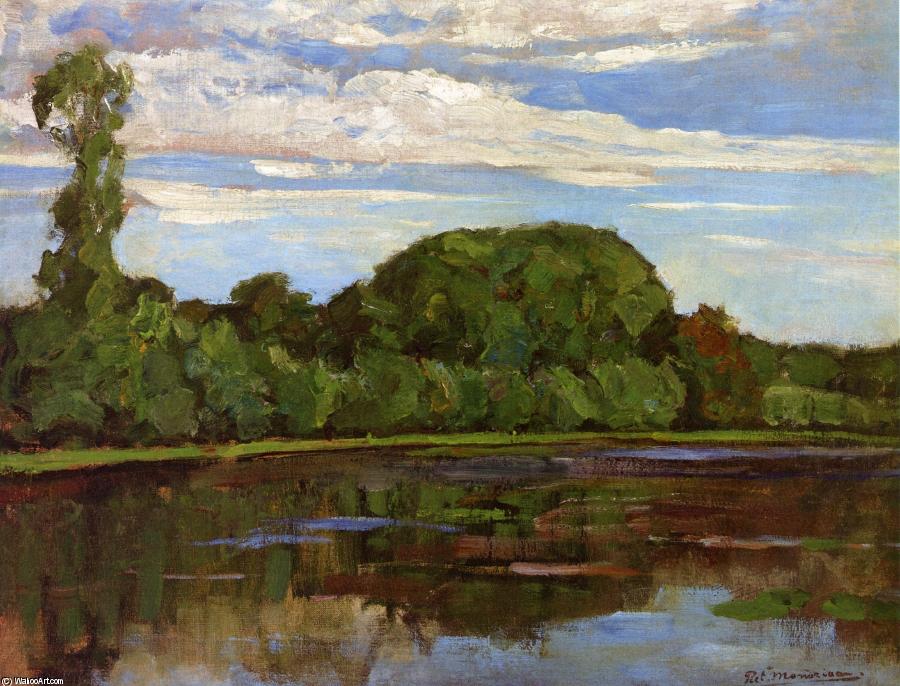
"CITE>Geinrust Farm with Isolated Tree" is more than just a depiction of a rural Dutch landscape; it’s a carefully orchestrated experiment in visual abstraction. Painted around 1905-1906, the artwork captures the serene beauty of Geinrust Farm—a modest estate nestled amidst rolling hills and trees.
The composition is dominated by horizontal and vertical lines that delineate the field and the tree respectively. The sky, rendered in muted blues and whites, provides a backdrop that emphasizes the vastness of the environment. Despite its simplified form, “Geinrust Farm” pulsates with energy—a testament to Mondrian’s unwavering commitment to his artistic principles.
Artistic Style: Neoplasticism
This painting exemplifies Mondrian's masterful transition towards Neoplasticism. While retaining subtle hints of naturalistic color, the dominant aesthetic is undeniably geometric. The artist meticulously applies brushstrokes to create a textured surface that subtly conveys the materiality of the landscape—a deliberate contrast with the flatness characteristic of abstract art.
The placement of the solitary tree—positioned prominently on the left side—is particularly significant. It serves as an anchor point within the composition, symbolizing resilience and uprightness against the horizontal expanse of the field. The artist’s intention was to convey a sense of balance and harmony—a visual representation of spiritual contemplation.
Mondrian's exploration of Neoplasticism extended beyond “Geinrust Farm,” informing his subsequent masterpieces like “Irrigation Ditch with Mature Willow Head” and “Place de la Concorde.” These works demonstrate a consistent preoccupation with reducing visual elements to their purest forms—a stylistic hallmark that solidified Mondrian’s legacy as one of the most influential artists of the 20th century.
Conclusion
"CITE>Geinrust Farm with Isolated Tree" by Piet Mondrian stands as a cornerstone in the evolution of Neoplasticism. It represents not merely an aesthetic achievement but a profound philosophical statement—a belief that art could serve as a vehicle for universal understanding and spiritual enlightenment.
For those seeking to delve deeper into Mondrian’s artistic vision or explore the broader context of De Stijl, visit Piet Mondrian on WahooArt. To learn more about this remarkable artwork and its significance in art history, explore Geinrust Farm with Isolated Tree - WikiArt.

1872 - 1944 , 荷兰

Explore the breathtaking mastery of Dutch Golden Age landscapes. From Italianate light to atmospheric realism, discover the techniques of 17th-century masters and learn how to bring these timeless, museum-quality masterpieces into your home through expert oil reproductions.

Explore the profound elegance of De Stijl. Discover how Piet Mondrian and the masters of Neoplasticism utilized geometric harmony and primary colors to redefine modern abstraction. An authoritative guide for the discerning collector seeking timeless, structured beauty.
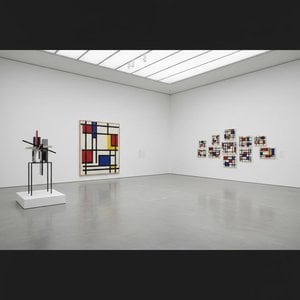
Explore the profound essence of Neoplasticism. Discover how Piet Mondrian and De Stijl masters used pure color and geometric form to redefine modern art. An essential guide for collectors seeking to understand the enduring power of abstract harmony and universal order.

 效果预览
效果预览
 分享
分享 分享
分享
 详情
详情 指南
指南

 下载
下载
 相似作品
相似作品 X射线
X射线 幻灯片播放
幻灯片播放 统计数据
统计数据 展开详情
展开详情









 玻璃选项仅适用于110厘米以下的尺寸。


