
 Oil On CanvasWallArtNeoplasticism
 1922Modern
 16.0 x 19.0 cm
博物馆级艺术微喷或帆布版画,制作高效,并提供多种饰面选择。 ( 购买手绘画作 切换至数字图像销售渠道)





























从与原作比例一致的预设尺寸中进行选择。

您可以输入自定义尺寸,以适配特定的画框或空间。如果您选择的尺寸与原图比例不符,我们将对作品进行裁剪,或通过镜像填充/纯色填充边缘的方式来扩展图像。在开始制作之前,我们会向您发送一份数字效果图供您确认。
请注意,屏幕上的预览并不能反映实际的裁剪或扩展效果。只有效果图才能准确展示最终的构图。
虽然我们提供定制尺寸,但为了保持原图比例,我们建议您从预设列表中选择尺寸。

Composition with Red, Yellow and Blue
复制品尺寸
In the quiet evolution of modernism, few works possess the radical clarity of Piet Mondrian’s Composition with Red, Yellow and Blue. Created in 1922, this masterpiece serves as a profound window into the soul of Neoplasticism, a movement that sought to strip away the distractions of the physical world to reveal a deeper, universal truth. While many artists of his era were still tethered to the representational beauty of landscapes and figures, Mondrian embarked on a daring intellectual voyage. He moved beyond the lush textures of Dutch Impressionism toward a visual language composed of nothing but the most fundamental elements: straight lines, primary colors, and a rigorous sense of equilibrium.
To gaze upon this canvas is to witness a deliberate distillation of reality. The painting does not attempt to mimic the organic chaos of nature; instead, it constructs an architectural meditation on order. Through a masterful use of horizontal and vertical black lines, Mondrian establishes a structural grid that anchors the viewer’s eye. Within this framework, the vibrant pulses of red, yellow, and blue emerge not as mere decorations, but as elemental forces. There is a rhythmic tension at play here—a silent dialogue between the weight of the bold color blocks and the airy lightness of the white spaces, creating a sense of dynamic stability that feels both ancient and avant-garde.
The technical brilliance of this work lies in its deceptive simplicity. Though the palette is strictly limited to the primary triad, the emotional resonance is vast. For the discerning collector or interior designer, this piece offers a timeless sophistication that transcends fleeting trends. The use of primary colors—red for energy, yellow for light, and blue for depth—mirrors the philosophical pursuits of Theosophy, which heavily influenced Mondrian’s search for spiritual harmony through geometric purity. Every intersection of line and color is calculated to achieve a state of "relational opposites," where asymmetry provides a much more complex and engaging balance than traditional symmetry ever could.
For those looking to infuse a contemporary space with intellectual depth, a high-quality reproduction of this composition acts as a focal point of clarity. It brings an atmosphere of structured calm and modern elegance to any room, whether it be a minimalist gallery setting or a vibrant, eclectic living area. The painting does not merely occupy space; it organizes it. By introducing such a disciplined aesthetic, the artwork invites contemplation, encouraging the viewer to find beauty in the essential and strength in the simple.
Understanding this work requires acknowledging the transformative era from which it emerged. Mondrian’s transition from the soft, atmospheric studies of his youth to this uncompromising abstraction represents one of the most significant shifts in art history. This 1922 composition stands as a pivotal moment where the artist successfully translated complex philosophical inquiries into a visual shorthand that remains legible and powerful over a century later. It is an invitation to look past the surface of things and appreciate the underlying geometry of existence.
Owning or displaying such a piece is more than a decorative choice; it is an engagement with the very foundations of 20th-century modernism. As a cornerstone of the De Stijl spirit, this artwork continues to inspire architects, designers, and art lovers alike, proving that true innovation does not require complexity, but rather the courage to find perfection in the most basic building blocks of our visual world.

1872 - 1944 , 荷兰
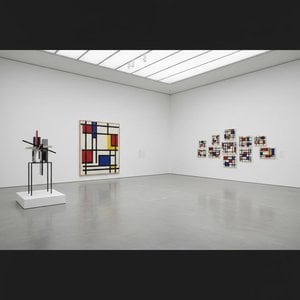
Explore the profound essence of Neoplasticism. Discover how Piet Mondrian and De Stijl masters used pure color and geometric form to redefine modern art. An essential guide for collectors seeking to understand the enduring power of abstract harmony and universal order.

Explore the profound elegance of De Stijl. Discover how Piet Mondrian and the masters of Neoplasticism utilized geometric harmony and primary colors to redefine modern abstraction. An authoritative guide for the discerning collector seeking timeless, structured beauty.

Explore the profound spiritual depth of geometric abstraction. From Malevich's Suprematism to modern masters, our expert guide reveals how pure form and color command presence in fine art collections.


 效果预览
效果预览
 分享
分享 分享
分享
 详情
详情

 下载
下载
 相似作品
相似作品 X射线
X射线 幻灯片播放
幻灯片播放 统计数据
统计数据 展开详情
展开详情









 玻璃选项仅适用于110厘米以下的尺寸。


