
博物馆级艺术微喷或帆布版画,制作高效,并提供多种饰面选择。 ( 订购此收藏品的纯手工复刻画作 切换至数字图像销售渠道)





























您可以从与原作比例一致的预设尺寸中进行选择。

请输入您所需的宽度和高度,以适配您的画框或墙面。由于印刷品只能进行裁剪,无法超出原图尺寸,因此若比例不一致,画面的一部分将会被裁切。在正式印刷之前,我们会为您发送一份数字效果图供您确认。本页面显示的图片并非最终裁剪后的效果——只有效果图才能展示真实的裁剪情况。
Composition in colour A
复刻品尺寸说明
Piet Mondrian's 1917 work, *Composition in Colour A*, isn’t merely a painting; it’s an architectural meditation on the fundamental elements of visual experience. Emerging from the fertile ground of early 20th-century abstraction, this piece represents a pivotal moment in the development of De Stijl – a movement Mondrian co-founded with Bart van der Leck and Theo van Doesburg – dedicated to stripping art down to its purest essence: lines and colours. It’s a testament to his lifelong pursuit of universal harmony, a vision born from a desire to transcend the limitations of representational painting and create a new language for expressing spiritual truth.
The canvas itself is dominated by a carefully orchestrated interplay of muted tones – a deep rose red, a rich dark ochre, and a profound midnight blue. These aren’t vibrant, assertive hues; rather, they are deliberately subdued, almost melancholic in their restraint. Mondrian eschewed the bright, energetic palette favored by earlier movements like Fauvism, opting instead for a sophisticated, contemplative approach. The colours themselves carry symbolic weight: red representing passion and energy, blue signifying spirituality and intellect, and ochre evoking the earth and grounding the composition. The deliberate choice of these specific shades speaks to Mondrian’s belief in their inherent balance and ability to evoke profound emotional responses.
What truly distinguishes *Composition in Colour A* is its masterful use of black lines. These aren't merely outlines defining shapes; they are the very structure of the painting, acting as a rigid grid that governs the placement and relationship of each coloured area. Mondrian’s approach moved beyond simply depicting objects; he sought to define the underlying geometric framework of reality itself. The lines don’t connect or converge in any obvious way – instead, they intersect and overlap with an almost unsettling precision, creating a sense of spatial ambiguity. This deliberate lack of closure contributes significantly to the painting's feeling of timelessness and its suggestion that it exists outside conventional notions of perspective and depth.
The white space surrounding the coloured blocks is equally crucial. It’s not simply a background; it’s an active participant in the composition, treated as a distinct form alongside the lines and colours. Mondrian believed that white held a vital role in creating visual equilibrium, acting as a ‘living component’ of the painting – a concept radical for its time. This rejection of traditional notions of negative space elevates the white areas to the status of integral design elements, mirroring the principles found in architecture and urban planning within the De Stijl philosophy.
*Composition in Colour A* is deeply rooted in the intellectual climate of 1917. The De Stijl movement was fueled by a desire to create a new, utopian world – one based on rationality, order, and harmony. Mondrian’s work reflects this ambition, representing an attempt to translate abstract principles into visual form. The painting can be seen as a blueprint for a new architectural style, anticipating the sleek, minimalist designs of the Bauhaus movement that would emerge shortly after. It's a powerful statement about the potential of art to shape not just our aesthetic experience but also our understanding of reality itself.
Beyond its historical significance, *Composition in Colour A* possesses a profound emotional impact. The painting’s quiet intensity and deliberate restraint evoke a sense of calm contemplation. The carefully balanced composition invites the viewer to lose themselves within its geometric embrace, offering a momentary respite from the chaos and complexity of everyday life. It's a work that speaks to our innate desire for order and harmony, suggesting that beauty can be found in simplicity and abstraction.
A hand-painted reproduction of *Composition in Colour A* offers a unique opportunity to bring this seminal artwork into your home or office. WahooArt’s meticulous reproductions capture the subtle nuances of Mondrian's technique, faithfully recreating the painting’s muted palette and precise lines. Whether you are an art enthusiast, a collector seeking to expand your collection, or simply someone looking for a piece that embodies timeless elegance and intellectual depth, this reproduction provides a beautiful and meaningful way to experience the legacy of Piet Mondrian.
蒙德里安 的《Composition in colour A》 的 Square 格式推荐用于 Living Room。画幅与空间的结合,将为您提供复制品摆放的指引。
总体而言,"Composition in colour A" 的亮度记录为 brilliant。感知亮度描述了作品呈现出的明暗程度。
是的——该作品目前存放于艺术家的原籍国。“Composition in colour A”收藏于荷兰,而蒙德里安出生于荷兰。


1872 - 1944 , 荷兰
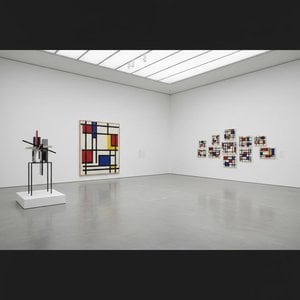
Explore the profound essence of Neoplasticism. Discover how Piet Mondrian and De Stijl masters used pure color and geometric form to redefine modern art. An essential guide for collectors seeking to understand the enduring power of abstract harmony and universal order.

Explore the profound evolution of Neo-Abstract art. Discover how bold geometric forms, vibrant chromatic depth, and tactile textures redefine modern expression for the discerning collector seeking sophisticated, high-impact masterpieces for contemporary interiors.

Explore the profound elegance of De Stijl. Discover how Piet Mondrian and the masters of Neoplasticism utilized geometric harmony and primary colors to redefine modern abstraction. An authoritative guide for the discerning collector seeking timeless, structured beauty.


 实景预览
实景预览
 发送
发送 分享
分享
 详情
详情 指南
指南

 下载图片
下载图片
 相似作品
相似作品 X射线
X射线 幻灯片播放
幻灯片播放 统计数据
统计数据


 阅读全文
阅读全文









 玻璃选项仅适用于110厘米以下的尺寸。


