购买高分辨率增强版数字图像,其品质远超在线预览。
每一份文件都由我们的内部专家使用先进工具与专业的后期润色技术精心打造。我们确保每一张图像都具备卓越的清晰度、精准的色彩还原度以及细腻的细节表现。
最终文件将在 72 小时内通过电子邮件交付,并针对专业、编辑及印刷用途进行了优化。其品质与顶级设计工作室、出版社和画廊所信赖的标准完全一致。
选择 WahooArt.com,您获得的不仅仅是一张图像——您收到的是经过专业级增强、精雕细琢的数字艺术作品,并享有满意保证。以下是您的订单中自动包含的所有内容:

您的高分辨率数字图像文件将在下单后 72 小时内通过电子邮件发送给您 —— 即可立即使用。

您的艺术品经过专业优化,结合先进的 AI 技术与人工修饰,确保呈现极致的细节、清晰度与色彩准确度。

不小心删除了文件或找不到了?没关系——我们将随时为您免费重发。

即刻拥有您的艺术作品,无需支付任何关税、税费或运费——数字下载始终免税。

我们通过专业工具与色彩管理技术,确保您的数字图像尽可能真实地还原原作色彩。

如果您对所购数字图像不满意,我们将在100天内为您进行修改或提供100%的全额退款——无需任何理由。

不满意?在收到数字文件后的100天内,您可以申请全额退款——无需任何理由。

购买 3 张图片可享 10% 折扣 - 购买 5 张可享 15% 折扣 - 购买 10+ 张可享 20% 折扣。非常适合创意项目、画廊和机构使用。
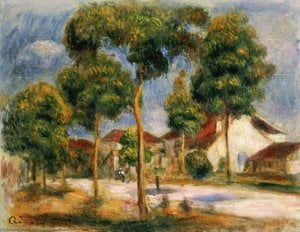
Pierre-Auguste Renoir's *Medlar Trees, Cagnes*, painted in 1908, isn’t merely a depiction of a landscape; it’s an immersion into the heart of Impressionism’s golden age. This oil on canvas transports us to the sun-drenched hillsides of Cagnes-sur-Mer, a charming coastal town near Nice, France – a place that profoundly shaped Renoir's artistic vision in his later years. The painting captures a moment of quiet beauty, a fleeting impression of light and color that embodies the very essence of the Impressionist movement. It’s a scene brimming with warmth, inviting the viewer to step into the dappled shade beneath the medlar trees and lose themselves in the gentle rhythm of Provençal life.
Renoir's masterful brushwork is immediately apparent. He doesn’t strive for photographic realism but instead employs loose, visible strokes—a hallmark of Impressionism—to capture the ephemeral qualities of light and atmosphere. Notice how he uses short, broken color to suggest the texture of bark, the shimmer of leaves in the sunlight, and the hazy distance of the buildings beyond. The composition itself is deceptively simple: a cluster of trees dominates the foreground, framing a glimpse of a building with people strolling beneath them. This deliberate arrangement draws our eye into the scene, creating a sense of depth and inviting us to contemplate the interplay between nature and human activity.
At its core, *Medlar Trees, Cagnes* is a study in light. Renoir was obsessed with capturing the fleeting effects of sunlight on surfaces—the way it dances through foliage, reflects off stone walls, and casts long shadows across the landscape. He achieves this not through meticulous detail but by layering colors and applying paint in rapid, broken strokes. The warm hues – rich greens, ochres, and hints of red – create a vibrant yet harmonious palette that evokes the feeling of a summer afternoon. The artist’s use of *plein air* painting—working directly from nature—is evident in the immediacy and freshness of the colors. He wasn't aiming for perfect representation but rather to convey his subjective experience of the scene, translating it onto canvas with remarkable sensitivity.
Cagnes-sur-Mer held a special significance for Renoir. Seeking respite from the bustling Parisian art world and battling chronic arthritis, he moved to the town in 1907, establishing a studio there that would become his home until his death in 1919. This period marked a significant shift in his artistic focus. He began to paint landscapes with greater frequency, capturing the beauty of the surrounding countryside—olive groves, vineyards, and the azure Mediterranean Sea. *Medlar Trees, Cagnes* is part of a series of paintings he created during these years, reflecting his deep connection to the local environment and his desire to capture its unique character.
Interestingly, Renoir’s later work shows influences beyond pure Impressionism. The vibrant colors and painterly quality of *Medlar Trees, Cagnes* hint at elements of Fauvism—a movement that emphasized bold color and expressive brushwork—while still retaining the core principles of Impressionism. This blending of styles demonstrates Renoir's willingness to experiment and evolve throughout his career, constantly pushing the boundaries of artistic expression.
Renoir’s work stands as a crucial bridge between the Impressionist movement and subsequent developments in modern art. While firmly rooted in the techniques and philosophies of Impressionism—particularly the emphasis on capturing fleeting moments, using broken color, and working *en plein air*—he also incorporated elements from other artistic traditions. His exploration of color, composition, and subject matter paved the way for later artists to further develop these ideas. The painting’s enduring appeal lies in its ability to evoke a sense of nostalgia and tranquility, reminding us of the simple pleasures of life and the beauty of the natural world.
*Medlar Trees, Cagnes* is a testament to Renoir’s mastery of Impressionism and his ability to capture the essence of natural beauty. This painting, along with other works by Renoir, continues to inspire art lovers and artists alike. For those interested in exploring more about Impressionism and Fauvism, visit Fauvism Art Movement on WahooArt.

1841 - 1919 , 法国


 效果预览
效果预览
 切换至版画销售渠道
 分享
分享 分享
分享
 详情
详情 指南
指南

 下载
下载
 相似作品
相似作品 X射线
X射线 幻灯片播放
幻灯片播放 统计数据
统计数据

 展开详情
展开详情