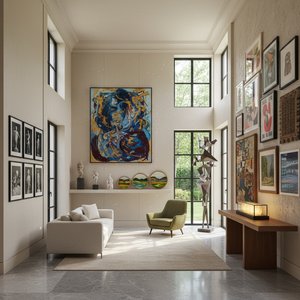
实景预览 AR 试挂 订购此收藏品的纯手工复刻画作 切换至数字图像销售渠道 发送
详情 指南 加入收藏 下载图片 相似作品 X射线 幻灯片播放 统计数据

A Morning Breeze

Petra Bauer (b. 1970) is a Swedish artist & filmmaker exploring feminist theory, immigration, colonialism & social organizing through collaborative projects. See her Venice Biennale work & more!

艺术微喷/版画

博物馆级艺术微喷或帆布版画,制作高效,并提供多种饰面选择。 ( 订购此收藏品的纯手工复刻画作 切换至数字图像销售渠道)

P118B $10
P118H $10
P118W $10
P438Z $10
P508JH $12
P508YH $12
P805H $10
P805Z $10
P919BZ $10
P919G $10
P919XJ $10
P959ZH $10
P968JZ $12
W106C $8
W218G $10
W218JH $8
W218Y $10
W307PJ $10
W316G $10
W316PJ $8
W316Y $10
W398PJ $8
W4111J $10
W500HY $15
W500JH $15
W692G $12
W849H $8
W940BG $15
W953PJ $8

标准尺寸
定制
CM
INCH

您可以从与原作比例一致的预设尺寸中进行选择。

宽度
高度

您可以输入自定义尺寸,以适配特定的画框或空间。如果您选择的尺寸与原图比例不符,我们将对作品进行裁剪,或通过镜像填充/纯色填充边缘的方式来扩展图像。在开始制作之前,我们会向您发送一份数字效果图供您确认。
请注意,屏幕上的预览并不能反映实际的裁剪或扩展效果。只有效果图才能准确展示最终的构图。
虽然我们提供定制尺寸,但为了保持原图比例,我们建议您从预设列表中选择尺寸。

全球配送()仅需 2 周即可送达,无需等待标准流程的 4/5 周。(26 September)

why_choose_icon
全球免运费特快专递服务
why_choose_icon
优质亚麻画布
why_choose_icon
全程运输保险
why_choose_icon
关税退款保证
why_choose_icon
色彩还原度保证
why_choose_icon
100天退货保障(仅限制造缺陷)
why_choose_icon
100% 退款保证
why_choose_icon
多件购买优惠

总计金额

$ 68

reproduction

A Morning Breeze

艺术微喷/版画

复刻品尺寸说明

-

总计金额

$ 68

基本信息

  • Title: A Morning Breeze
  • Notable elements or techniques: Public calls; Group portraits
  • Artist: Petra Bauer
  • Year: 2015
  • Movement: Feminist Art
  • Artistic style: Conceptual & Documentarian
  • Medium: Installation

艺术知识测评

每道题只有一个正确答案。

问题 1:
What is Petra Bauer known for?
问题 2:
The installation ‘A Morning Breeze’ showcases:
问题 3:
What was a significant focus of Bauer’s artistic exploration?
问题 4:
Where was Bauer's first iteration of ‘What Women Want’ presented?
问题 5:
The portraits featured in ‘A Morning Breeze’ represent:

Petra Bauer: A Voice for Feminist Praxis

Petra Bauer (born Stockholm, Sweden in 1970) stands as a compelling figure within contemporary art and filmmaking—a practitioner deeply rooted in feminist theory who consistently champions collaborative artistic endeavors aimed at addressing pressing social issues. Her work isn’t merely aesthetically driven; it's fundamentally engaged with interrogating power dynamics, advocating for marginalized voices, and challenging conventional narratives within the art world itself. Born into a Swedish cultural landscape marked by burgeoning discussions on gender equality, Bauer’s artistic trajectory has been shaped by an unwavering commitment to exploring themes of resistance and solidarity—particularly those experienced by women confronting systemic oppression. Her formative years witnessed the rise of influential feminist thinkers like Judith Butler and Gayatri Chakravorty Spivak, whose conceptual frameworks profoundly impacted her approach to artmaking.

Exploring Collective Identity Through Visual Narrative

Bauer’s artistic practice centers around a profound fascination with collective identity and the struggles faced by marginalized communities—specifically women—to assert their presence as political actors. Unlike many artists of her generation who prioritize individual expression, Bauer deliberately chooses collaborative projects to amplify voices often silenced within mainstream cultural discourse. This methodological decision reflects a core belief that transformative change requires confronting entrenched power structures through shared experiences and collective action. Her films delve into complex social realities, dissecting narratives surrounding immigration, colonialism, and the ongoing pursuit of social justice—subjects she tackles with meticulous research and unwavering ethical considerations.

The Venice Biennale Installation: “A Morning Breeze” – A Dialogue Across Time

Her most notable contribution to the art world arrived at the Venice Biennale in 2015, where Bauer presented her installation "A Morning Breeze." This ambitious project reimagined the legacy of Swedish socialist women’s activism between 1907 and 1920. Utilizing archival materials—magazine reprints featuring posters calling for women to unite and discuss pressing conditions—Bauer invited viewers to contemplate how questions posed in the past resonate with contemporary concerns. The installation wasn't simply a display of historical images; it functioned as an active interrogation of feminist ideas, prompting reflection on the enduring relevance of struggles for emancipation and representation. Collaborating closely with the women’s clubs involved, Bauer ensured that their perspectives were authentically conveyed—a testament to her dedication to honoring voices historically excluded from official histories.

Technique and Style: Black-and-White Portraits as Symbols of Empowerment

The photographic portraits featured in “A Morning Breeze” exemplify Bauer’s stylistic preferences: a deliberate embrace of black-and-white imagery—a technique chosen not for its aesthetic appeal alone, but for its ability to convey solemnity and unwavering focus. The meticulous composition of each portrait captures the subjects' gaze directly, asserting their agency and confronting viewers with an honest portrayal of resilience. Bauer’s artistic vision aligns seamlessly with the broader feminist movement’s commitment to challenging idealized representations and prioritizing unflinching honesty in documenting lived experiences—a stylistic choice that underscores the installation’s core message: recognizing the importance of collective solidarity and celebrating the courage of women striving for self-representation as political beings.

Beyond Reproduction: Engaging With Bauer's Vision

A high-quality reproduction of “A Morning Breeze” offers more than just a visual souvenir; it serves as an invitation to engage with Bauer’s profound artistic inquiry—a reminder that true progress demands confronting uncomfortable truths and honoring the voices of those historically marginalized. By commissioning these portraits from the clubs themselves, Bauer ensured that their narratives were presented authentically—a gesture that speaks volumes about her commitment to upholding feminist principles and advocating for a more inclusive understanding of history. Consider framing your reproduction in a neutral tone to maximize its impact and allow the images’ inherent symbolism to shine through.

艺术家简介

The Cinematic Lens of Resistance: The Art of Petra Bauer

In the contemporary landscape of moving images, few voices resonate with as much profound social urgency as Petra Bauer. Born in Stockholm, Sweden, in 1970, Bauer has cultivated a practice that transcends the boundaries of traditional filmmaking, positioning herself instead at the vital intersection of art, activism, and feminist theory. Her work does not merely observe the world; it actively interrogates the structures of power that shape our reality. To encounter a Bauer film is to enter a space of negotiation, where the aesthetic becomes a tool for political mobilization and where the camera serves as a witness to the struggles of the marginalized.

Bauer’s artistic identity was forged within a Swedish cultural milieu deeply engaged with questions of gender equality and social justice. Her intellectual foundation is built upon the rigorous frameworks of feminist thinkers such as Judith Butler and Gayatri Chakravorty Spivak, whose explorations of performativity and post-coloniality permeate her cinematic language. This academic depth is balanced by a visceral commitment to the collective. Throughout her career, Bauer has eschewed the myth of the solitary genius, frequently employing the plural pronoun "we" to describe her creative process. This reflects her deep-seated belief in collaborative authorship and her role as an initiator of platforms like k.ö.k (Kvinnor könskar kollektivitet), a feminist collective dedicated to the pursuit of solidarity.

A Practice of Solidarity and Social Engagement

The essence of Bauer’s oeuvre lies in its refusal to exist in isolation from the pulse of society. Her methodology is inherently relational; she seeks out existing social and political organizations to create works that reflect on how aesthetics can catalyze change. This dedication to socially engaged art is perhaps most evident in her documentary-style interventions. In projects such as "Film Workers!", she documented the labor struggles of sex workers during a TUC occupation, transforming the screen into a site of visibility for those often pushed to the periphery of political discourse. Similarly, her film "Der Fall Joseph" confronted the harrowing realities of immigrant child mortality in Germany, forcing a confrontation with institutional failures and systemic discrimination.

Bauer’s thematic preoccupations are vast, ranging from the material consequences of the colonial world order to the intimate politics of domesticity. She often revisits and rethinks cinematic histories to find new meanings for contemporary struggles. A notable example is her engagement with the work of Chantal Akerman, specifically the seminal film Jeanne Dielman, 23 Quai du Commerce, 1080 Bruxelles. By revisiting the themes of domestic labor, parenting, and sex work through an Akerman-inspired lens, Bauer explores how the aesthetics of the everyday can be politicized to challenge the globalized structures of the present day.

Legacy and Academic Contribution

Beyond her filmography, Bauer has made significant contributions to the academic and institutional fabric of the art world. Her journey through the Malmö Art Academy and her doctoral research at Konstfack have culminated in a role as a Professor of Moving Image at the Royal Institute of Art in Stockholm. In this capacity, she continues to bridge the gap between rigorous research and experimental practice, focusing on the relationship between art, technology, and materiality. Her work has been celebrated on the most prestigious global stages, including:

  • The 56th Venice Biennale, where her contributions highlighted the potential of film as a political practice.
  • The Moderna Museet in Stockholm, showcasing her ability to weave historical film collectives into contemporary narratives.
  • International exhibitions at institutions such as the Van Abbe Museum, Showroom London, and the Bard College, cementing her status as a vital voice in international contemporary art.

Ultimately, Petra Bauer’s significance lies in her ability to transform the moving image from a medium of passive consumption into a dynamic site of resistance. Her legacy is not found merely in the films she has produced, but in the communities she has helped organize and the critical dialogues she has ignited regarding the very nature of authorship, visibility, and justice in an increasingly complex world.

Petra Bauer

Petra Bauer

1970 - , Sweden

快速概览

  • Artistic Movement Or Style: Feminist art
  • Artists Or Movements Influenced By This Artist: ['Radical Filmmaking']
  • Artists Who Influenced This Artist:
    • Cinema Action
    • London Women's Film Group
  • Date Of Birth: 1970
  • Full Name: Petra Bauer
  • Nationality: Swedish
  • Notable Artworks: ['A Morning Breeze']
  • Place Of Birth: Stockholm, Sweden