
 Oil On CanvasWallArtDivisionist Pointillism
 189919th Century
 46.0 x 55.0 cm
博物馆级艺术微喷或帆布版画,制作高效,并提供多种饰面选择。 ( 购买手绘画作 切换至数字图像销售渠道)





























从与原作比例一致的预设尺寸中进行选择。

您可以输入自定义尺寸,以适配特定的画框或空间。如果您选择的尺寸与原图比例不符,我们将对作品进行裁剪,或通过镜像填充/纯色填充边缘的方式来扩展图像。在开始制作之前,我们会向您发送一份数字效果图供您确认。
请注意,屏幕上的预览并不能反映实际的裁剪或扩展效果。只有效果图才能准确展示最终的构图。
虽然我们提供定制尺寸,但为了保持原图比例,我们建议您从预设列表中选择尺寸。

The Velodrome
复制品尺寸
Paul Signac’s “The Velodrome,” painted in 1899, is more than just a depiction of an outdoor race; it's a vibrant embodiment of the burgeoning modernist movement. This oil on canvas, measuring 46 x 55 cm, pulsates with energy and captures a fleeting moment of exhilaration – the collective gaze of spectators absorbed in the spectacle of a horse race. The painting’s immediate impact stems from Signac’s masterful deployment of Pointillism, a technique he pioneered alongside Georges Seurat, that fundamentally altered the way artists approached color and light.
“The Velodrome” was created during a period of intense artistic experimentation in France. Following the innovations of Impressionism, artists sought new ways to represent reality, moving beyond simply recording visual sensations. Paul Signac, along with Seurat and others, embraced scientific theories of color perception – particularly those championed by Eugène Chevreul – to develop Pointillism. This movement was a reaction against the subjective interpretations of Impressionism, aiming for a more objective and systematic approach to painting. The late 19th century witnessed a growing fascination with science and technology, which undoubtedly influenced this artistic pursuit of quantifiable visual principles.
The subject matter itself – a velodrome, a relatively new sporting venue at the time – reflects the broader cultural shifts occurring in France during the Belle Époque. The rise of spectator sports and mass entertainment provided fertile ground for artists like Signac to explore themes of modernity, progress, and the collective experience.
Beyond its technical brilliance, “The Velodrome” resonates with a powerful emotional charge. The painting isn’t merely a record of an event; it's an evocation of excitement, anticipation, and shared human experience. The tightly packed crowd, the focused attention on the horses, and the vibrant colors all contribute to this sense of energy. Signac skillfully uses color not just for representation but also to evoke feeling – the cool blues and greens suggesting both the vastness of the sky and the intensity of the race, while bursts of yellow and red capture the heat and passion of the moment.
The inclusion of the horse itself is significant. Horses were central to French culture and sport, representing power, speed, and nobility. Their presence elevates “The Velodrome” beyond a simple depiction of a sporting event, transforming it into a symbol of human ambition and our enduring fascination with nature’s forces.
This meticulously crafted reproduction of Paul Signac's "The Velodrome" offers an unparalleled opportunity to experience the brilliance of this pivotal work firsthand. Each hand-painted reproduction faithfully captures the nuances of Signac’s Pointillist technique, allowing you to appreciate the depth and luminosity that only this method can achieve. Whether adorning a gallery wall or enhancing your interior design scheme, this artwork is guaranteed to be a captivating focal point, bringing a touch of modernist elegance and artistic innovation to any space.


1863 - 1935

Master the nuances of Giclée printing with our expert guide. Discover how pigment-based inks and museum-grade substrates create fade-resistant, high-fidelity art reproductions designed for discerning collectors seeking unparalleled quality and longevity.

Explore the scientific brilliance of Seurat and Signac. Discover how Pointillism revolutionized color through optical mixing and light, offering a profound look into the Neo-Impressionist movement for true art connoisseurs and collectors.
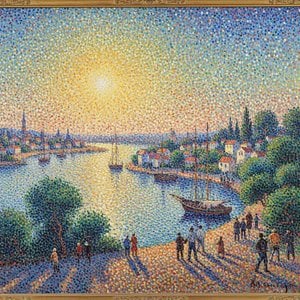
Embark on a sophisticated journey into the luminous world of Neo-Impressionism. Uncover the scientific brilliance of Pointillism, from Georges Seurat’s revolutionary color theory to the mesmerizing magic of the dot. An expert exploration for true art history enthusiasts.


 效果预览
效果预览
 分享
分享 分享
分享
 详情
详情

 下载
下载
 相似作品
相似作品 X射线
X射线 幻灯片播放
幻灯片播放 统计数据
统计数据 展开详情
展开详情









 玻璃选项仅适用于110厘米以下的尺寸。


