免费艺术咨询

x
定制手绘复刻品 定制手绘复刻品购买高清图片 购买高清图片 分享分享
详情详情 加入收藏 加入收藏 下载下载 相似作品相似作品 X射线检测X射线检测 幻灯片播放幻灯片播放

Head

Explore Jackson Pollock's 'Head,' a haunting and distorted portrait showcasing his early exploration of psychological themes and foreshadowing his revolutionary drip technique.

探索杰克逊·波洛克(1912-1956)的革命性艺术,他是抽象表现主义和滴画技法的先驱。 发现他标志性的作品、强烈的情感表达以及对现代艺术的持久影响。#抽象表现主义 #波洛克

艺术微喷/版画

博物馆级艺术微喷或帆布版画,制作高效,并提供多种饰面选择。

P118B $10
P118H $10
P118W $10
P438Z $10
P508JH $12
P508YH $12
P805H $10
P805Z $10
P919BZ $10
P919G $10
P919XJ $10
P959ZH $10
P968JZ $12
W106C $8
W218G $10
W218JH $8
W218Y $10
W307PJ $10
W316G $10
W316PJ $8
W316Y $10
W398PJ $8
W4111J $10
W500HY $15
W500JH $15
W692G $12
W849H $8
W940BG $15
W953PJ $8

Standard
custom
CM
INCH

从与原作比例一致的预设尺寸中进行选择。

宽度
高度

您可以输入自定义尺寸,以适配特定的画框或空间。如果您选择的尺寸与原图比例不符,我们将对作品进行裁剪,或通过镜像填充/纯色填充边缘的方式来扩展图像。在开始制作之前,我们会向您发送一份数字效果图供您确认。
请注意,屏幕上的预览并不能反映实际的裁剪或扩展效果。只有效果图才能准确展示最终的构图。
虽然我们提供定制尺寸,但为了保持原图比例,我们建议您从预设列表中选择尺寸。

全球配送(),仅需 2 周即可送达,无需等待标准流程的 4/5 周。(2 July)

why_choose_icon
全球免费特快专递服务
why_choose_icon
优质亚麻画布
why_choose_icon
全程运输保险
why_choose_icon
关税退款保证
why_choose_icon
色彩还原度保证
why_choose_icon
60天退货政策(仅限制造缺陷)
why_choose_icon
100%退款保证
why_choose_icon
多件购买优惠

总计金额

-

reproduction

Head

艺术微喷/版画

复制品尺寸

-

最终总价

-

作品概览

  • Artist: Jackson Pollock
  • Artistic style: Abstract Expressionism
  • Influences:
    • Surrealism
    • Native American art
  • Notable elements or techniques: Multiple eyes/mouths
  • Title: Head

艺术知识测试

每道题只有一个正确答案。

题目 1:
Based on the image description, what is a defining characteristic of this artwork?
题目 2:
Jackson Pollock is most known for pioneering which artistic technique?
题目 3:
What artistic movement is Jackson Pollock most closely associated with?
题目 4:
According to the provided biography, what was an early influence on Pollock's artistic development?
题目 5:
The artwork 'Orange Head' is described as embodying what quality of Abstract Expressionism?

藏品详情

A Visceral Exploration of the Human Condition

Jackson Pollock’s *Head*, a work shrouded in some mystery due to its lack of definitive dating and detailed documentation, presents a profoundly unsettling yet captivating vision. It is not a portrait in any traditional sense; rather, it's a fragmented, distorted exploration of the human form pushed to the very edge of recognition. The image assaults the viewer with a multiplicity of eyes and mouths, scattered across a seemingly chaotic surface. This isn’t an attempt at realistic representation but a raw, visceral expression of inner turmoil, anxiety, and perhaps even existential dread. The painting feels less like looking *at* a head and more like being immersed *within* a fractured psyche.

Echoes of Surrealism and the Primal Self

To understand *Head*, one must consider Pollock’s artistic journey during its creation – likely in the late 1930s or early 1940s. He was deeply influenced by the Surrealist movement, which sought to unlock the power of the unconscious mind. However, Pollock wasn't simply mimicking Surrealism; he was forging his own path. The multiple eyes and mouths suggest a breakdown of boundaries – a loss of control over perception and expression. This resonates with Jungian psychology, an area Pollock actively explored through therapy during this period. His psychoanalyst encouraged him to express himself through art, leading to drawings that delved into archetypal imagery and the darker recesses of the human psyche. The work also reveals echoes of Picasso’s explorations of distorted figures, particularly his interpretations of mythological creatures like the Minotaur – a symbol of primal instincts and inner conflict. Pollock wasn't merely copying these influences; he was internalizing them and transforming them into something uniquely his own.

The Genesis of a Revolutionary Technique

While *Head* doesn’t yet exhibit Pollock’s signature “drip” technique in its fully developed form, it foreshadows the radical innovations that would soon define his career. The layering of forms, the sense of movement and energy within the composition, hint at the all-over painting style he would later perfect. He was beginning to move away from traditional easel painting and explore more direct, physical ways of applying paint to canvas. This experimentation stemmed from a desire to bypass conscious control and tap into a more authentic, spontaneous form of expression. The very act of creating *Head* – the building up of layers, the distortion of form – can be seen as a precursor to his later action paintings, where the process itself became as important as the final product. It’s a crucial stepping stone in understanding how Pollock moved from representational work towards complete abstraction.

A Powerful Statement for Modern Interiors

For those considering a reproduction of *Head*, it's essential to understand its emotional weight and visual impact. This is not a painting that will blend seamlessly into the background; it demands attention, provokes thought, and sparks conversation. Its dark, unsettling energy can be surprisingly effective in modern interiors, particularly those with minimalist or industrial aesthetics. The fragmented forms and bold composition create a striking focal point, adding depth and complexity to any space. *Head* is more than just an artwork; it’s a statement – a testament to the power of art to confront us with uncomfortable truths about ourselves and the world around us. It's a piece that will resonate with those who appreciate challenging, thought-provoking art and are unafraid to embrace the darker side of human experience.

相似艺术品


艺术家简介

早年生活与创新的萌芽

保罗·杰克逊·波洛克,1912年生于怀俄明州的科迪,从一开始就是一个不安分的灵魂。他的童年充满了频繁的搬迁,因为他的父亲在广阔的美国西部作为土地测量员四处奔波。这种漂泊的生活方式赋予了年轻的波洛克对自然世界的深刻联结以及对多元文化的接触,尤其是在那些测量旅行中与美洲原住民艺术的相遇——这些印象后来微妙地渗透到他后来的艺术视野中。尽管他从未明确模仿土著风格,但早期经历中的原始能量和精神共鸣无疑留下了印记。

波洛克的正规艺术训练始于洛杉矶的手工艺术高中,随后在纽约艺术学生联盟接受了托马斯·哈特·本顿的指导。本顿是区域主义运动的重要人物,强调以美国生活为根基的节奏性构图和叙事主题。虽然波洛克最初吸收了这些教训,但他天生的倾向却偏向于更抽象的探索。他还受到墨西哥壁画画家何塞·克莱门特·奥罗兹科的深刻影响,奥罗兹科对社会斗争的有力描绘深深地触动了他。这些早期的影响奠定了基础,但真正释放波洛克艺术潜能的是新兴的超现实主义世界。

行动绘画的诞生与革命性技法

20世纪30年代,波洛克尝试了各种技巧,寻求替代传统的笔触。他开始倾倒颜料,探索其流动性和不可预测性。然而,大约在1947年左右,他的艺术轨迹发生了根本性的转变。彻底放弃画架,波洛克直接将画布铺在地板上,开始了后来被称为“滴流技法”的创作过程。然后,他开始从上方向画布上滴、泼洒和甩颜料,编排一场艺术家、媒介和表面之间动态的舞蹈。

这不仅仅是涂抹颜料;而是体现了创造行为本身。波洛克的画布成为了身体表达的舞台,捕捉了他姿态的即时性和情感。由此产生的绘画作品以其“整体”构图为特征——缺乏中心焦点,邀请观众将整个表面视为统一的能量场。错综复杂的线条和色彩网络交织在一起,创造出一种既引人入胜又具有挑战性的视觉复杂性。他使用了非常规工具——棍棒、刀子甚至注射器——以不可预测的方式操纵颜料,进一步强调了他创作过程的自发性。

这种创新的方法将波洛克定位为新兴抽象表现主义运动的核心人物,该运动在二战后的纽约市兴起。抽象表现主义优先考虑自发的姿态、大尺度和非代表性图像,反映了更广泛的文化转变,远离传统的艺术惯例。他与同伴艺术家李·克拉斯纳的婚姻也至关重要;她提供了坚定不移的情感支持并积极鼓励他的艺术发展,认识到他作品的突破性本质。

标志性作品与持久遗产

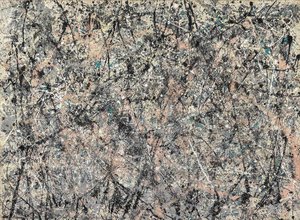
波洛克最著名的作品——例如1950年第1号(薰衣草雾)一:1950年第31号蓝极:1952年第11号汇聚——是他革命性技法的证明。这些绘画不仅仅是图像;它们是表演的记录,蕴含着艺术家的身体存在和情感强度。从这些画布中散发出的动态能量是可触知的,将观众带入一个纯粹抽象的世界。

他的风格超越了单纯的美学;它是一种对过程而非产品的探索。波洛克试图捕捉他在画布上的行动和情感的即时性,拒绝传统的构图和表现概念。他深入研究荣格心理学,在艺术中探索原型和潜意识,寻求挖掘普遍象征和原始能量。

波洛克对艺术史的影响是巨大的。他从根本上改变了艺术家处理绘画的方式,摆脱了基于画架的方法并拥抱了一种更具表演性的方法。他的作品帮助巩固了纽约市作为全球现代艺术中心的地位,将焦点从欧洲主导地位转移开来。他的影响可以在无数后来的艺术家身上看到,包括那些与色彩田绘画和抽象表现主义后期形式相关的艺术家。

尽管最初受到褒贬不一的评论——一些批评家认为他的作品混乱或缺乏技巧——波洛克在他1956年44岁去世后声誉稳步增长。今天,他被普遍认为是20世纪最重要的和最具影响力的艺术家之一,一位敢于挑战惯例并重新定义艺术表达界限的先驱。他创新的技术和富有表现力的风格继续激励和激发人们,确保他在未来世代的持久遗产。

波洛克的关键影响

  • 托马斯·哈特·本顿:早期对波洛克构图和美国主题的影响。
  • 何塞·克莱门特·奥罗兹科:墨西哥壁画画家,激发了波洛克对社会问题的关注和绘画的戏剧性力量。
  • 超现实主义运动:为波洛克的抽象探索提供了灵感,鼓励了他潜意识表达的追求。
  • 李·克拉斯纳:波洛克的妻子,是一位艺术家,也是他坚定不移的支持者和缪斯女神。

波洛克作品中的象征意义

虽然波洛克的绘画是非具象的,但它们并非没有意义。许多人认为他的“滴流”构图代表了原始能量、潜意识和普遍原型。画布上的线条和色彩可以被解释为情感状态、宇宙力量或人类经验的象征。

艺术家简介

  • Artistic Movement Or Style: 抽象表现主义
  • Artists Or Movements Influenced By This Artist:
    • 色域绘画
    • 抽象表现主义
  • Artists Who Influenced This Artist:
    • 何塞·克莱门特·奥罗兹科
    • 安德烈·马松
    • 马克思·恩斯特
    • 托马斯·哈特·本顿
  • Date Of Birth: 1912年1月28日
  • Date Of Death: 1956年8月11日
  • Full Name: 保罗·杰克逊·波洛克
  • Nationality: 美国国籍
  • Notable Artworks (List Of Titles):
    • 《1号,1950(薰衣草雾)》
    • 《一:31号,1950》
    • 《蓝色极点:11号,1952》
  • Place Of Birth (City And Country): 怀俄明州科迪市,美国
探索按主题、风格和特征分类的艺术作品。