博物馆级艺术微喷或帆布版画,制作高效,并提供多种饰面选择。 ( 购买手绘画作 切换至数字图像销售渠道)
从与原作比例一致的预设尺寸中进行选择。

您可以输入自定义尺寸,以适配特定的画框或空间。如果您选择的尺寸与原图比例不符,我们将对作品进行裁剪,或通过镜像填充/纯色填充边缘的方式来扩展图像。在开始制作之前,我们会向您发送一份数字效果图供您确认。
请注意,屏幕上的预览并不能反映实际的裁剪或扩展效果。只有效果图才能准确展示最终的构图。
虽然我们提供定制尺寸,但为了保持原图比例,我们建议您从预设列表中选择尺寸。

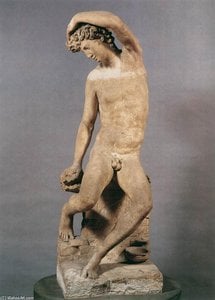
Narcissus
复制品尺寸
In the quiet stillness of Paul Dubois’s 1867 masterpiece, Narcissus, we encounter a moment frozen in time, captured with the breathtaking precision of 19-century French classical realism. The sculpture presents the mythological figure not as a boastful youth, but as a soul lost in the depths of his own reflection. As he draws a heavy, draped cloth across his body, his gaze is cast downward, directed toward an unseen pool, inviting the viewer into a private world of melancholy and profound contemplation. This work transcends mere stone, transforming cold marble into a living, breathing study of human vulnerability and the weight of self-awareness.
The technical mastery displayed in this piece is nothing short of extraordinary. Dubois, a student of the prestigious École Nationale des Beaux-Arts, utilizes his deep understanding of anatomy to create a figure that feels both monumental and incredibly delicate. The interplay of light and shadow—even when viewed through the lens of photography—reveals a sophisticated command over texture. One can almost feel the contrast between the smooth, polished skin of the subject and the voluminous, undulating folds of the drapery that cascade around him. This meticulous carving creates a sense of three-dimensionality that commands attention, making it an ideal centerpiece for any collection seeking to evoke a sense of classical grandeur.
Beyond its physical beauty, Narcissus serves as a poignant exploration of one of mythology's most enduring themes: the duality of self-love and self-destruction. The act of gazing downward symbolizes the inward turn of the spirit, representing both the beauty of introspection and the danger of vanity. For the discerning collector or interior designer, this piece offers more than just aesthetic pleasure; it provides a narrative depth that can anchor a room with intellectual gravity. The sculpture’s ability to evoke emotion—ranging from quiet peace to a haunting sense of loss—makes it a versatile element for sophisticated spaces, whether in a formal gallery setting or a curated private study.
The historical context of the work further enhances its value. Created during a period when French sculptors were revitalizing the classical traditions of Rome, Dubois’s work carries the prestige of the Légion d'honneur and the rigorous training of the Beaux-Arts tradition. To possess a reproduction of such a significant piece is to hold a fragment of art history. It brings into a contemporary interior the timeless elegance of the 19th century, bridging the gap between the ancient myths of antiquity and the modern appreciation for fine craftsmanship and emotional resonance.


1829 - 1905 , France

Explore the profound legacy of marble sculpture, from Classical antiquity to Neoclassical mastery. A definitive guide for elite collectors and designers seeking to integrate the luminous, eternal beauty of stone into sophisticated, high-end architectural spaces.

Embark on a sophisticated journey through the history of classical sculpture. From Ancient Greek mastery to Renaissance bronze, discover the profound beauty and enduring legacy of the world's most iconic sculptural masterpieces.

Master the nuances of three-dimensional art with our expert guide. Explore sculptural history, from Phidias to Neoclassicism, and learn to evaluate materiality, form, and technique like a true connoisseur. Elevate your collection with profound insights into the world of sculpture.

Discover the sublime beauty of marble art through an expert exploration of Renaissance and Neoclassical masterpieces. From the delicate textures of Carpeaux to the grandeur of Sansovino, immerse yourself in a guide to timeless elegance and sculptural perfection.

Transform cherished photos into breathtaking 3D sculptures and marble busts with WahooArt AI. Experience the pinnacle of luxury art commissions, blending cutting-edge technology with classical mastery to create timeless, museum-quality heirlooms for your private collection.


 分享
分享 分享
分享
 详情
详情

 下载
下载
 相似作品
相似作品 幻灯片播放
幻灯片播放 统计数据
统计数据


 展开详情
展开详情






































 玻璃选项仅适用于110厘米以下的尺寸。