Acrylic On CanvasWallArtSurrealist Dreamscapes
 1939Modern
 117.0 x 147.0 cm
购买高分辨率增强版数字图像,其品质远超在线预览。
每一份文件都由我们的内部专家使用先进工具与专业的后期润色技术精心打造。我们确保每一张图像都具备卓越的清晰度、精准的色彩还原度以及细腻的细节表现。
最终文件将在 72 小时内通过电子邮件交付,并针对专业、编辑及印刷用途进行了优化。其品质与顶级设计工作室、出版社和画廊所信赖的标准完全一致。
选择 WahooArt.com,您获得的不仅仅是一张图像——您收到的是经过专业级增强、精雕细琢的数字艺术作品,并享有满意保证。以下是您的订单中自动包含的所有内容:

您的高分辨率数字图像文件将在下单后 72 小时内通过电子邮件发送给您 —— 即可立即使用。

您的艺术品经过专业优化,结合先进的 AI 技术与人工修饰,确保呈现极致的细节、清晰度与色彩准确度。

不小心删除了文件或找不到了?没关系——我们将随时为您免费重发。

即刻拥有您的艺术作品,无需支付任何关税、税费或运费——数字下载始终免税。

我们通过专业工具与色彩管理技术,确保您的数字图像尽可能真实地还原原作色彩。

如果您对所购数字图像不满意,我们将在100天内为您进行修改或提供100%的全额退款——无需任何理由。

不满意?在收到数字文件后的100天内,您可以申请全额退款——无需任何理由。

购买 3 张图片可享 10% 折扣 - 购买 5 张可享 15% 折扣 - 购买 10+ 张可享 20% 折扣。非常适合创意项目、画廊和机构使用。
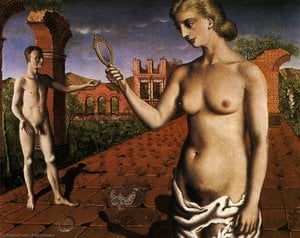
Paul Delvaux’s 1939 painting, “Pygmalion,” is more than just a depiction of a woman interacting with statues; it’s a meticulously crafted exploration of desire, the unsettling beauty of the uncanny, and the enduring power of classical myth. Measuring 117 x 147 cm, this surrealist masterpiece immediately draws the viewer into its enigmatic world, populated by figures rendered in Delvaux's signature style – a precise, almost photographic realism that simultaneously elevates and distorts reality. The scene unfolds within a dimly lit interior, suggesting a studio or perhaps a private chamber, where the woman’s presence is both alluring and profoundly unsettling. Her posture, ambiguous between invitation and restraint, invites speculation about her intentions and the nature of her relationship with the two imposing nude statues flanking her.
“Pygmalion” resonates with a complex layering of symbolism, drawing heavily from classical mythology while simultaneously reflecting the anxieties and uncertainties of the interwar period. The statues themselves represent idealized masculinity – powerful, imposing, and ultimately unattainable. Their nudity is not merely anatomical; it’s symbolic of vulnerability and exposure, mirroring the woman's own potential fragility within this charged scene. The presence of other figures in the background—a man on the left and another on the right—adds to the sense of unease and suggests a voyeuristic element, further complicating the narrative. Delvaux expertly utilizes these elements to evoke a feeling of psychological tension, prompting viewers to confront their own desires and anxieties about beauty, power, and representation.
Created in 1939, “Pygmalion” emerged during a pivotal moment in art history – the height of Surrealism. Following the devastation of World War I and the rise of totalitarian regimes, artists sought to challenge conventional notions of reality and explore the subconscious mind. Delvaux, though often resistant to rigid categorization, embraced the core tenets of Surrealism: dream imagery, irrational juxtapositions, and a fascination with the uncanny. His work reflects this broader movement’s interest in exploring the darker aspects of human psychology and questioning established social norms. The painting's stark realism within a surreal context is particularly characteristic of Delvaux's approach.
“Pygmalion” possesses a haunting beauty that transcends its narrative complexity. It’s a work that lingers in the mind long after viewing, prompting contemplation about the nature of desire, identity, and the relationship between art and reality. This meticulously crafted reproduction captures not only the visual details of Delvaux's original but also the emotional depth and psychological intensity that make it such a significant piece of Surrealist art. Its enduring appeal makes it an ideal addition to any discerning collection or a captivating focal point for interior design, offering a glimpse into the visionary world of Paul Delvaux.


1897 - 1994 , 比利时


 效果预览
效果预览
 切换至版画销售渠道
 分享
分享 分享
分享
 详情
详情

 下载
下载
 相似作品
相似作品 X射线
X射线 幻灯片播放
幻灯片播放 统计数据
统计数据 展开详情
展开详情