
博物馆级艺术微喷或帆布版画,制作高效,并提供多种饰面选择。 ( 订购纯手工绘制画作 切换至数字图像销售渠道)





























您可以从与原作比例一致的预设尺寸中进行选择。

请输入您所需的宽度和高度,以适配您的画框或墙面。由于印刷品只能进行裁剪,无法超出原图尺寸,因此若比例不一致,画面的一部分将会被裁切。在正式印刷之前,我们会为您发送一份数字效果图供您确认。本页面显示的图片并非最终裁剪后的效果——只有效果图才能展示真实的裁剪情况。
untitled (7736)
复刻品尺寸
Paul Cézanne's "Untitled (7736)," a captivating post-impressionist landscape, isn’t merely a depiction of a rural scene; it’s an invitation to contemplate the very essence of perception and representation. Painted around 1895-1900, during a period of intense artistic experimentation for the artist, this work embodies Cézanne's revolutionary approach to capturing reality – not through fleeting impressions like his Impressionist predecessors, but through a deliberate restructuring of form and color. The scene unfolds with a quiet dignity: a cluster of modest houses nestled amongst rolling hills, punctuated by the suggestion of trees and a winding dirt road. Yet, it’s far from a straightforward representation; Cézanne employs a masterful orchestration of planes and angles, subtly distorting familiar forms to convey an underlying sense of spatial depth and volume.
Cézanne’s technique is arguably the most defining element of this painting. He moved decisively away from the optical realism favored by earlier generations, instead focusing on the underlying geometric structure of objects. Notice how he breaks down each house into a series of interlocking rectangular forms – a deliberate simplification that allows him to capture not just *what* something looks like, but *how* it exists in space. This is evident in the way the houses are stacked upon one another, creating an illusion of receding planes and atmospheric perspective. The trees, too, are rendered with a similar geometric precision, their branches and trunks reduced to essential lines and shapes. He wasn’t interested in mimicking nature exactly; he was striving to reveal its fundamental structure, a concept that would profoundly influence the development of Cubism decades later.
While Cézanne's approach is undeniably formalistic, "Untitled (7736)" isn’t devoid of symbolic resonance. The scene evokes a sense of rustic tranquility, suggesting a connection to the land and a celebration of rural life. The presence of figures – individuals engaged in everyday activities near the houses – adds a layer of human interaction to the landscape, grounding it in a tangible reality. The dirt road itself acts as a visual pathway, inviting the viewer into the scene and prompting reflection on journeys, both literal and metaphorical. It’s a quiet tableau that speaks volumes about the simple pleasures and enduring values of rural existence.
Despite its formal rigor, “Untitled (7736)” possesses a remarkable emotional depth. The cloudy sky lends an air of melancholy and introspection to the scene, while the muted palette – dominated by earthy browns, greens, and blues – contributes to a sense of quiet contemplation. Cézanne wasn’t simply recording a visual reality; he was attempting to capture the *feeling* of being in that place at that time. The painting invites us to slow down, to observe with care, and to appreciate the subtle beauty of the natural world. It's a testament to his ability to imbue even the most commonplace subject matter with profound artistic significance. A high-quality reproduction allows one to truly immerse themselves in this evocative atmosphere, bringing a touch of Cézanne’s contemplative vision into any interior space.
"untitled (7736)" 的版权状态 —— 属于公有领域 —— 其版权已过期 —— 取决于艺术家于 1906 年逝世这一事实。
"untitled (7736)" 是 塞尚 Post-Impressionism 时期的代表作,其创作主题涵盖了 impressionism’s fleeting light, provencal rural life”, “geometric form exploration”, “bridge to cubism”, “breaking artistic conventions”。
塞尚 的《untitled (7736)》 的 访问统计 页面展示了公开访问统计数据:包括该作品的每月访问量、与艺术家最受关注作品的对比,以及访客的来源地。

1839 - 1906 , 法国
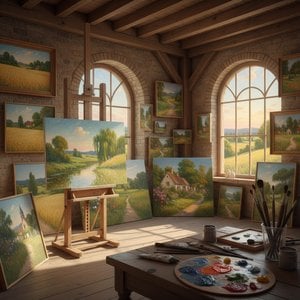
Discover the profound tranquility of rural art through an expert exploration of Impressionist landscapes. From pastoral scenes to textured oil masterpieces, learn how timeless nature-inspired artworks bring enduring elegance and serenity to sophisticated collectors.

 实景预览
实景预览
 分享
分享 分享
分享
 详情
详情 指南
指南

 下载作品
下载作品
 相似作品
相似作品 X射线
X射线 幻灯片播放
幻灯片播放 问答
问答
 统计数据
统计数据
 展开全文
展开全文









 玻璃选项仅适用于110厘米以下的尺寸。


