The Quiet Power of Observation: Paul Cézanne’s “The Old Gardener”
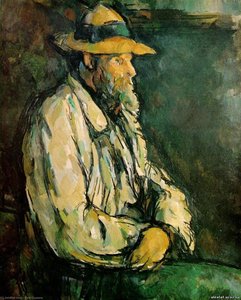
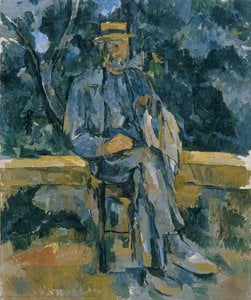
Paul Cézanne's "The Old Gardener," painted in 1906 and now residing within the esteemed E. G. Buhrle Collection in Switzerland, isn’t merely a portrait; it’s a profound meditation on time, memory, and the enduring connection between humanity and the natural world. This oil-on-canvas masterpiece represents a pivotal moment in Cézanne's artistic journey – a bridge between the fleeting impressions of Impressionism and the nascent geometric explorations that would define Cubism. The painting immediately draws the viewer into a scene of serene contemplation: an elderly man, seated comfortably on a weathered wooden chair, occupies the center of the composition, framed by the dappled light filtering through a grove of trees. Cézanne masterfully captures not just the physical likeness of his subject but also a palpable sense of his character – a quiet dignity and a deep-rooted connection to the land. The man’s face, etched with wrinkles that speak of years spent outdoors, is rendered with remarkable sensitivity, hinting at untold stories and a life lived in harmony with nature.
A Revolutionary Approach to Form and Space
Cézanne's genius lies not simply in his ability to depict reality but in how he *represents* it. He abandons the traditional single-point perspective of academic painting, instead employing a complex system of interlocking planes and fragmented forms. The wooden chair, for instance, isn’t rendered as a solid block; rather, it's broken down into a series of overlapping geometric shapes – rectangles, triangles, and curves – that create an illusion of depth and volume. Similarly, the trees in the background aren’t painted as unified masses but are dissected into individual brushstrokes, each contributing to the overall structure of the scene. This technique, characteristic of Cézanne's late style, anticipates the radical innovations of Cubism while retaining a distinctly Impressionistic sensitivity to color and light. The repetitive, exploratory nature of his brushwork—a hallmark of his oeuvre—adds a dynamic quality to the painting, suggesting an ongoing process of observation and interpretation. Notice how he uses short, broken strokes to define the edges of objects, creating a sense of movement and vibrancy within the stillness of the scene.
Symbolism and the Essence of Rural Life
Beyond its formal innovations, “The Old Gardener” is rich in symbolic meaning. The subject himself embodies the wisdom and resilience of age, representing a connection to the rhythms of nature and the simple pleasures of rural life. The hat he wears—a practical garment for shielding from the sun—and the beard that frames his face further reinforce this image of a seasoned outdoorsman. The setting – a quiet garden bathed in sunlight – evokes a sense of tranquility and contentment, suggesting a refuge from the complexities of modern society. The partially visible figure on the right side of the painting adds an element of mystery and context, hinting at a relationship between the old gardener and another individual, perhaps a family member or friend. The inclusion of this secondary figure subtly expands the narrative, inviting the viewer to contemplate the social dynamics within this isolated scene.
Cézanne’s Legacy: A Foundation for Modern Art
Paul Cézanne's influence on subsequent generations of artists is undeniable. Initially met with skepticism and even ridicule by contemporary critics who struggled to comprehend his unconventional approach, he gradually gained recognition as a visionary artist whose work laid the groundwork for Cubism, Fauvism, and other avant-garde movements. Artists like Henri Matisse and Pablo Picasso famously declared that Cézanne “is the father of us all,” acknowledging his profound impact on their artistic development. “The Old Gardener” stands as a testament to this legacy—a powerful example of Cézanne’s ability to transform ordinary subjects into works of enduring beauty and intellectual significance. Today, it continues to inspire artists and viewers alike with its quiet power, its innovative use of form and space, and its poignant portrayal of the human connection to nature. For those seeking a piece that embodies both artistic innovation and timeless elegance, a high-quality reproduction of “The Old Gardener” offers a captivating glimpse into the world of Paul Cézanne. You can explore more of his work on WahooArt.com and delve deeper into the Post-Impressionism art movement at /art/list/?Filter=8EWP5V-Paul-Cezanne-The-Old-Gardener.

 Switch to Print


 效果预览
效果预览
 分享
分享 分享
分享
 详情
详情

 下载
下载
 相似作品
相似作品 X射线
X射线 幻灯片播放
幻灯片播放 Stats
Stats

 展开详情
展开详情