
博物馆级艺术微喷或帆布版画,制作高效,并提供多种饰面选择。 ( 购买手绘画作 切换至数字图像销售渠道)





























从与原作比例一致的预设尺寸中进行选择。

您可以输入自定义尺寸,以适配特定的画框或空间。如果您选择的尺寸与原图比例不符,我们将对作品进行裁剪,或通过镜像填充/纯色填充边缘的方式来扩展图像。在开始制作之前,我们会向您发送一份数字效果图供您确认。
请注意,屏幕上的预览并不能反映实际的裁剪或扩展效果。只有效果图才能准确展示最终的构图。
虽然我们提供定制尺寸,但为了保持原图比例,我们建议您从预设列表中选择尺寸。

Still Life Post, Bottle, Cup and Fruit
复制品尺寸
Paul Cézanne (1839-1906) stands as a pivotal figure in the artistic landscape of late 19th century France – a visionary who irrevocably shifted the paradigm from Impressionism’s fleeting sensations to Cubism's fractured realities. Initially dismissed by critics and overshadowed by his contemporaries, Cézanne persevered with unwavering dedication, transforming into one of the most influential artists of his era and securing a place among the giants of modern art.
Born in Aix-en-Provence to a family enjoying considerable financial stability thanks to his father’s involvement in banking, Cézanne benefited from privileges uncommon for aspiring painters. This afforded him the invaluable freedom to pursue his artistic ambitions without the pressures of immediate commercial considerations – a luxury that allowed him to immerse himself fully in experimentation and exploration.
While Cézanne’s early influences included artists like Jean-François Millet and Gustave Courbet, who championed realism and depicted rural life with meticulous detail, he quickly recognized the limitations of Impressionistic techniques. Impressionists sought to capture the ephemeral effects of light and atmosphere—a pursuit Cézanne deemed insufficient for conveying the essence of his subjects. Instead, he embarked on a radical reformulation of artistic representation, prioritizing geometric forms and simplifying contours.
"Still Life Post, Bottle, Cup and Fruit," painted in 1871, exemplifies this transformative approach. Unlike Impressionistic renderings characterized by hazy brushstrokes and diffused colors, Cézanne’s composition is deliberately constructed with interlocking planes of color and shape—a technique that anticipates the groundbreaking innovations of Cubism.
The painting depicts a humble domestic scene – a table laden with apples, oranges, a bottle, and two cups. Cézanne’s meticulous attention to detail is evident in the rendering of each element, yet these objects are presented not as photographic likenesses but as abstracted forms that engage with underlying spatial relationships.
He employed a technique known as “Analytical Cubism,” where he dissected objects into multiple geometric planes—often cubes and cylinders—that were then rearranged on the canvas to create an illusion of depth. Cézanne’s masterful use of color – predominantly muted hues – contributes to the painting's subdued yet resonant atmosphere, inviting contemplation about permanence and solidity amidst perceived instability.
Beyond its formal innovations, “Still Life Post, Bottle, Cup and Fruit” possesses a profound symbolic significance. The fruit itself represents nourishment and abundance—themes frequently explored in Cézanne’s oeuvre. However, more importantly, the painting speaks to an underlying preoccupation with capturing the fundamental structure of reality – a quest that reflects Cézanne's belief that art should strive for something beyond mere visual imitation.
Cézanne’s legacy extends far beyond his artistic achievements; he fundamentally reshaped how artists perceived and depicted the world. “Still Life Post, Bottle, Cup and Fruit” remains an enduring testament to this revolutionary vision—a captivating piece of art history that continues to inspire collectors and interior designers alike.


1839 - 1906 , 法国
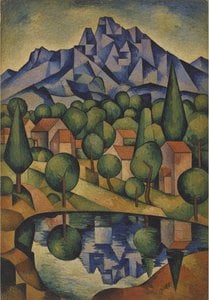
Explore the profound legacy of Paul Cézanne. Discover how his mastery of geometric forms and vibrant color bridged Impressionism and Cubism, offering timeless inspiration for fine art collectors and enthusiasts seeking to understand the foundations of modern art.

Explore the profound spiritual depth of geometric abstraction. From Malevich's Suprematism to modern masters, our expert guide reveals how pure form and color command presence in fine art collections.

Explore the transformative era of Post-Impressionism. Discover how masters like Cézanne and Matisse revolutionized color and form, moving beyond Impressionism to shape modern art history through structural innovation and expressive emotion.


 效果预览
效果预览
 分享
分享 分享
分享
 详情
详情 指南
指南

 下载
下载
 相似作品
相似作品 X射线
X射线 幻灯片播放
幻灯片播放 统计数据
统计数据

 展开详情
展开详情









 玻璃选项仅适用于110厘米以下的尺寸。


