
由我们的艺术家按需定制,为您提供您所选尺寸及画框的布面手工油画。 ( 切换至版画销售渠道 切换至数字图像销售渠道)





























您可以从与原作比例一致的预设尺寸中进行选择。

您可以输入自定义尺寸,以适配特定的画框或空间。如果所选尺寸与原图比例不符,我们将通过裁剪作品或添加手绘元素来扩展画面。数字样稿将在制作开始前发送给您确认。
请注意,屏幕预览无法准确反映实际的裁剪或扩展效果,只有样稿才能真实呈现最终的构图。
虽然我们提供定制尺寸服务,但为了保留原作比例,建议您从预设列表中选择尺寸。

Standing Bather, Drying Her Hair
复刻品尺寸说明
Paul Cézanne's "Standing Bather, Drying Her Hair," painted in 1869, isn’t merely a depiction of a woman tending to her toilette; it’s a profound meditation on the essence of form, light, and the quiet dignity of the human figure. This pivotal work, housed within private collections but frequently studied through reproductions, marks a crucial turning point in Cézanne's artistic journey – a bridge between the fleeting impressions of Impressionism and the nascent geometric explorations that would define his legacy as a precursor to Cubism. The painting immediately draws the viewer into an atmosphere of contemplative stillness, a rare quality within the vibrant world of 19th-century art.
Cézanne’s approach diverges dramatically from the prevalent Impressionist focus on capturing transient moments and atmospheric effects. Instead, he meticulously dissects the subject – a nude female figure – into its fundamental geometric components: planes, lines, and volumes. The bather isn't rendered with delicate brushstrokes aiming to mimic the play of light; rather, she is constructed from carefully considered shapes that suggest solidity and permanence. This deliberate simplification, coupled with Cézanne’s masterful use of color—a restrained palette dominated by pale blues, ochres, and subtle pinks—creates a sense of timelessness, as if the scene exists outside the constraints of time itself.
The painting's luminosity isn't achieved through direct observation of reflected light, but rather through Cézanne’s understanding of color theory. He employs complementary colors—particularly the juxtaposition of blue and orange—to intensify the sense of depth and volume. The warm tones of the bather’s skin contrast subtly with the cooler hues of the background, drawing the eye to her form while simultaneously suggesting a vast, undefined space beyond. Notice how Cézanne uses broken brushstrokes – short, distinct marks that build up to create texture and shape—to capture the subtle variations in light and shadow across the figure's body. This technique contributes significantly to the painting’s tactile quality, inviting the viewer to almost feel the warmth of the sun on her skin.
While Cézanne himself resisted overt interpretations of his work, “Standing Bather” is rich in symbolic potential. The act of drying one's hair—a seemingly mundane domestic activity—is elevated to a moment of profound introspection. The bather’s posture – slightly off-center and imbued with a sense of quiet contemplation – suggests vulnerability and self-awareness. Some art historians have linked the swirling, atmospheric background to turbulent emotions or an internal landscape, mirroring the complexities of the human psyche. The painting's stillness isn't one of peace, but rather a pregnant pause—a moment before action, a reflection on the self.
Cézanne’s “Standing Bather” emerged during a period of significant artistic ferment in France. The Impressionist movement was challenging traditional academic conventions, while Post-Impressionist artists like Cézanne were experimenting with new ways of representing reality. Influenced by the frescoes he encountered during his trip to Italy in 1881—particularly those of Raphael and Giotto—Cézanne sought to rediscover a sense of classical order and harmony within his own work. His exploration of form and color paved the way for the development of Cubism, with artists like Picasso and Braque building upon Cézanne’s groundbreaking approach to spatial representation. The painting stands as a testament to Cézanne's revolutionary vision—a quiet yet powerful assertion of artistic independence that continues to resonate with viewers today.

1839 - 1906 , 法国

Explore the structural genius of Paul Cézanne. Discover how his mastery of geometric form and color bridged Impressionism and Cubism in this definitive guide for art enthusiasts and collectors.
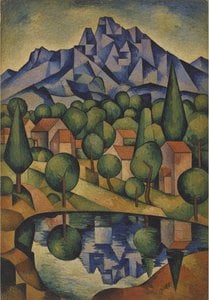
Explore the profound legacy of Paul Cézanne. Discover how his mastery of geometric forms and vibrant color bridged Impressionism and Cubism, offering timeless inspiration for fine art collectors and enthusiasts seeking to understand the foundations of modern art.

Explore the ethereal beauty of Impressionist landscapes. Discover how masters like Monet captured fleeting light through color and texture, and learn to curate these timeless, luminous masterpieces for your home collection.


 实景预览
实景预览
 发送
发送 分享
分享
 详情
详情 指南
指南

 下载图片
下载图片
 相似作品
相似作品 X射线
X射线 幻灯片播放
幻灯片播放 统计数据
统计数据

 阅读全文
阅读全文









 玻璃选项仅适用于110厘米以下的尺寸。


