
博物馆级艺术微喷或帆布版画,制作高效,并提供多种饰面选择。 ( 购买手绘画作 切换至数字图像销售渠道)





























从与原作比例一致的预设尺寸中进行选择。

您可以输入自定义尺寸,以适配特定的画框或空间。如果您选择的尺寸与原图比例不符,我们将对作品进行裁剪,或通过镜像填充/纯色填充边缘的方式来扩展图像。在开始制作之前,我们会向您发送一份数字效果图供您确认。
请注意,屏幕上的预览并不能反映实际的裁剪或扩展效果。只有效果图才能准确展示最终的构图。
虽然我们提供定制尺寸,但为了保持原图比例,我们建议您从预设列表中选择尺寸。

Self-Portrait (Phillips)
复制品尺寸
Paul Cézanne's Self-Portrait, painted between 1878 and 1880 – a remarkably intimate work housed within the esteemed Phillips Collection in Washington D.C. – stands as more than just a likeness; it’s a profound meditation on artistic identity, the passage of time, and the very nature of perception. This pivotal piece, belonging to the burgeoning Post-Impressionist movement, offers a rare glimpse into the mind of an artist grappling with his own place within the evolving landscape of European art. Cézanne wasn't simply documenting his appearance; he was constructing a visual statement, meticulously layering observation and emotion onto the canvas.
Emerging from the shadows of Impressionism – that movement’s focus on fleeting light and ephemeral moments – Cézanne sought to delve deeper, to uncover the underlying structure of reality. He rejected the purely optical approach of his predecessors, instead prioritizing form, line, and color as fundamental building blocks. This is strikingly evident in this self-portrait; the simplified background, a muted yellow wall that provides a warm, almost sculptural counterpoint to the figure, directs all attention towards Cézanne himself. The brushstrokes are deliberately visible, not blended into seamlessness but rather retaining their individual character, creating a textured surface that invites close scrutiny.
Cézanne's technique in this portrait is revolutionary for its time. He employed a method he termed “alla prima,” working directly onto the canvas with minimal underpainting, building up color and form rapidly. This approach resulted in a dynamic interplay of planes and angles – a deliberate departure from the smooth, atmospheric effects favored by Impressionists. Notice how Cézanne breaks down his face into geometric shapes: the bald patch on his head is rendered as a distinct plane, the contours of his nose and mouth are sharply defined, and even the folds of his clothing are constructed with careful attention to volume and perspective. This isn’t merely a realistic depiction; it's an exploration of how we *see* – a translation of three-dimensional space onto a two-dimensional surface.
The use of color is equally significant. Cézanne employs a restrained palette, dominated by earthy tones—ochres, browns, and blues—that lend the portrait a sense of quiet dignity. However, within this muted range, he skillfully utilizes subtle shifts in hue to create depth and volume. The warm yellows of the background contrast with the cooler tones of the figure’s skin, drawing the eye inward and emphasizing his presence. He was particularly interested in capturing the effects of light on color, a concept that would profoundly influence later artists like Matisse and Picasso.
The direct gaze of Cézanne’s self-portrait is remarkably arresting. He meets the viewer with an expression of quiet intensity – a mixture of seriousness and introspection. There's a hint of melancholy in his eyes, perhaps reflecting the challenges he faced as an artist during a period of critical rejection. Yet, there’s also a sense of resilience, a determination to pursue his artistic vision despite the odds. The portrait isn’t simply about presenting a likeness; it’s about revealing something of Cézanne's inner world – his thoughts, his struggles, and his unwavering commitment to art.
Considering the context of Post-Impressionism, this self-portrait represents a pivotal moment in artistic history. Cézanne was laying the groundwork for modern art, challenging traditional notions of representation and paving the way for abstraction. His work continues to resonate with viewers today because it speaks to universal themes of identity, perception, and the human condition. A high-quality reproduction of this masterpiece offers a tangible connection to one of the most influential artists of all time – an opportunity to bring a touch of timeless elegance and intellectual depth into your home or office.
WahooArt.com is proud to offer meticulously crafted, hand-painted reproductions of Paul Cézanne’s Self-Portrait. Our artisans employ traditional oil painting techniques and archival-quality materials to faithfully recreate the nuances of this iconic work. Each reproduction captures not only the visual details but also the emotional depth and artistic intent of the original. Whether you are an art enthusiast, a collector, or simply seeking a stunning piece of décor, our reproductions provide a beautiful and authentic way to experience the genius of Paul Cézanne.

1839 - 1906 , 法国

Master the nuances of Impressionism vs. Post-Impressionism with our expert guide. Explore the revolutionary shift from Monet’s fleeting light to Van Gogh’s emotional depth. Discover how these iconic movements continue to inspire fine art collectors and modern interiors today.

Explore the vibrant evolution of Post-Impressionism. From Seurat's revolutionary Pointillism to the emotional depth of masters, discover how this movement redefined modern art history through color, structure, and unparalleled creative expression.

Explore the transformative era of Post-Impressionism. Discover how masters like Cézanne and Matisse revolutionized color and form, moving beyond Impressionism to shape modern art history through structural innovation and expressive emotion.
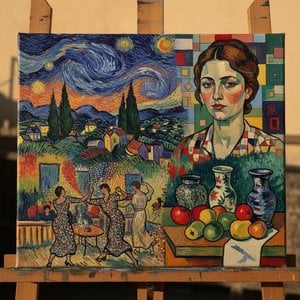
Unveil the profound revolution of Post-Impressionism. Explore how masters like Van Gogh and Cézanne utilized bold colors and emotional depth to transcend mere representation, laying the foundation for modern art. A sophisticated journey through history's most emotive brushstrokes.

Explore the profound legacy of Paul Cézanne. Discover how his mastery of geometric forms and vibrant color bridged Impressionism and Cubism, offering timeless inspiration for fine art collectors and enthusiasts seeking to understand the foundations of modern art.


 效果预览
效果预览
 分享
分享 分享
分享
 详情
详情 指南
指南

 下载
下载
 相似作品
相似作品 X射线
X射线 幻灯片播放
幻灯片播放 统计数据
统计数据

 展开详情
展开详情









 玻璃选项仅适用于110厘米以下的尺寸。


