
 Oil On CanvasWallArtPost-Impressionism
 187219th Century
 53.0 x 40.0 cm
博物馆级艺术微喷或帆布版画,制作高效,并提供多种饰面选择。 ( 购买手绘画作 切换至数字图像销售渠道)





























从与原作比例一致的预设尺寸中进行选择。

您可以输入自定义尺寸,以适配特定的画框或空间。如果您选择的尺寸与原图比例不符,我们将对作品进行裁剪,或通过镜像填充/纯色填充边缘的方式来扩展图像。在开始制作之前,我们会向您发送一份数字效果图供您确认。
请注意,屏幕上的预览并不能反映实际的裁剪或扩展效果。只有效果图才能准确展示最终的构图。
虽然我们提供定制尺寸,但为了保持原图比例,我们建议您从预设列表中选择尺寸。

Self-Portrait in a Casquette, Ca E
复制品尺寸
In the quiet intensity of Self-Portrait in a Casquette, Ca E, we encounter more than just a likeness; we meet the very moment when the fleeting light of Impressionism began to solidify into the structural permanence of Post-Impressionism. Created around 1872, this intimate oil on canvas serves as a profound window into the psyche of Paul Cézanne. The artist presents himself with a serious, contemplative expression, his eyes meeting the viewer with a weight that suggests a man deeply engaged in the labor of seeing. Clad in a dark jacket and topped with a distinctive casquette, he holds a book—a subtle nod to the intellectual rigor and the deep literary influences that fueled his revolutionary approach to the canvas.
The composition is masterfully balanced, utilizing a muted backdrop featuring a window that provides a delicate sense of depth without the need for traditional, vanishing-point perspective. This deliberate choice reflects Cézanne’s growing departure from the purely optical experiments of his contemporaries. Instead of chasing the ephemeral shimmer of sunlight, he sought to capture the essence of form. The presence of the window acts as a threshold between the internal world of the artist and the external reality he seeks to distill, creating a sense of quiet solitude that is both haunting and deeply personal.
To observe this work is to witness the birth of a new pictorial language. While many of his peers were focused on dissolving outlines into diffused light, Cézanne utilized bold, assertive brushstrokes to build texture and solidity. He employs a technique of carefully placed planes of color that create an illusion of volume and weight. This method—often referred to as color modulation—allows the artist to construct space through tonal shifts rather than mere line work. The painting possesses a certain flatness that is paradoxically full of substance, a characteristic that would later become the cornerstone of Cubism.
For the discerning collector or interior designer, this piece offers a sophisticated interplay of texture and tone. The dark, heavy tones of the jacket contrast beautifully with the more subtle, atmospheric qualities of the background, making it a versatile centerpiece for a curated space. It does not merely decorate a wall; it anchors a room with its gravity and historical significance. The tactile quality of the brushwork, even when rendered in a high-quality reproduction, invites the eye to linger on the structural integrity of the subject, offering a sense of permanence that is rare in much of the era's more transient art.
The historical weight of this portrait cannot be overstated. As a bridge between the 19th and 20th centuries, it carries the DNA of modern art history. Picasso famously referred to Cézanne as "the father of us all," and in this early work, one can see the seeds of that greatness. The painting embodies a rejection of naturalistic illusion in favor of an inner truth—a pursuit of the underlying structure of the world. It is a piece that speaks to the courage of innovation and the beauty of intellectual depth.
Integrating such a masterpiece into a contemporary collection provides more than just aesthetic pleasure; it offers a conversation starter about the evolution of human perception. Whether placed in a minimalist modern study or a classic, richly textured library, Self-Portrait in a Casquette, Ca E brings with it an aura of dignity and profound introspection. It is an invitation to look closer, to find the structure beneath the surface, and to appreciate the enduring power of a vision that refused to settle for the mere superficiality of light.

1839 - 1906 , 法国

Explore the transformative era of Post-Impressionism. Discover how masters like Cézanne and Matisse revolutionized color and form, moving beyond Impressionism to shape modern art history through structural innovation and expressive emotion.

Master the nuances of Impressionism vs. Post-Impressionism with our expert guide. Explore the revolutionary shift from Monet’s fleeting light to Van Gogh’s emotional depth. Discover how these iconic movements continue to inspire fine art collectors and modern interiors today.
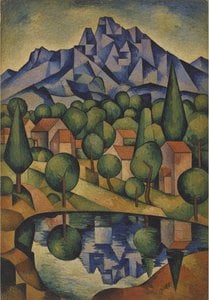
Explore the profound legacy of Paul Cézanne. Discover how his mastery of geometric forms and vibrant color bridged Impressionism and Cubism, offering timeless inspiration for fine art collectors and enthusiasts seeking to understand the foundations of modern art.

Unveil the profound revolution of Post-Impressionism. Explore how masters like Van Gogh and Cézanne utilized bold colors and emotional depth to transcend mere representation, laying the foundation for modern art. A sophisticated journey through history's most emotive brushstrokes.

Explore the vibrant evolution of Post-Impressionism. From Seurat's revolutionary Pointillism to the emotional depth of masters, discover how this movement redefined modern art history through color, structure, and unparalleled creative expression.


 效果预览
效果预览
 分享
分享 分享
分享
 详情
详情 指南
指南

 下载
下载
 相似作品
相似作品 X射线
X射线 幻灯片播放
幻灯片播放 统计数据
统计数据 展开详情
展开详情









 玻璃选项仅适用于110厘米以下的尺寸。


