Paul Cézanne’s Introspective Self-Portrait: A Bridge Between Worlds
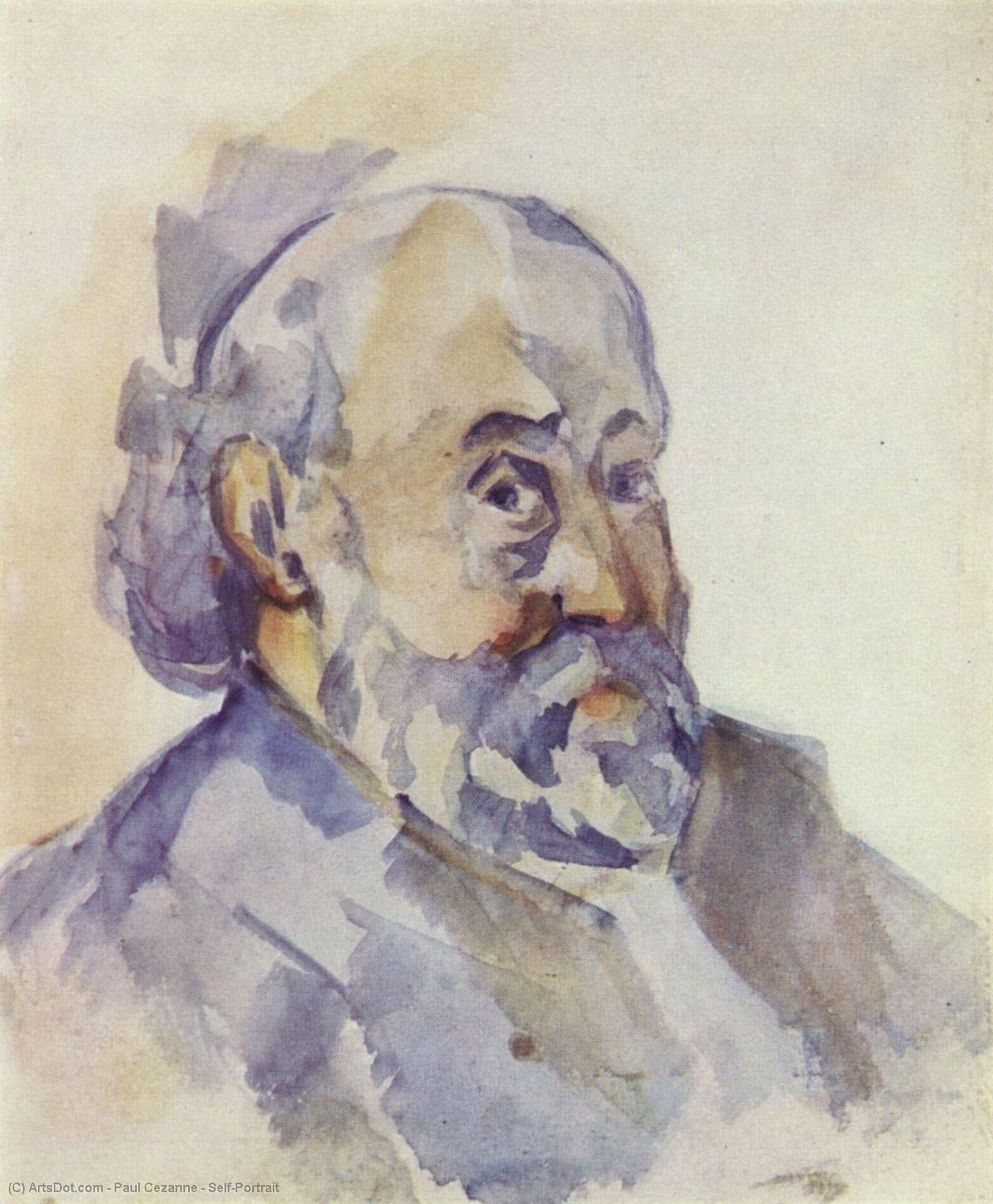
Paul Cézanne's 1896 “Self-Portrait,” rendered in delicate watercolor, isn’t merely a depiction of an aging artist; it’s a profound meditation on the nature of observation, the weight of experience, and the very foundations of artistic representation. This intimate work, measuring just 26 x 22 centimeters, offers a rare glimpse into Cézanne's intensely private world – a world he meticulously translated onto paper with a revolutionary approach to color, form, and perspective that would irrevocably alter the course of modern art.
The painting immediately draws the eye to Cézanne’s face, rendered with remarkable detail despite the slightly blurred background. The predominant blue palette, punctuated by subtle greens and purples, evokes a sense of age and quiet contemplation. These muted tones aren't applied in a conventional manner; instead, they build up through layered brushstrokes – a technique characteristic of Cézanne’s evolving style. Notice how he doesn’t blend colors smoothly but rather allows them to retain their individual character, creating a textured surface that seems to vibrate with energy. The long, flowing white beard, extending almost to his chest, is not simply an accessory; it's a symbol of wisdom and the passage of time, anchoring the portrait in a narrative of lived experience.
A Study in Intensity and Exploration
Cézanne’s self-portrait exudes an undeniable intensity. His eyes, wide open and direct, seem to pierce through the canvas, inviting the viewer into his inner world. This isn't a flattering portrait; it’s brutally honest, revealing the lines of age and the subtle imperfections of a life fully lived. The repetitive, exploratory brushstrokes – a hallmark of Cézanne’s style – are particularly evident here. He wasn’t interested in creating a photographic likeness but rather in capturing the *essence* of his subject, dissecting it into its fundamental geometric forms. These building blocks of color and shape aren't arranged according to traditional rules of perspective; instead, they exist in a dynamic equilibrium, suggesting an ongoing process of observation and reinterpretation.
The Evolution of a Visionary
Cézanne’s artistic journey was one of radical transformation. Initially influenced by Romanticism and Realism, he gradually moved away from representational accuracy towards a more abstract approach. His early works reflected the meticulous detail and atmospheric effects of Impressionism, but Cézanne sought to go beyond mere visual impressions. He became fascinated with the underlying structure of objects – their essential forms and spatial relationships. This pursuit led him to break free from the constraints of academic art, rejecting conventional perspective and embracing a more subjective and expressive style. The “Self-Portrait” is a prime example of this evolution, demonstrating his growing confidence in conveying not just what he *saw* but also how he *felt* about what he saw.
Recognition and Legacy: A Father of Modern Art
Initially met with skepticism and even ridicule, Cézanne’s innovative approach was gradually recognized by fellow artists like Camille Pissarro and the influential art dealer Ambroise Vollard. The first solo exhibition of his work in Vollard's Paris gallery in 1895 proved to be a turning point, bringing Cézanne’s vision to a wider audience. Crucially, figures like Henri Matisse and Pablo Picasso later acknowledged Cézanne as “the father of us all,” recognizing his profound influence on their own artistic development. His emphasis on form, color, and the exploration of spatial relationships laid the groundwork for Cubism and other avant-garde movements that would shape the 20th century.
A Timeless Reflection
Cézanne’s “Self-Portrait” remains a captivating work of art, offering a poignant glimpse into the artist's introspective nature and his revolutionary approach to representation. It stands as a testament to his enduring legacy – a bridge between the past and the future of art. For those seeking to delve deeper into Cézanne’s world, WahooArt offers meticulously crafted reproductions that capture the essence of this iconic painting, allowing you to experience its beauty and complexity firsthand. Explore more of Cézanne's masterpieces at WahooArt.com, and discover the vibrant world of Paul Gauguin with Paul Gauguin: Landscape with Cows in an Orchard or consider a stunning reproduction of Roger Eliot Fry’s “Self Portrait (copy after Paul Cézanne)” available at WahooArt.com.



 效果预览
效果预览
 购买手绘画作
 分享
分享 分享
分享
 详情
详情

 下载
下载
 相似作品
相似作品 X射线
X射线 幻灯片播放
幻灯片播放


 展开详情
展开详情






































 玻璃选项仅适用于110厘米以下的尺寸。