
博物馆级艺术微喷或帆布版画,制作高效,并提供多种饰面选择。 ( 订购此收藏品的纯手工复刻画作 切换至数字图像销售渠道)





























您可以从与原作比例一致的预设尺寸中进行选择。

您可以输入自定义尺寸,以适配特定的画框或空间。如果您选择的尺寸与原图比例不符,我们将对作品进行裁剪,或通过镜像填充/纯色填充边缘的方式来扩展图像。在开始制作之前,我们会向您发送一份数字效果图供您确认。
请注意,屏幕上的预览并不能反映实际的裁剪或扩展效果。只有效果图才能准确展示最终的构图。
虽然我们提供定制尺寸,但为了保持原图比例,我们建议您从预设列表中选择尺寸。

Mont Sainte-Victoire
复刻品尺寸说明
Paul Cézanne's "Mont Sainte-Victoire" is more than just a landscape painting; it’s a pivotal work in the transition from Impressionism to Cubism, showcasing Cézanne's revolutionary approach to form and perspective. Created in 1906, this piece exemplifies his lifelong fascination with the mountain near Aix-en-Provence, France, which served as a constant subject throughout his career, particularly from the 1880s until his death.
The artwork depicts Mont Sainte-Victoire under a cloudy sky. Cézanne abandons traditional perspective techniques—like linear perspective to create depth—instead emphasizing the painted surface by bringing foreground, middle ground, and background onto a single plane. This creates a unique sense of spatial ambiguity that challenges conventional representation. The style leans towards Post-Impressionism, characterized by visible brushstrokes and an expressive use of color aimed at capturing atmosphere and light rather than precise detail. It’s not about photographic accuracy but conveying the emotional impact of the scene.
Cézanne's technique is as significant as his subject matter. He utilizes a quasi-abstract style, indicating form and space through the juxtaposition of small, colored patches of paint laid side by side. This impasto technique—where paint is applied thickly—creates a textured surface that adds depth and visual interest. Lines are used expressively to define shapes and contours, particularly in the mountain peaks and tree branches. The cool color palette – predominantly blues, greens, and browns – contributes to a serene yet slightly melancholic mood. Cézanne’s layering of oil paints builds up texture and color, creating a dynamic surface that invites close inspection.
“Mont Sainte-Victoire” was painted in the final year of Cézanne's life, a period when he was refining his distinctive style. His rejection of traditional perspective and emphasis on geometric forms profoundly influenced subsequent artistic movements, most notably Cubism. Artists like Pablo Picasso and Henri Matisse acknowledged Cézanne as a foundational figure, recognizing him as "the father of us all." This painting exemplifies Cézanne’s exploration of how to represent three-dimensional objects on a two-dimensional surface, paving the way for new approaches to pictorial representation.
Beyond its artistic significance, "Mont Sainte-Victoire" evokes powerful emotions. The vastness of the landscape inspires feelings of awe and tranquility. The diffused lighting and lack of sharp definition create a sense of solitude or contemplation, inviting viewers to reflect on their place within the natural world. Symbolically, the mountain represents permanence and stability amidst the ever-changing atmosphere, offering a timeless image of nature's enduring power.

1839 - 1906 , 法国

Explore the transformative era of Post-Impressionism. Discover how masters like Cézanne and Matisse revolutionized color and form, moving beyond Impressionism to shape modern art history through structural innovation and expressive emotion.

探索印象派与后印象派的艺术革命。本文深度解析莫内、梵高、塞尚等大师如何通过光影与色彩重塑现代美学。作为全球领先的艺术品交易平台,WahooArt为您呈现博物馆级的纯手工油画复刻,以精湛技艺捕捉名画神韵,为您的私人收藏与高端空间装饰注入永恒的艺术灵魂。
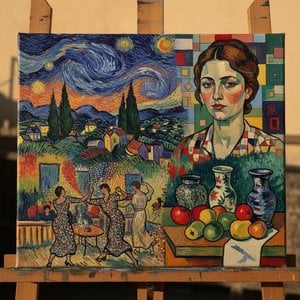
Unveil the profound revolution of Post-Impressionism. Explore how masters like Van Gogh and Cézanne utilized bold colors and emotional depth to transcend mere representation, laying the foundation for modern art. A sophisticated journey through history's most emotive brushstrokes.

Explore the vibrant evolution of Post-Impressionism. From Seurat's revolutionary Pointillism to the emotional depth of masters, discover how this movement redefined modern art history through color, structure, and unparalleled creative expression.
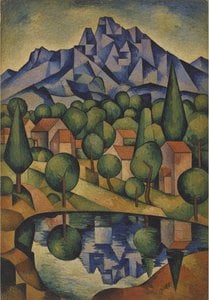
Explore the profound legacy of Paul Cézanne. Discover how his mastery of geometric forms and vibrant color bridged Impressionism and Cubism, offering timeless inspiration for fine art collectors and enthusiasts seeking to understand the foundations of modern art.


 实景预览
实景预览
 发送
发送 分享
分享
 详情
详情 指南
指南

 下载图片
下载图片
 相似作品
相似作品 X射线
X射线 幻灯片播放
幻灯片播放 统计数据
统计数据


 阅读全文
阅读全文









 玻璃选项仅适用于110厘米以下的尺寸。


