
由我们的艺术家按需定制,为您提供您所选尺寸及画框的布面手工油画。 ( 切换至版画销售渠道 切换至数字图像销售渠道)





























从与原作比例一致的预设尺寸中进行选择。

您可以输入自定义尺寸,以适配特定的画框或空间。如果所选尺寸与原图比例不符,我们将通过裁剪作品或添加手绘元素来扩展画面。数字样稿将在制作开始前发送给您确认。
请注意,屏幕预览无法准确反映实际的裁剪或扩展效果,只有样稿才能真实呈现最终的构图。
虽然我们提供定制尺寸服务,但为了保留原作比例,建议您从预设列表中选择尺寸。

Man with Crossed Arms
复制品尺寸
Paul Cézanne's "Man with Crossed Arms," painted circa 1899, isn’t merely a portrait; it’s a carefully constructed meditation on introspection and the complexities of human emotion. This remarkable work, currently housed within the Solomon R. Guggenheim Museum in New York City, stands as a pivotal bridge between the fleeting impressions of Impressionism and the nascent explorations of Cubism that would soon reshape modern art. Cézanne, already a figure grappling with established artistic conventions, sought to move beyond simply *seeing* the world; he aimed to capture its underlying structure, its essence—a pursuit evident in every deliberate brushstroke and considered color choice.
The subject himself remains deliberately ambiguous, shrouded in a muted palette of browns, grays, and blues that evoke a sense of timelessness. The man’s face, rendered with sharp, geometric lines – a hallmark of Cézanne's evolving style – is framed by a dark coat and a simple chair, both defined with equally precise forms. These shapes aren’t merely decorative; they represent the fundamental building blocks of his composition, echoing the principles he was developing to dismantle traditional perspective. The background, deliberately indistinct and receding into darkness, serves not as a distraction but as an amplifier for the figure's presence, drawing our attention entirely to this solitary individual.
Cézanne’s technique is immediately striking. He employs a visible impasto – thick layers of oil paint applied directly to the canvas – creating a tactile surface that invites close examination. The brushstrokes are not blended smoothly, as in many Impressionist works; instead, they retain their individual character, contributing to a sense of ruggedness and solidity. This deliberate roughness contrasts with the refined geometry of the figure’s features, suggesting an internal tension between outward appearance and hidden depths. The color choices are equally expressive, moving away from photographic realism towards a more symbolic use of hue. The muted tones contribute to the overall mood of melancholy and contemplation, while subtle shifts in value create a dynamic interplay of light and shadow that defines the man’s face and form.
The most arresting element of the portrait is undoubtedly the man's crossed arms. While often interpreted as a sign of defensiveness or resistance, Cézanne himself resisted definitive explanations for his work. However, considering the context of the late 19th century – a period marked by social unrest and shifting societal norms – it’s plausible that these crossed arms represent a guarded posture, a retreat from external pressures. More profoundly, they can be seen as a gesture of inward reflection—a deliberate turning away from the world to confront one's own thoughts and feelings. The man’s gaze is direct and unwavering, suggesting an intensity of emotion beneath his reserved exterior. This combination of restraint and vulnerability creates a powerful emotional resonance that continues to captivate viewers today.
“Man with Crossed Arms” isn't simply a portrait; it’s a foundational work in Cézanne’s evolution towards Cubism. His exploration of multiple viewpoints, his fragmentation of form, and his emphasis on the underlying structure of objects paved the way for artists like Picasso and Braque. Cézanne’s influence extends far beyond the confines of this single painting, demonstrating his profound impact on the trajectory of modern art. Reproductions of this work offer a unique opportunity to appreciate the artist's revolutionary vision and its enduring relevance in our understanding of human emotion and artistic expression.

1839 - 1906 , 法国

Explore the transformative era of Post-Impressionism. Discover how masters like Cézanne and Matisse revolutionized color and form, moving beyond Impressionism to shape modern art history through structural innovation and expressive emotion.

Master the nuances of Impressionism vs. Post-Impressionism with our expert guide. Explore the revolutionary shift from Monet’s fleeting light to Van Gogh’s emotional depth. Discover how these iconic movements continue to inspire fine art collectors and modern interiors today.
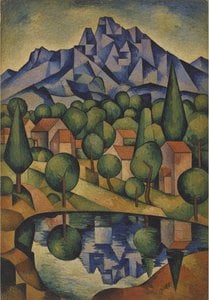
Explore the profound legacy of Paul Cézanne. Discover how his mastery of geometric forms and vibrant color bridged Impressionism and Cubism, offering timeless inspiration for fine art collectors and enthusiasts seeking to understand the foundations of modern art.

Explore the vibrant evolution of Post-Impressionism. From Seurat's revolutionary Pointillism to the emotional depth of masters, discover how this movement redefined modern art history through color, structure, and unparalleled creative expression.


 效果预览
效果预览
 分享
分享 分享
分享
 详情
详情

 下载
下载
 相似作品
相似作品 X射线
X射线 幻灯片播放
幻灯片播放 统计数据
统计数据

 展开详情
展开详情









 玻璃选项仅适用于110厘米以下的尺寸。


