
 Oil On CanvasWallArtPost-Impressionism
 187819th Century
 38.0 x 46.0 cm
博物馆级艺术微喷或帆布版画,制作高效,并提供多种饰面选择。 ( 订购此收藏品的纯手工复刻画作 切换至数字图像销售渠道)





























您可以从与原作比例一致的预设尺寸中进行选择。

请输入您所需的宽度和高度,以适配您的画框或墙面。由于印刷品只能进行裁剪,无法超出原图尺寸,因此若比例不一致,画面的一部分将会被裁切。在正式印刷之前,我们会为您发送一份数字效果图供您确认。本页面显示的图片并非最终裁剪后的效果——只有效果图才能展示真实的裁剪情况。
Four Bathers
复刻品尺寸说明
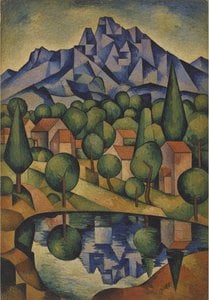
Paul Cézanne's "Four Bathers," painted in 1878, isn’t merely a depiction of nude figures enjoying the sun; it’s a pivotal moment in art history—a deliberate dismantling of established conventions and a bold assertion of a new visual language. This oil on canvas, measuring a modest 38 x 46 cm, embodies Cézanne's revolutionary approach to capturing the essence of nature and human connection, marking a crucial transition from the fleeting impressions of Impressionism towards the structured explorations of Cubism. The painting invites us into a world where form and color are not simply observed but actively constructed by the artist’s hand, revealing a profound shift in how we perceive and represent reality.
Cézanne's artistic journey began with an initial flirtation with Impressionist techniques – capturing the ephemeral effects of light and atmosphere. However, he quickly recognized the limitations of this approach, feeling that it lacked the underlying structure necessary to convey a sense of permanence and solidity. “Four Bathers” represents his decisive move away from mere representation towards a more conceptual understanding of form. The figures aren’t rendered with photographic accuracy; instead, they are fragmented into geometric planes of color, suggesting volume and mass through their arrangement within the composition. Notice how Cézanne uses overlapping forms to create depth—the bodies seem to emerge from and recede into the surrounding landscape, blurring the boundaries between subject and environment.
The painting’s composition is remarkably deliberate. Cézanne employs a technique he termed “alla prima,” working directly on the canvas with loose, expressive brushstrokes—a stark contrast to the meticulous layering of Impressionist paint. These strokes aren't blended; they retain their individual character, creating a textured surface that vibrates with energy. The figures are positioned at varying angles, some partially obscured by foliage, others emerging from the shadows. This dynamic arrangement creates a sense of movement and spontaneity, as if capturing a fleeting moment in time. Crucially, Cézanne isn’t interested in depicting a specific scene; he's exploring the fundamental building blocks of form—lines, planes, and volumes—that constitute the world around us.
The color palette is equally significant. Cézanne utilizes muted earth tones – ochres, browns, greens – to create a harmonious yet subtly unsettling atmosphere. He avoids bright, saturated hues, favoring instead subtle gradations of color that suggest light and shadow. The use of complementary colors—such as the blues and oranges—creates visual tension and adds depth to the composition. It’s important to note that Cézanne was deeply interested in the scientific study of color, believing that it could be used to create a more accurate representation of reality than traditional methods allowed.
“Four Bathers” emerged during a period of intense artistic ferment. The Impressionist movement, with its focus on capturing fleeting moments and atmospheric effects, was beginning to face criticism for its lack of structure and permanence. Cézanne’s work represented a direct response to this critique—a deliberate attempt to reintroduce order and form into the art world. Initially, his paintings were met with incomprehension and ridicule by contemporary critics who found them unsettling and unconventional. However, figures like Camille Pissarro and Ambroise Vollard recognized Cézanne's genius early on, championing his work and providing him with crucial support.
Vollard’s decision to organize the first solo exhibition of Cézanne’s work in 1895 proved transformative. This event brought Cézanne’s art to a wider audience and helped to establish his reputation as a major innovator. Remarkably, artists like Henri Matisse and Pablo Picasso later acknowledged Cézanne's profound influence on their own work, famously declaring him “the father of us all.” His emphasis on geometric form and the exploration of underlying structure paved the way for the development of Cubism—a revolutionary movement that shattered traditional notions of perspective and representation.
“Four Bathers” stands as a testament to Cézanne’s pioneering spirit and his enduring legacy. It's more than just a beautiful painting; it’s a foundational work in the history of modern art, bridging the gap between Impressionism and Cubism. Its influence can be seen in countless works by artists who followed in his footsteps—from Matisse to Picasso to Braque. Today, the painting is celebrated not only for its artistic merit but also for its historical significance as a pivotal moment in the evolution of Western art. It reminds us that art isn't simply about imitating reality; it’s about interpreting and transforming it according to the artist’s vision.
Experience the beauty of handmade oil painting reproductions at WahooArt.com.
塞尚 的《Four Bathers》 的 相似作品 页面展示了相关艺术作品。
塞尚 的《Four Bathers》 是一幅尺寸为 38 x 46 cm 的 Landscape 作品。
塞尚 的《Four Bathers》 的亮度记录为 shadow,亮度值为 Soft Shadow。

1839 - 1906 , 法国

Unveil the profound revolution of Post-Impressionism. Explore how masters like Van Gogh and Cézanne utilized bold colors and emotional depth to transcend mere representation, laying the foundation for modern art. A sophisticated journey through history's most emotive brushstrokes.
Explore the profound legacy of Paul Cézanne. Discover how his mastery of geometric forms and vibrant color bridged Impressionism and Cubism, offering timeless inspiration for fine art collectors and enthusiasts seeking to understand the foundations of modern art.

探索印象派与后印象派的艺术革命。本文深度解析莫内、梵高、塞尚等大师如何通过光影与色彩重塑现代美学。作为全球领先的艺术品交易平台,WahooArt为您呈现博物馆级的纯手工油画复刻,以精湛技艺捕捉名画神韵,为您的私人收藏与高端空间装饰注入永恒的艺术灵魂。

Explore the vibrant evolution of Post-Impressionism. From Seurat's revolutionary Pointillism to the emotional depth of masters, discover how this movement redefined modern art history through color, structure, and unparalleled creative expression.

Explore the transformative era of Post-Impressionism. Discover how masters like Cézanne and Matisse revolutionized color and form, moving beyond Impressionism to shape modern art history through structural innovation and expressive emotion.


 实景预览
实景预览
 发送
发送 分享
分享
 详情
详情 指南
指南

 下载图片
下载图片
 相似作品
相似作品 X射线
X射线 幻灯片播放
幻灯片播放 统计数据
统计数据 阅读全文
阅读全文









 玻璃选项仅适用于110厘米以下的尺寸。


