x
效果预览效果预览 AR 预览AR 预览 购买手绘画作 购买手绘画作购买图片 购买图片 分享分享
详情详情 加入收藏 加入收藏 下载下载 相似作品相似作品 X射线X射线 幻灯片播放幻灯片播放

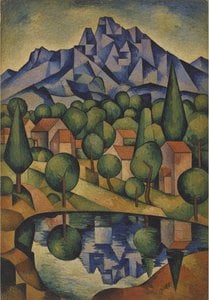
Chateau Noir

保罗·塞尚(1839-1906),后印象主义大师,连接了印象派与立体主义。以对几何形态的探索、静物画和蒙圣维克多山系列作品闻名,深刻影响了现代艺术的发展。

艺术微喷/版画

博物馆级艺术微喷或帆布版画,制作高效,并提供多种饰面选择。 (购买手绘画作 购买手绘画作购买图片 购买图片)

P118B $10
P118H $10
P118W $10
P438Z $10
P508JH $12
P508YH $12
P805H $10
P805Z $10
P919BZ $10
P919G $10
P919XJ $10
P959ZH $10
P968JZ $12
W106C $8
W218G $10
W218JH $8
W218Y $10
W307PJ $10
W316G $10
W316PJ $8
W316Y $10
W398PJ $8
W4111J $10
W500HY $15
W500JH $15
W692G $12
W849H $8
W940BG $15
W953PJ $8

标准尺寸
定制
CM
INCH

从与原作比例一致的预设尺寸中进行选择。

宽度
高度

您可以输入自定义尺寸,以适配特定的画框或空间。如果您选择的尺寸与原图比例不符,我们将对作品进行裁剪,或通过镜像填充/纯色填充边缘的方式来扩展图像。在开始制作之前,我们会向您发送一份数字效果图供您确认。
请注意,屏幕上的预览并不能反映实际的裁剪或扩展效果。只有效果图才能准确展示最终的构图。
虽然我们提供定制尺寸,但为了保持原图比例,我们建议您从预设列表中选择尺寸。

全球配送(),仅需 2 周即可送达,无需等待标准流程的 4/5 周。(5 September)

why_choose_icon
全球免费特快专递服务
why_choose_icon
优质亚麻画布
why_choose_icon
全程运输保险
why_choose_icon
关税退款保证
why_choose_icon
色彩还原度保证
why_choose_icon
60天退货政策(仅限制造缺陷)
why_choose_icon
100%退款保证
why_choose_icon
多件购买优惠

总计金额

$ 68

reproduction

Chateau Noir

艺术微喷/版画

复制品尺寸

-

最终总价

$ 68

作品概览

  • Movement: Post-Impressionism
  • Location: National Gallery of Art, Washington, D.C.
  • Year: 1904
  • Title: Château Noir
  • Artistic style: Innovative
  • Medium: Oil on canvas
  • Artist: Paul Cézanne

艺术知识测试

每道题只有一个正确答案。

题目 1:
What art movement is Paul Cézanne primarily associated with?
题目 2:
Where is Château Noir currently housed?
题目 3:
What distinctive technique did Cézanne employ in Château Noir?
题目 4:
Which artist greatly influenced Cézanne's style?
题目 5:
During Cézanne’s lifetime, how was his work initially received by art critics?

Château Noir: Cézanne’s Vision of Rustic Tranquility

Paul Cézanne's Château Noir stands as a cornerstone of Post-Impressionism and a testament to Cézanne’s revolutionary approach to depicting the natural world. Created in 1904 during his prolific period in Provence, this monumental canvas—now housed at the National Gallery of Art in Washington, D.C.—captures not merely a landscape but an essence of stillness and contemplation. Its enduring appeal lies in Cézanne’s masterful manipulation of form and color to convey a profound sense of atmosphere and emotional resonance.

Compositional Innovation: Breaking Free From Tradition

Unlike Impressionists who sought to capture fleeting moments of light, Cézanne prioritized structural integrity above all else. He abandoned the conventional perspective systems favored by academic painters, opting instead for a technique that emphasized geometric forms—particularly cubes—to represent objects and their surroundings. This bold decision was revolutionary at the time, rejecting the illusionistic conventions of his predecessors and paving the way for Cubism’s radical departure from realism. The painting's composition is dominated by a towering cypress tree on the left side, anchoring the scene and providing a vertical counterpoint to the horizontal expanse of the hillside. A modest château—a medieval castle—occupies the center foreground, its walls rendered in muted ochres and browns, subtly textured to convey solidity and age. Scattered trees surround the château, creating layers of visual complexity that invite prolonged observation. Cézanne’s brushstrokes are deliberately thick and expressive, building up surface color and texture to create a palpable sense of presence.

Influences Beyond Impressionism: Romantic Roots and Artistic Dialogue

Cézanne's artistic vision was deeply rooted in Romantic ideals—particularly the fascination with sublime landscapes—but he actively engaged in dialogue with Impressionist artists like Camille Pissarro and Claude Monet. While Cézanne admired Monet’s ability to capture atmospheric effects, he rejected Monet’s pursuit of optical accuracy, prioritizing instead an internal representation of reality. The influence of Gustave Courbet's earthy realism is also evident in Cézanne’s handling of color and texture, reflecting a desire to depict the world as it truly appears—rather than as idealized by artistic convention. Cézanne’s exploration of form and color anticipated developments in Cubism spearheaded by Pablo Picasso and Georges Braque, who would further dismantle traditional perspective and embrace fragmentation as expressive devices.

Historical Context: Cézanne's Recognition Amidst Criticism

Cézanne’s paintings initially faced considerable resistance from critics who deemed them crude and incomprehensible. They questioned his stylistic choices and accused him of abandoning the pursuit of beauty—a charge that stung Cézanne deeply. However, Cézanne gradually gained acceptance among fellow artists and a growing circle of patrons, thanks in part to the unwavering support of Ambroise Vollard, who championed Cézanne’s work and organized his first solo exhibition in Paris in 1895. This exhibition proved pivotal in establishing Cézanne's reputation as a visionary artist—one whose uncompromising commitment to artistic innovation would ultimately transform the landscape of modern art.

Legacy: An Inspiration for Generations

Paul Cézanne’s influence on subsequent generations of artists is undeniable. His groundbreaking techniques—particularly his use of geometric forms and expressive brushstrokes—inspired painters such as Henri Matisse, Pablo Picasso, Georges Braque, Alfred Munnings and many others to experiment with new visual languages. Cézanne's unwavering belief in the primacy of form over illusion continues to resonate today, reminding us that art can transcend mere representation and communicate profound emotional truths. As “the father of us all,” Cézanne’s legacy endures as a beacon of artistic courage—a testament to the transformative power of challenging conventions and pursuing one's own unique vision.
  • The Chateau Noir (National Gallery of Art, Washington, D.C.) - /art/list/?Filter=8XX6E6-Paul-Cezanne-Chateau-Noir
  • A Turn on the Road at Roche-Ruyon (Smith College Museum of Art, United States) - /art/list/?Filter=8YE5UX-Paul-Cezanne-A-Turn-on-the-Road-at-Roche-Ruyon
  • Owl on a Chair and Sea Urchin (Pablo Picasso, Cubism) - /art/list/?Filter=8EWNFJ-Pablo-Picasso-Owl-on-a-Chair-and-Sea-Urchin
Further Exploration: For more insights into Cézanne’s artistic journey and his enduring impact on modern art, visit Paul Cézanne: Chateau Noir at WahooArt.

艺术家简介

波尔·塞尚:重塑艺术的革命性视界

波尔·塞尚(Paul Cézanne,1839-1906),诞生于普罗旺斯地区的艾克斯-昂-普罗旺斯,是连接印象主义转瞬即逝的光影与立体主义碎片化形式之间的一位伟大桥梁。他的艺术之路并非一帆风顺,反而是充满自我怀疑和批评的缓慢燃烧过程,最终成就了一项彻底改变现代艺术进程的遗产。塞尚出身于一个富裕的家庭——他的父亲最初是一位帽子制造商,后来成为一名银行家——这使他拥有了其他有抱负的艺术家罕见的经济保障,让他能够在没有商业成功的即时压力下全身心地投入到自己的热情之中。尽管他的父亲最初希望他走法律道路,但艺术表达的吸引力最终战胜了一切,他毅然放弃了法律事业,投身于绘画,这一决定将定义他的一生。早期的影响包括其青春期盛行的浪漫主义以及巴比松画派对风景的热爱,但正是通过与保罗·高更和乔治·修拉的相遇,以及他们对色彩和形式的创新方法,塞尚才开始开辟自己独特的道路。

从黑暗到结构:风格的演变

塞尚早期的作品常常反映出浪漫主义绘画中具有戏剧性和情感张力的主题——画布上充斥着深色调和富有表现力的笔触。然而,这一初始阶段仅仅是他走向更为分析性和开创性的方法的一个过渡阶段。对简单捕捉光线的瞬间印象感到不满,印象派画家所推崇的这种方式,塞尚踏上了理解并呈现物体内在结构的探索之旅。他寻求的不仅仅是*看到什么*,而是*如何感知*构成现实的基本形式。这促使他将自然形状分解为几何等价物——锥体、圆柱体、球体——预示了数十年前立体主义革命的到来。他的技巧变得具有特征性的重复笔触,精心分层以构建复杂的色彩和纹理领域,从而创造出前所未见的实体感和深度。他并非对幻觉空间感兴趣;相反,他经常从多个视角同时呈现物体,挑战了传统的透视观念,迫使观众积极参与到他的构图的构建中。这种有意的扭曲并非任意,而是试图传达一种更完整的形式理解,代表的不仅是一个瞬间,更是感知的综合体。

风景、静物与人像:主要作品和反复出现的主题

塞尚的作品涵盖了令人印象深刻的多样性,包括风景、静物、肖像以及对沐浴者的描绘,但所有这些都统一在他的独特形式和色彩方法之下。《雅斯-德-布凡的池塘》(The Pond at Jas de Bouffan),创作于1880年,体现了他对风景作品的研究,展示了他如何通过精心安排形状和色调来捕捉自然之精髓。艾米尔·佐拉的肖像(Portrait of Émile Zola),创作于1866年,揭示了他的风格发展,并提供了对其亲密好友兼作家智力激情的引人入胜一瞥。他的静物作品,如那些描绘苹果和其他水果的作品,不仅仅是对物体的再现,更是对体积、光线和空间关系的探索。《圣维克多尔山》(Mont Sainte-Victoire)系列成为了塞尚的痴迷,一个反复出现的主题,让他能够几十年如一日地研究形式和透视。这些画作并非仅仅是描绘一座山;它们是对我们如何感知深度、体积以及光线与阴影相互作用的研究。最后,他的沐浴者系列,描绘了田园风光的裸体形象,代表着对人体形式及其与自然的联系的深刻探索,常常蕴含着一种永恒和宁静的沉思。

在创新中铸就的遗产:塞尚对现代艺术的影响

波尔·塞尚对后世艺术家的影响是不可估量的。他被广泛认为是“现代艺术之父”,因为他对绘画语言做出了开创性的贡献,为20世纪许多主要艺术运动铺平了道路。巴勃罗·毕加索和乔治·布拉克深深地欠于塞尚对几何形式和多重透视的强调,这些成为了立体主义的核心原则。他大胆的用色也启发了具有亨利·马蒂斯为首的野兽派运动。 即使是超现实主义艺术家也能在塞尚对主观感知和心理深度的探索中找到共鸣。 除了特定的运动之外,塞尚对艺术家的个人愿景的坚持以及他对传统学术约束的拒绝,解放了许多画家去探索新的表达形式。他挑战了对表征本身的定义,将重点从模仿现实转移到基于底层结构和主观感知构建视觉体验。 1906年他的去世标志着并非结束,而是开始——现代艺术史的新纪元,这一新纪元深受他的革命性视界的塑造。
塞尚

塞尚

1839 - 1906 , 法国

艺术家简介

  • Artistic Movement Or Style: 后印象派
  • Artists Or Movements Influenced By This Artist:
    • 立体主义
    • 野兽派
    • 超现实主义
  • Artists Who Influenced This Artist:
    • 浪漫主义
    • 巴比松画派
    • 保罗·高更
    • 乔治·修拉
  • Date Of Birth: 1839年1月19日
  • Date Of Death: 1906年10月22日
  • Full Name: 保罗·塞尚
  • Nationality: 法国人
  • Notable Artworks:
    • Jas de Bouffan池塘
    • 埃米尔·佐拉肖像
    • 森林
    • 圣维克多山系列
    • 沐浴者
  • Place Of Birth: 法国艾克斯-普罗旺斯
探索按主题、风格和特征分类的艺术作品。