A Revolutionary Synthesis: Exploring Cézanne’s ‘Bathers’
Paul Cézanne's “Bathers” isn’t merely a depiction of figures lounging beneath a tree; it represents a seismic shift in artistic perception—a defiant rejection of Impressionistic fleetingness and an audacious step toward the geometric precision that would define Cubism. Initially dismissed by critics as amateurish and lacking commercial appeal, Cézanne persevered, driven by an unwavering conviction in his vision, transforming into one of the most influential artists of the late 19th century. His formative years were shaped by familial stability—his father’s banking career afforded him a rare opportunity to pursue artistic endeavors without crippling financial burdens—yet it was the irresistible allure of painting that ultimately captivated his soul. Abandoning legal aspirations, he embraced art wholeheartedly, embarking on a lifelong journey of experimentation and innovation.
The Impressionistic Echoes Dissolve
Early influences included artists like Jean-François Millet and Gustave Courbet, whose earthy realism instilled in Cézanne a profound respect for the natural world. However, unlike his contemporaries who sought to capture momentary impressions of light and color—a hallmark of Impressionism—Cézanne wrestled with how to represent solidity and permanence. He meticulously studied geological formations and architectural structures, analyzing their underlying geometric forms. This analytical approach would soon propel him toward a radically different aesthetic. The shimmering surfaces of Impressionistic canvases yielded to Cézanne’s deliberate layering of pigment, creating textured planes that seemed to vibrate with latent energy.
Geometric Forms Emerging from Nature
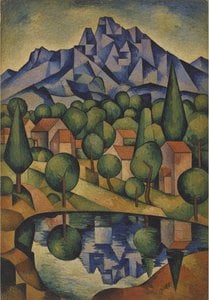
“Bathers” exemplifies this transformative process brilliantly. Observe how Cézanne renders the tree trunk—not as a smooth, organic curve but as a series of intersecting cylinders and cones. Similarly, he simplifies the human figures into abstracted shapes, emphasizing volume rather than contour lines. This technique isn’t simply about stylistic novelty; it's fundamentally concerned with capturing the essence of existence itself – the underlying structure beneath apparent appearances. The muted palette—primarily ochres, browns, and greens—further reinforces this sense of groundedness, mirroring Cézanne’s fascination with the earth and its enduring presence.
Symbolism Beyond Surface Beauty
Beyond its formal innovations, “Bathers” carries subtle symbolic weight. The figures represent humanity's connection to nature, a recurring theme in Cézanne’s oeuvre. Their relaxed postures convey tranquility and contentment—a deliberate contrast to the anxieties of the era. Moreover, the tree itself symbolizes resilience and stability, mirroring Cézanne’s own artistic determination. It speaks to an artist who refused to compromise his vision for commercial success or critical acclaim, insisting on pursuing truthfulness above all else.
A Legacy That Shaped Modern Art
“Bathers” stands as a pivotal work bridging Impressionism and Cubism, influencing generations of artists who followed. Its groundbreaking approach to form and color paved the way for Picasso, Matisse, and Braque—the pioneers of Cubism—establishing Cézanne as a cornerstone of modern art history. Today, reproductions of this iconic painting offer collectors and interior designers alike an opportunity to experience the profound beauty and intellectual depth of Cézanne’s revolutionary vision.
常见问题与解答
"Bathers 3" 的色彩饱和度如何?
"Bathers 3" 的色彩饱和度为 Subtle Color。
Post-Impressionism 流派的作品 "Bathers 3" 传达了怎样的情感?
"Bathers 3" 在 Post-Impressionism 运动中蕴含着 Calm 的情感基调。
在哪里可以找到关于“Bathers 3”的指南?
针对 塞尚 的《Bathers 3》,我们提供了一个 指南 页面:这是一份可打印的艺术品资料页,专为学生及课堂教学使用而设计。