
博物馆级艺术微喷或帆布版画,制作高效,并提供多种饰面选择。 ( 购买手绘画作 切换至数字图像销售渠道)





























从与原作比例一致的预设尺寸中进行选择。

您可以输入自定义尺寸,以适配特定的画框或空间。如果您选择的尺寸与原图比例不符,我们将对作品进行裁剪,或通过镜像填充/纯色填充边缘的方式来扩展图像。在开始制作之前,我们会向您发送一份数字效果图供您确认。
请注意,屏幕上的预览并不能反映实际的裁剪或扩展效果。只有效果图才能准确展示最终的构图。
虽然我们提供定制尺寸,但为了保持原图比例,我们建议您从预设列表中选择尺寸。

St Jerome
复制品尺寸

In the vibrant, light-drenched tapestry of the late seventeenth century, few artists embodied the dramatic transition from Mannerist artifice to Baroque grandeur as uniquely as Paolo Antonio Pagani. Born in 1655 in the tranquil borderlands of Valsolda, Pagani’s journey was one of constant movement and profound transformation. While his early years were rooted in the Lombardy region, it was his migration to Venice in 1667 that ignited his creative spirit. This relocation placed him at the very heart of a visual revolution, where the lingering elegance of Mannerism began to merge with the sweeping, emotional intensity of the Baroque era. As he navigated the canals and studios of Venice, Pagani developed a technical versatility that would allow him to master not only the brush but also the delicate precision of the etching needle.
Pagani’s early professional identity was deeply intertwined with the art of printmaking. He demonstrated an extraordinary ability to translate the painterly textures of his contemporaries into the graphic language of aquatint. One of his most significant early achievements was a monumental series of ten aquatints inspired by the canvases of Giuseppe Diamant, a Venetian master known for blending classical grace with dynamic movement. Through these prints, Pagani did more than merely replicate existing works; he acted as a vital conduit for artistic ideas, disseminating the sophisticated visual vocabulary of Venice across much wider territories. This period of his life established him as an artist capable of profound technical experimentation, a trait that would define his later, more ambitious architectural and fresco endeavors.
The trajectory of Pagani’s career took a magnificent turn toward the north when he was invited to the imperial court of Vienna. Between 1690 and 1696, under the patronage of Emperor Leopold I, Pagani expanded his artistic horizons far beyond the Italian peninsula. This exposure to Central European traditions infused his work with a new sense of scale and a more robust, dramatic sensibility. The cosmopolitan atmosphere of Vienna allowed him to absorb diverse influences, refining a style that could command the vast, soaring spaces of imperial architecture. It was during this era that Pagani truly began to master the art of quadratura—the illusionistic technique of painting architectural perspectives that appear to extend the real space of a room into an infinite sky.
Upon his return to Valsolda in 1696, Pagani embarked upon what many scholars consider his definitive masterpiece: the frescoing of the nave in the parish church of San Martino. This project stands as a breathtaking testament to his ability to manipulate light and perspective. In this sacred space, he utilized a technique known as sotto in su—a "from below upwards" perspective—to create dizzying, celestial visions that seem to dissolve the very ceiling. His work in San Martino is characterized by:
Though history has sometimes overlooked Pagani in favor of more widely recognized names, his contribution to the evolution of European painting remains undeniable. He was an artist of transition, a bridge between the structured elegance of the past and the theatrical exuberance of the future. His ability to move between the intimate scale of a portrait—such as his evocative St. Jerome—and the monumental scale of a cathedral ceiling demonstrates a rare breadth of vision. Pagani’s work serves as a vital link in the lineage of Italian art, embodying the spirit of an age that sought to blur the lines between the earthly and the divine through the sheer power of artistic invention.

1655 - 1716 , Italy

深入探索巴洛克艺术的辉煌历史、独特风格与持久影响。了解卡拉瓦乔、贝尼尼等大师的作品,洞悉反宗教改革运动下的艺术变革。WahooArt.com为您提供专业的艺术解读与高清画作欣赏。

探索巴洛克艺术的辉煌!本文精选十部巨作,带您领略卡拉瓦乔、伦勃朗等大师的光影魔法与戏剧张力。从黄金时代到宗教绘画,感受奢华与精致。WahooArt.com为您提供博物馆品质的艺术复制品和家居装饰灵感。尽在WahooArt.com!

Explore the dramatic world of Baroque art! Discover its history, defining characteristics, & lasting influence on painting & sculpture. Expert insights into Caravaggio, Zurbarán, and Bernini – plus high-quality reproductions at WahooArt.

探索巴洛克艺术的辉煌与奢华!WahooArt提供精湛的手工油画复制、定制服务和专业艺术咨询,助您将经典作品融入当代室内设计,提升家居品味。投资艺术,传承价值。
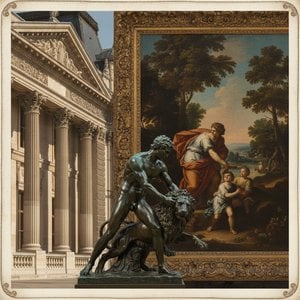
Explore the profound elegance of Baroque Classicism. Discover how 17th-century masters synthesized dramatic emotion with classical order through the lens of the Counter-Reformation and the works of legends like Carlo Maratta and Andrea Sacchi.


 效果预览
效果预览
 分享
分享 分享
分享
 详情
详情 指南
指南

 下载
下载
 相似作品
相似作品 X射线
X射线 幻灯片播放
幻灯片播放 统计数据
统计数据


 展开详情
展开详情









 玻璃选项仅适用于110厘米以下的尺寸。


