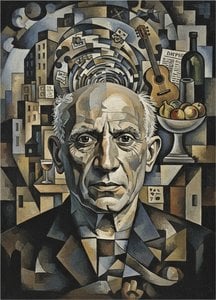
La Vie: A Meditation on Maternal Instinct and Artistic Sorrow
Pablo Picasso’s “La Vie,” painted in 1903 during his Blue Period, transcends mere representation; it embodies a profound exploration of human emotion—specifically, the poignant tenderness of motherhood intertwined with an inescapable sense of melancholy. Created shortly after the tragic suicide of his friend Carles Casagemas, this oil-on-canvas artwork reflects Picasso’s personal turmoil and subtly weaves into its composition themes of loss and vulnerability.
Subject Matter and Composition
The painting depicts a woman cradling a baby, positioned amidst three figures—a man on the left, another in the center, and a third on the right. The woman is nude, her breasts exposed, symbolizing fertility and nurturing – a deliberate choice that speaks to Picasso’s preoccupation with themes of femininity and maternal care during this period. The figures are arranged in a manner that emphasizes intimacy and connection, yet simultaneously conveys a feeling of isolation against a muted backdrop.
Style and Technique: Embracing the Blue Palette
“La Vie” exemplifies Picasso's signature Expressionist style, characterized by its deliberate simplification of form and use of color. Dominating the canvas is a palette dominated by shades of blue—ranging from deep indigo to pale cerulean—a hallmark of Picasso’s Blue Period. This monochromatic scheme wasn’t merely aesthetic; it served as a powerful tool for conveying emotion. The cool blues evoke feelings of sadness, despair, and introspection, mirroring Picasso's own psychological state at the time.
Historical Context: Echoes of Grief and Artistic Transformation
Painted in 1903, “La Vie” sits firmly within Picasso’s Blue Period—a period marked by intense grief following Casagemas’ death. This loss profoundly impacted Picasso's artistic vision, prompting him to delve into darker themes and explore the complexities of human suffering. The painting reflects a broader cultural preoccupation with mortality and disillusionment prevalent in Europe at the turn of the century.
Symbolism: Beyond Literal Representation
Beyond its depiction of motherhood, “La Vie” is laden with symbolic significance. The nude woman represents vulnerability and purity, while the baby symbolizes innocence and rebirth—a poignant juxtaposition against the backdrop of sorrow. Picasso’s masterful use of color contributes to this symbolism, conveying a sense of emotional depth that transcends literal observation. It's a visual testament to the artist grappling with grief and striving to capture the essence of human experience.
常见问题与解答
"La Vie" 的色彩饱和度如何?
巴勃罗·毕加索 的《La Vie》 的色彩呈现出 Balanced Soft 的饱和度。饱和度描述了色彩的鲜艳或柔和程度。
是否有关于 巴勃罗·毕加索 的《La Vie》 的幻灯片展示?
您可以在作品的幻灯片展示页面上观看“La Vie”的幻灯片展示。
巴勃罗·毕加索 的《La Vie》 的构图以什么颜色为主导?
在“La Vie”中,最引人注目的颜色是Gray (#717861)。了解作品的主色调有助于将其与室内装饰进行搭配。