
博物馆级艺术微喷或帆布版画,制作高效,并提供多种饰面选择。 ( 购买手绘画作 切换至数字图像销售渠道)
从与原作比例一致的预设尺寸中进行选择。

您可以输入自定义尺寸,以适配特定的画框或空间。如果您选择的尺寸与原图比例不符,我们将对作品进行裁剪,或通过镜像填充/纯色填充边缘的方式来扩展图像。在开始制作之前,我们会向您发送一份数字效果图供您确认。
请注意,屏幕上的预览并不能反映实际的裁剪或扩展效果。只有效果图才能准确展示最终的构图。
虽然我们提供定制尺寸,但为了保持原图比例,我们建议您从预设列表中选择尺寸。

Her Favourite
复制品尺寸

Nikolai Kornilievich Bodarevsky remains a captivating, if somewhat shadowed, figure within the grand tapestry of Russian art. Born on December 6, 1850, into the refined atmosphere of the old Moldavian nobility, his early life was shaped by an environment where intellectual pursuit and artistic tradition were deeply intertwined. As the son of a Titular Councillor, Bodarevlysky possessed an inherent connection to the cultural currents of the era, a foundation that would later allow him to navigate the complex social and political landscapes of the late 19th century with profound sensitivity. While his name may not resonate with the same immediate fame as contemporaries like Viktor Vasnetsov, his contribution to the Peredvizhniki movement—the "Wanderers" who sought to bring art to the people through realism and social commentary—is an essential chapter in the story of Russian identity.
His formal journey into the world of fine art began at the Odessa Art School, a vital branch of the Imperial Academy of Arts. It was here that Bodarevsky’s raw talent was refined under the guidance of masters such as Pyotr Shamshin, Timofey Neff, and Vasily Petrovich Vereshchagin. His academic prowess was nothing short of extraordinary; between 1869 and 1873, he distinguished himself by securing four silver and two gold medals, a testament to his technical mastery and meticulous eye for detail. This period of rigorous training instilled in him the principles of accurate representation and profound observation that would become the hallmarks of his mature style, allowing him to capture not just the physical likeness of his subjects, but their very essence.
As Bodarevsky’s career progressed, he began to move beyond the strictures of traditional academic realism, finding a unique voice that blended social awareness with an almost poetic atmospheric quality. His entry into the Peredvizhniki in 1884 marked a pivotal moment, aligning him with a group of artists dedicated to depicting the raw truths of everyday life. However, Bodarevsky brought a distinctive aesthetic flair to this movement. Influenced by the subtle, evocative techniques of James Abbott McNeill Whistler, he developed a fascination with capturing fleeting moments of light and the delicate gradations of tone. This infusion of Impressionistic sensibility allowed him to imbue his works with a psychological depth that was both intimate and haunting.
This mastery of atmosphere found its most beautiful expression in his numerous female portraits. In these works, Bodarevsky moved away from mere documentation toward a more nuanced exploration of character and grace. His ability to manipulate light to suggest mood and texture made him a sought-after portraitist, even earning him the opportunity to paint figures of immense historical importance, such as Tsarina Alexandra Feodorovna. Whether depicting a noblewoman in a moment of quiet reflection or a figure lost in thought, his brushwork possessed a softness that invited the viewer into a private, emotional dialogue with the subject.
The breadth of Bodarevsky’s talent extended far beyond the canvas of portraiture. His versatility was evidenced by his significant contributions to religious and monumental art. Alongside luminaries like Mikhail Nesterov and Andrei Ryabushkin, he participated in the decoration of the magnificent Church of the Savior on Blood, providing intricate sketches for sixteen mosaics depicting biblical scenes and Russian Orthodox history. This work, which eventually earned him the prestigious title of Academician in 1908, demonstrated his ability to marry the intimate scale of a portrait with the grand, spiritual narrative of a nation.
Beyond his religious contributions, Bodarevsky also left an indelible mark on the musical history of Russia. In 1889, he was commissioned by Vasily Safonov, Director of the Moscow Conservatory, to create fourteen portraits of legendary composers for the Great Hall. These works became part of a larger cultural dialogue, surviving even the turbulent political shifts of the 20th century. Though his life ended in the hardships of the Russian Civil War era in Odessa, his legacy persists through the enduring beauty of his compositions. His art remains a testament to a period when realism was not merely about seeing the world as it was, but about finding the soulful, poetic truth hidden within its most quiet and ordinary moments.

Elevate your luxury lifestyle with bespoke high-realism oil commissions from WahooArt. Transform your yacht, estate, or classic car into a timeless masterpiece through expert craftsmanship and academic rigor. Discover the ultimate investment in personal legacy and fine art excellence.

Discover the ultimate guide to gifting prestige with bespoke oil reproductions. Elevate your collection with hand-painted masterpieces, custom period shifts, and museum-quality artistry designed for the discerning connoisseur seeking timeless luxury.
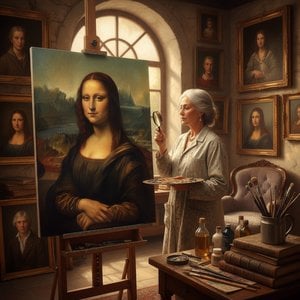
Discover the unparalleled elegance of WahooArt’s premium hand-painted oil reproductions. From bespoke portraits to museum-quality masterpieces, our expert artists transform visions into timeless legacies with 100% satisfaction guaranteed. Elevate your collection with true artistry.

Discover the profound allure of oil on canvas. Explore the mastery of impasto textures, the science of pigment longevity, and expert guides to selecting museum-quality reproductions that elevate your collection with timeless elegance and tactile depth.

Discover the enduring allure of oil on canvas. Explore how master techniques like impasto and glazing create the depth, texture, and emotional resonance found in the world's greatest masterpieces. An essential guide for fine art enthusiasts and discerning collectors.


 效果预览
效果预览
 分享
分享 分享
分享
 详情
详情

 下载
下载
 相似作品
相似作品 X射线
X射线 幻灯片播放
幻灯片播放 统计数据
统计数据
 展开详情
展开详情






































 玻璃选项仅适用于110厘米以下的尺寸。


