
x































从与原作比例一致的预设尺寸中进行选择。

您可以输入自定义尺寸,以适配特定的画框或空间。如果所选尺寸与原图比例不符,我们将通过裁剪作品或添加手绘元素来扩展画面。数字样稿将在制作开始前发送给您确认。
请注意,屏幕预览无法准确反映实际的裁剪或扩展效果,只有样稿才能真实呈现最终的构图。
虽然我们提供定制尺寸服务,但为了保留原作比例,建议您从预设列表中选择尺寸。

Selene and Endymion
复制品尺寸
Nicolas Poussin, one of the most renowned artists of the French Baroque period, created a captivating painting titled Selene and Endymion in 1630. This beautiful piece is now housed at the Detroit Institute of Arts, showcasing Poussin's exceptional skill in capturing mythological scenes with elegance and poise.
The painting depicts a scene from Greek mythology, where Selene, the goddess of the moon, falls deeply in love with Endymion, a mortal known for his extraordinary beauty. According to legend, Zeus granted Endymion eternal youth but placed him into an eternal sleep. Each night, Selene would visit her beloved Endymion, and their union resulted in 50 daughters.
Poussin's composition is a masterpiece of balance and harmony. The painting features Selene and Endymion at the center, surrounded by other figures from the mythological story. The artist skillfully uses a rich color palette to create depth and emotion in the scene. The heavy blue curtains of night are opened to reveal the chariot of the sun, symbolizing the dawn of a new day. This deliberate juxtaposition underscores Poussin’s masterful command of visual storytelling—a hallmark of his style.
Poussin's work was heavily influenced by classical Greek and Roman art, which is evident in his use of mythological subjects. His style, characterized by stately majesty, brilliant drawing skills, and sure composition, reflects the French Baroque period. He meticulously rendered idealized forms—a technique rooted in Renaissance humanist ideals—creating images that aspire to moral grandeur. Poussin’s influence can be seen in later artists such as Jean-Auguste-Dominique Ingres and Jacques-Louis David.
Selene and Endymion is a significant piece in art history, showcasing Poussin's unique approach to mythological subjects. The painting has been the subject of various interpretations by art historians due to its singular composition and symbolism. Scholars debate whether it represents an allegory for the soul’s journey toward enlightenment or simply a celebration of beauty and love—a testament to Poussin’s ability to evoke profound emotion through carefully crafted visual elements.
For those interested in exploring more of Poussin's works or other masterpieces from the French Baroque period, Nicolas Poussin: Theseus Finding His Father's Arms and Discovering the Detroit Institute of Arts are excellent resources.


1594 - 1665 , 法国

Embark on a sophisticated journey through the eternal allure of mythological art. Discover how master painters breathe life into ancient legends, from Greek deities to Baroque masterpieces, and learn to curate these timeless narratives within your own exquisite art collection.
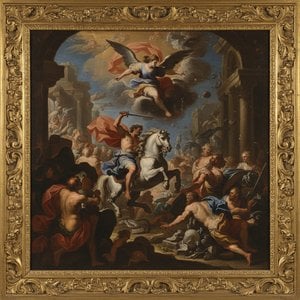
Explore the breathtaking power of Baroque art. Delve into the dramatic interplay of light, shadow, and motion through the works of masters like Caravaggio. Discover how the era's intense emotional realism continues to inspire collectors and connoisseurs of classical grandeur.

Explore the profound elegance of Baroque Classicism. Discover how masters fused dramatic chiaroscuro with structured order to redefine art history through light, shadow, and emotional grandeur.

Explore the breathtaking drama of the Baroque era. From the mastery of chiaroscuro to epic mythological narratives, discover a definitive guide to art's most powerful period of light, shadow, and emotion for the true classical art enthusiast.


第一时间获取最新的艺术新闻、独家优惠及装饰灵感。
向我们介绍您的项目需求,我们的艺术专家将为您提供 3 个个性化的艺术品推荐。
由我们的专家为您精选 3 款心仪之作 —— 完全免费!


 效果预览
效果预览
 购买印刷品
购买印刷品 分享
分享 分享
分享
 详情
详情

 下载
下载
 相似作品
相似作品 X射线
X射线 幻灯片播放
幻灯片播放


 展开详情
展开详情









 玻璃选项仅适用于110厘米以下的尺寸。


