由我们的艺术家按需定制,为您提供您所选尺寸及画框的布面手工油画。 ( 切换至版画销售渠道 切换至数字图像销售渠道)





























您可以从与原作比例一致的预设尺寸中进行选择。

请输入您需要的宽度和高度,以适配您的画框或墙面。由于作品为手工绘制,若您选择不同的尺寸比例,艺术家可能会在画面边缘多画一些或稍作裁剪 —— 由您决定。在开始绘画之前,我们会为您发送一份数字效果图供您确认。本页面上展示的图片并非最终实物 —— 只有效果图才能反映真实结果。
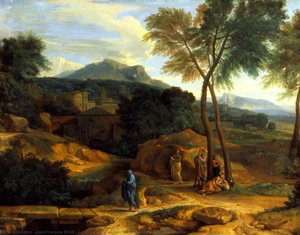
Landscape with Polyphemus
复刻品尺寸说明
Nicolas Poussin’s Landscape with Polyphemus stands as a cornerstone of Baroque art and exemplifies the artist’s masterful command of classical ideals translated into visual splendor. Painted in 1648 for Jean Pointel, this monumental oil on canvas resides within the hallowed halls of The Hermitage Museum in St. Petersburg, Russia—a repository of artistic treasures reflecting centuries of cultural heritage.
At 150 x 199 cm, the painting immediately impresses with its serene grandeur and deliberate composition. Poussin eschewed the flamboyant excesses characteristic of his contemporaries, opting instead for a harmonious balance achieved through meticulous observation and intellectual contemplation. The scene depicts a mythological narrative—a retelling of Homer’s Odyssey—featuring Polyphemus, the cyclops son of Poseidon, wrestling with Galatea, a nymph from Arcadia. This juxtaposition of pagan mythology and idealized landscape is quintessential Poussinian style.
The artist skillfully employs linear perspective to create depth and realism within this fantastical setting. Foreground elements—a rocky outcrop and scattered shrubs—are rendered with painstaking detail, anchoring the viewer’s gaze while simultaneously framing a panoramic vista stretching into the distance. Two horses dominate the right side of the composition, symbolizing nobility and strength, and their placement contributes to the overall sense of balance.
Central to the painting is Polyphemus himself—a figure rendered with remarkable anatomical accuracy despite his monstrous appearance. He holds a bow and arrow, poised for action yet imbued with an air of melancholy contemplation. The inclusion of Galatea and her attendants underscores themes of beauty, innocence, and divine grace – concepts deeply rooted in classical philosophy.
Beyond its aesthetic merits, Landscape with Polyphemus speaks to a broader artistic and intellectual tradition. Poussin’s unwavering devotion to classical principles—particularly those championed by Raphael—influenced generations of artists who sought to emulate his clarity, elegance, and profound understanding of human emotion. The painting's enduring appeal lies in its ability to transport the viewer to another realm—a realm where mythic grandeur intertwines with sublime natural beauty.
The Hermitage Museum’s acquisition of this masterpiece solidified its place within Russia’s artistic canon. Alongside other celebrated works by Poussin, such as The Holy Family with St. Elizabeth and John the Baptist—also housed in St. Petersburg—demonstrates Poussin’s lasting impact on European art history.
For those wishing to experience the majesty of Landscape with Polyphemus firsthand, WahooArt.com offers exquisitely crafted oil painting reproductions that faithfully capture the essence and luminosity of Poussin’s original vision.
在尼古拉·普桑的艺术生涯中,"Landscape with Polyphemus"创作于Mature Period时期。这一阶段有助于将其与艺术家的其他作品进行比较。
"Landscape with Polyphemus" 的作者是 尼古拉·普桑,创作于 1648 年。
尼古拉·普桑 的《Landscape with Polyphemus》 的媒介为 布面丙烯。复制品旨在呈现该技法的视觉效果。


1594 - 1665 , 法国

Explore the breathtaking drama of the Baroque era. From the mastery of chiaroscuro to epic mythological narratives, discover a definitive guide to art's most powerful period of light, shadow, and emotion for the true classical art enthusiast.

Embark on a sophisticated journey through the eternal allure of mythological art. Discover how master painters breathe life into ancient legends, from Greek deities to Baroque masterpieces, and learn to curate these timeless narratives within your own exquisite art collection.
Explore the breathtaking power of Baroque art. Delve into the dramatic interplay of light, shadow, and motion through the works of masters like Caravaggio. Discover how the era's intense emotional realism continues to inspire collectors and connoisseurs of classical grandeur.

Explore the profound elegance of Baroque Classicism. Discover how masters fused dramatic chiaroscuro with structured order to redefine art history through light, shadow, and emotional grandeur.


 实景预览
实景预览
 发送
发送 分享
分享
 详情
详情 指南
指南

 下载图片
下载图片
 相似作品
相似作品 X射线
X射线 幻灯片播放
幻灯片播放 统计数据
统计数据


 阅读全文
阅读全文









 玻璃选项仅适用于110厘米以下的尺寸。