
x


从与原作比例一致的预设尺寸中进行选择。

您可以输入自定义尺寸,以适配特定的画框或空间。如果所选尺寸与原图比例不符,我们将通过裁剪作品或添加手绘元素来扩展画面。数字样稿将在制作开始前发送给您确认。
请注意,屏幕预览无法准确反映实际的裁剪或扩展效果,只有样稿才能真实呈现最终的构图。
虽然我们提供定制尺寸服务,但为了保留原作比例,建议您从预设列表中选择尺寸。

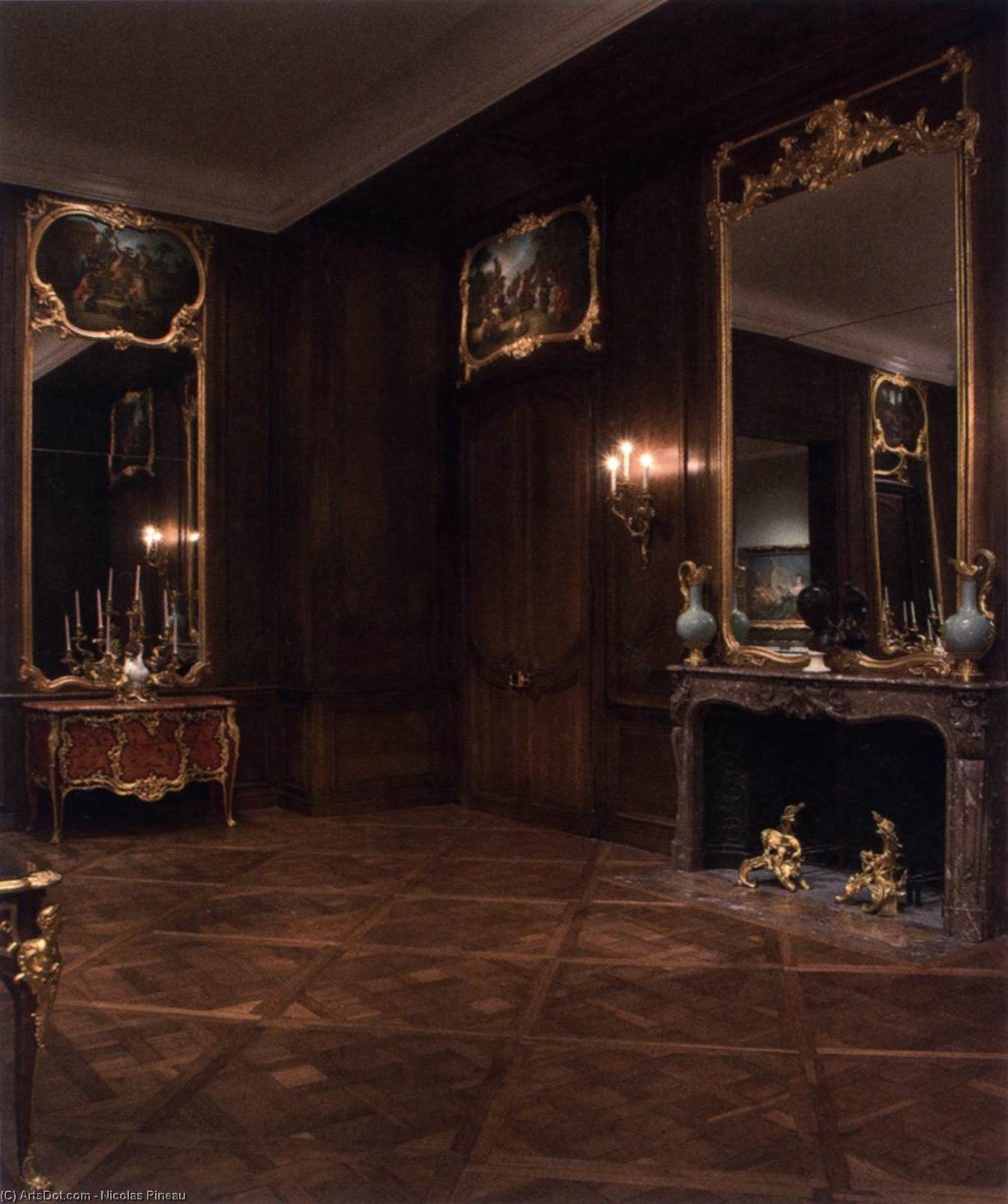
Carved Oak Paneling
复制品尺寸

Jean-Antoine Watteau, a name synonymous with the Rococo era in French art, was more than just a painter; he was a poet of light, color, and fleeting moments. Born in Valenciennes in 1684, his life spanned only thirty-six years, yet within that brief period, he profoundly shaped the artistic landscape, establishing a genre—the *fête galante*—that continues to captivate viewers today. His work isn’t merely decorative; it's imbued with an atmosphere of wistful beauty, theatricality, and a subtle yearning for escape, reflecting the sensibilities of the French court during the Régence.
Watteau’s early life was marked by a delicate balance between artistic aspiration and familial hardship. The son of a roof tiler, his childhood wasn't one of privilege, and his father’s volatile nature undoubtedly influenced his sensitive temperament. Despite this challenging environment, Watteau displayed an early passion for art, sketching street performers and absorbing the vibrant energy of public life. His initial training was somewhat unconventional, beginning with rudimentary work copying devotional paintings before finding a mentor in Claude Gillot, a master of theatrical fantasy and arabesque designs. Gillot’s influence proved pivotal, introducing Watteau to the world of stagecraft and inspiring his fascination with illusion and spectacle – elements that would become hallmarks of his style.
Watteau's most significant contribution to art history lies in the invention of the *fête galante*. This unique genre, a departure from the grand narratives of Baroque painting, focused on idyllic scenes of aristocratic leisure—picnics, strolls through gardens, and gatherings amidst beautiful landscapes. These weren’t stories with clear beginnings and endings; instead, they were carefully constructed moments of beauty, capturing an ephemeral feeling rather than a specific event. Watteau masterfully evoked a sense of dreamlike serenity, often featuring couples in elegant attire engaged in graceful pursuits – dancing, playing music, or simply enjoying the company of friends. The figures are rarely identified, allowing viewers to project their own emotions and fantasies onto the scene.
The *fête galante* was not born in a vacuum. Watteau drew inspiration from various sources: the commedia dell’arte, with its masked characters and playful interactions; the opéra ballet, with its elaborate costumes and theatrical settings; and the decorative arts, particularly the arabesque patterns that were increasingly popular in interior design. He skillfully blended these influences, creating paintings that were both visually stunning and psychologically complex. His use of color was revolutionary—he moved away from the dark, dramatic palettes of the Baroque period towards lighter, more luminous tones, employing pastel shades to create a sense of airiness and delicacy.
Watteau’s artistic journey was shaped by several key figures. Claude Gillot provided him with an early foundation in theatrical design and fantasy painting, while Claude Audran III introduced him to the world of decorative arts and interior design. However, it was the influence of Rubens that proved particularly transformative. Watteau deeply admired Rubens' dynamic compositions, vibrant colors, and masterful use of light—qualities he sought to emulate in his own work. He also studied the works of Venetian painters, absorbing their techniques for rendering color and capturing atmospheric effects.
Despite his talent and ambition, Watteau’s path was not without obstacles. He never received the opportunity to study in Italy, the traditional destination for aspiring artists, due to a lack of patronage. Nevertheless, he continued to refine his skills through diligent copying of masterworks at Pierre Crozat's residence, meticulously studying the techniques of Rubens and other great painters. This dedication allowed him to develop a distinctive style that combined elements of various influences while retaining a unique sense of elegance and grace.
Watteau’s most celebrated works include *Embarkation for Cythera* (1717–1718), a masterpiece of the *fête galante* genre, and *L'Enseigne de Gersaint* (1720–1721), which offers a glimpse into the bustling world of Parisian commerce. His paintings are characterized by their delicate brushwork, luminous colors, and evocative atmosphere. Watteau’s influence extended far beyond his own lifetime. He inspired a generation of artists, including Lancret and Pater, who continued to explore the themes and techniques he pioneered.
Watteau's legacy is not simply one of artistic innovation but also of emotional resonance. His paintings evoke a sense of nostalgia for a bygone era—a time of elegance, beauty, and fleeting pleasures. He captured the spirit of the Rococo age with remarkable sensitivity, creating works that continue to enchant viewers centuries later. His brief career, tragically cut short by illness at the age of 36, left an indelible mark on the history of art, solidifying his place as one of France’s most beloved and influential painters.

1684 - 1754 , France


第一时间获取最新的艺术新闻、独家优惠及装饰灵感。
向我们介绍您的项目需求,我们的艺术专家将为您提供 3 个个性化的艺术品推荐。
由我们的专家为您精选 3 款心仪之作 —— 完全免费!

 效果预览
效果预览
 购买印刷品
购买印刷品 分享
分享 分享
分享
 详情
详情

 下载
下载
 相似作品
相似作品 X射线
X射线 幻灯片播放
幻灯片播放 展开详情
展开详情






































 玻璃选项仅适用于110厘米以下的尺寸。


