
 Contemporary Realism
 1845
1845 92.0 x 76.0 cm
 大都会艺术博物馆
博物馆级艺术微喷或帆布版画,制作高效,并提供多种饰面选择。 ( 购买手绘画作 切换至数字图像销售渠道)
从与原作比例一致的预设尺寸中进行选择。

您可以输入自定义尺寸,以适配特定的画框或空间。如果您选择的尺寸与原图比例不符,我们将对作品进行裁剪,或通过镜像填充/纯色填充边缘的方式来扩展图像。在开始制作之前,我们会向您发送一份数字效果图供您确认。
请注意,屏幕上的预览并不能反映实际的裁剪或扩展效果。只有效果图才能准确展示最终的构图。
虽然我们提供定制尺寸,但为了保持原图比例,我们建议您从预设列表中选择尺寸。

Charles Henry Augustus Carter
复制品尺寸

In the golden age of American landscape painting, few artists captured the quiet majesty of the natural world with as much soulful reverence as Nicholas Biddle Kittell. Born in 1822 in Norwich, New York, Kittell emerged during a transformative era when the American spirit was deeply entwined with the rugged beauty of its untamed wilderness. His life and work serve as a profound testament to the nineteenth-century fascination with the sublime, a period where the boundaries between the physical landscape and spiritual experience were often indistelguishable. Through his meticulous brushwork and an eye for atmospheric nuance, Kittell did not merely document scenery; he translated the very breath of the mountains onto canvas.
Kittell’s artistic evolution was deeply rooted in the intellectual and philosophical currents of his time. Influenced by the Transcendentalist ideals of thinkers such as Ralph Waldo Emerson and Henry David Thoreau, he approached nature not as a passive subject, but as a living, breathing entity imbued with divine significance. This spiritual connection is palpable in his landscapes, particularly those depicting the mountainous grandeur of the Adirondacks. His technical foundation was equally robust; having pursued studies at Yale University, he developed a disciplined approach to composition and a mastery of tonal modulation. This allowed him to employ atmospheric perspective with such skill that viewers could almost feel the shifting mists and the cooling air of a high-altitude morning.
While Kittell is celebrated for his landscapes, his versatility as an artist extended into the intimate realm of portraiture. His ability to navigate between the vast, sweeping vistas of the American wilderness and the delicate, psychological depth of a human face speaks to a remarkable breadth of talent. One of his most notable achievements includes his captivating portrait, “Charles Henry Augustus Carter,” which exemplifies his command over nineteenth-century realism. In his portraits, Kittell utilized light and shadow to evoke character and dignity, much like he used light to define the contours of a mountain range.
Throughout his prolific career, Kittell was an active participant in the prestigious art circles of his day. His presence in the American art scene was marked by regular exhibitions at several esteemed institutions:
His professional journey also saw him moving within the inner circles of notable contemporaries. It is believed that Kittell shared close ties with the renowned artist Benjamin Champney, frequently visiting the White Mountains to sketch and study. This connection likely deepened his understanding of the White Mountain School style, further refining his ability to capture the interplay of light and atmosphere in mountainous terrains.
As the nineteenth century drew to a close, Kittell’s work remained a vital part of the American artistic dialogue. Living much of his later life in New York City, he maintained a connection to the burgeoning urban art market while never losing sight of the rustic landscapes that defined his soul. His death in 1894 marked the end of an era, yet his contributions to the development of American landscape painting endure. He bridged the gap between the rigid documentation of early realism and the emotive, subjective qualities of Romanticism.
Today, the works of Nicholas Biddle Kittell continue to resonate with collectors and historians alike. His canvases remain windows into a vanished era of American history—a time when the landscape was a frontier of both physical exploration and spiritual discovery. Whether through the sweeping vistas of the Adirondacks or the quiet dignity of his portraits, Kittell’s legacy is one of profound observation and an unwavering devotion to the beauty of the natural world.

1822 - 1894 , United States of America
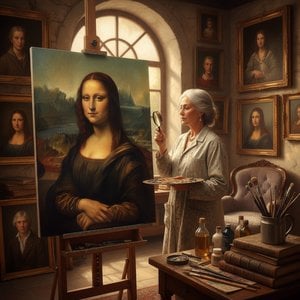
Discover the unparalleled elegance of WahooArt’s premium hand-painted oil reproductions. From bespoke portraits to museum-quality masterpieces, our expert artists transform visions into timeless legacies with 100% satisfaction guaranteed. Elevate your collection with true artistry.


 效果预览
效果预览
 分享
分享 分享
分享
 详情
详情

 下载
下载
 相似作品
相似作品 X射线
X射线 幻灯片播放
幻灯片播放 统计数据
统计数据 展开详情
展开详情






































 玻璃选项仅适用于110厘米以下的尺寸。


