
 Gothic Illumination
 1342
1342 15.0 x 16.0 cm
由我们的艺术家按需定制,为您提供您所选尺寸及画框的布面手工油画。 ( 切换至版画销售渠道 切换至数字图像销售渠道)
从与原作比例一致的预设尺寸中进行选择。

您可以输入自定义尺寸,以适配特定的画框或空间。如果所选尺寸与原图比例不符,我们将通过裁剪作品或添加手绘元素来扩展画面。数字样稿将在制作开始前发送给您确认。
请注意,屏幕预览无法准确反映实际的裁剪或扩展效果,只有样稿才能真实呈现最终的构图。
虽然我们提供定制尺寸服务,但为了保留原作比例,建议您从预设列表中选择尺寸。

Untitled (D2XB3S)
复制品尺寸

In the golden, sun-drenched landscape of mid-fourteenth-century Siena, a period defined by spiritual fervor and artistic refinement, the name Niccolò di Ser Sozzo resonates as a symbol of the Sienese Gothic zenith. Though his life remains partially veiled by the mists of history—with scholars still debating whether he was the Niccolò di Ser Sozzo di Francesco Tegliacci or the more recently proposed Niccolò di Ser Sozzo di Stefano—his presence in the annals of Italian art is undeniable. Active primarily between 1334 and 1363, Sozzo emerged not merely as a painter, but as a master of light and delicate line, a virtuoso who could breathe life into both monumental panels and the most intimate manuscript leaves.
The foundations of his style were laid within the prestigious workshops of Siena, where the echoes of Simone Martini and the Lorenzetti brothers provided a rich, instructional atmosphere. It is widely believed that Sozzo’s formative years were spent absorbing the stylistic nuances of these pioneers, inheriting their ability to blend profound theological symbolism with an ethereal, almost weightless beauty. His work represents a sophisticated evolution of this tradition, moving toward a more refined, decorative elegance that would define the Sienese school during its most prosperous era.
Sozzo’s artistic identity was uniquely dualistic, finding equal expression in the grand scale of altarpieces and the microscopic precision of manuscript illumination. His most enduring contribution to the world of art is perhaps the breathtaking frontispiece of the Codex Caleffo, Siena’s historic land registry book. In this monumental depiction of the Assumption of the Virgin, Sozzo demonstrated an unparalleled command over color and composition. The panel, inscribed with his proud signature, serves as a testament to his technical prowess, utilizing gold leaf and vibrant pigments to create a celestial vision that feels both physically present and spiritually transcendent.
Beyond this singular masterpiece, his hand can be found guiding the eyes of the faithful through various religious texts and liturgical works. His skill as a miniaturist allowed him to transform simple parchment into windows to the divine. In his illuminated manuscripts, one observes:
The historical significance of Niccolò di Ser Sozzo lies in his role as a bridge between the foundational masters of the early Trecento and the burgeoning complexities of the later Gothic period. His style, characterized by a certain lyrical grace and a preference for delicate, flowing contours, helped solidify Siena's reputation as a center of unparalleled decorative beauty. Even as the artistic tides began to shift toward the more robust naturalism of other regions, Sozzo’s commitment to the Sienese aesthetic—one of elegance, light, and spiritual intimacy—remained a beacon of cultural identity.
Today, when we gaze upon his surviving works, whether in the archives of Siena or within the prestigious collections of international museums, we are not merely looking at relics of the past. We are witnessing the heartbeat of a vanished era. Through his mastery of the Ascension and the Assumption, Sozzo captured the very essence of the medieval soul: a longing for the divine, expressed through the most exquisite earthly materials. His legacy remains etched in gold and pigment, a permanent fragment of the celestial beauty he sought to manifest on earth.
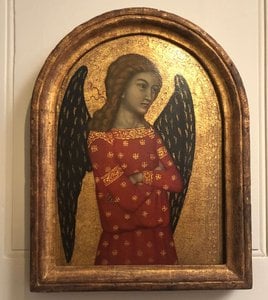
1334 - 1363 , Italy

Embark on a journey through time with our deep dive into the exquisite beauty of illuminated manuscripts. Discover the sacred artistry, precious materials, and enduring legacy of medieval illumination in this cultural exploration for history lovers.
Explore the exquisite elegance of International Gothic art. Discover the mastery of illuminated manuscripts, the brilliance of gold leaf, and the legacy of the Limbourg Brothers in this expert guide to Europe's sophisticated medieval dawn.

Embark on a scholarly journey through the sacred beauty of High Medieval art. Discover the profound symbolism, luminous iconography, and spiritual depth of Gothic masterpieces in this expert guide for classical art enthusiasts.
Embark on a journey through the dramatic era of Gothic art. Discover the profound beauty of illuminated manuscripts, sacred gold leaf masterpieces, and the transition to naturalism in this expert-led exploration of medieval artistry and historical grandeur.

Embark on a visual journey through Early Medieval art. Explore the profound beauty of illuminated manuscripts, sacred symbols, and golden light through an expert historical lens, celebrating the enduring legacy of medieval craftsmanship and divine artistry.


 效果预览
效果预览
 分享
分享 分享
分享
 详情
详情

 下载
下载
 相似作品
相似作品 X射线
X射线 幻灯片播放
幻灯片播放 统计数据
统计数据 展开详情
展开详情






































 玻璃选项仅适用于110厘米以下的尺寸。


