
x































从与原作比例一致的预设尺寸中进行选择。

您可以输入自定义尺寸,以适配特定的画框或空间。如果您选择的尺寸与原图比例不符,我们将对作品进行裁剪,或通过镜像填充/纯色填充边缘的方式来扩展图像。在开始制作之前,我们会向您发送一份数字效果图供您确认。
请注意,屏幕上的预览并不能反映实际的裁剪或扩展效果。只有效果图才能准确展示最终的构图。
虽然我们提供定制尺寸,但为了保持原图比例,我们建议您从预设列表中选择尺寸。

Basse cour
复制品尺寸
To gaze upon Nicasius Bernaerts's Basse cour is to step directly into the sun-dappled, earthy heart of 17th-century Flemish rural life. This painting is far more than a mere collection of fowl; it is a vibrant celebration of agricultural abundance and domestic prosperity. The composition bursts with life, featuring a lively gathering of chickens whose varied plumage—from deep blacks to creamy golds—captures the very essence of spirited existence. Bernaerts has masterfully arranged these subjects in an informal tableau, allowing each bird its moment in the spotlight while maintaining a cohesive, natural energy across the canvas.
Technically, this work is a testament to the meticulous skill of the Flemish Baroque period. Bernaerts employed oil paint on panel, a medium that allowed him to achieve an astonishing level of verisimilitude. Observe the feathers: they are not simply painted; they seem to possess weight and softness. The artist’s handling of texture—the overlapping barbs, the sheen on a rooster's elaborate crest—is breathtakingly realistic. While the overall perspective maintains a certain flatness characteristic of the era, it is counterbalanced by the palpable depth achieved through Bernaerts's nuanced understanding of light. A soft, diffused illumination seems to emanate from an unseen source, gently highlighting the contours and rich colors of the plumage against the muted, dark background.
Historically, the subject matter itself carries significant weight. The term Basse cour refers not just to a simple yard, but often to an exhibition or display of prized poultry—a visible marker of wealth, status, and successful husbandry in the Dutch Golden Age context. Owning such a piece was akin to displaying one's connection to the land and its bounty. The chickens, therefore, become potent symbols: they speak of reliable sustenance, the cyclical nature of life, and the quiet, enduring prosperity that underpinned much of the era’s mercantile success.
For the modern collector or designer, this reproduction offers an unparalleled opportunity to infuse a space with historical narrative and organic warmth. The palette—dominated by rich ochres, warm browns, and muted grays—is inherently grounding, making it a perfect focal point for rooms seeking an antique, cultivated atmosphere. Whether displayed in a formal hall or a cozy study, the Basse cour invites contemplation of nature’s intricate beauty. It is art that whispers tales of bygone markets and skilled craftsmanship, transforming a simple wall into a gallery celebrating life's most humble, yet magnificent, details.

To encounter the works of Nicasius Bernaerts is to step into a world where the boundaries between scientific observation and poetic grandeur dissolve. Born in the vibrant artistic hub of Antwerp in 1620, Bernaerts emerged from a lineage of Northern excellence, shaped profoundly by the tutelage of Frans Snyders. This early apprenticeship under one of Flanders' most celebrated animal painters instilled in him a lifelong devotion to the textures of the natural world. His brush did not merely record the presence of creatures; it sought to capture their very essence—the heavy weight of an ostrich’s plumage, the spirited flutter of a pheasant’s wing, and the quiet dignity of domestic fowl.
Bernaerts' journey was as much international as it was stylistic. As he traversed the great artistic centers of Europe, his reputation grew under the evocative moniker Monsù Nicasio. His time in Italy allowed him to infuse his Flemish training with a Mediterranean light and a sense of classical composition, earning him the prestigious patronage of Ferdinando II de’ Medici, the Grand Duke of Tuscany. This period of Italian refinement added a layer of sophisticated grace to his already meticulous realism, preparing him for the ultimate stage of his career: the French court.
Upon relocating to Paris around 1643, Bernaerts ascended to the pinnacle of the Baroque era. His talent for capturing the anatomy and behavior of animals caught the eye of the most powerful figures in Europe, eventually leading to his admission into the Royal Academy of Painting and Sculpture in 1663. The zenith of his professional life was marked by a monumental commission from Louis XIV himself. Tasked with documenting the exotic inhabitants of the King’s newly formed menagerie at Versailles, Bernaerts transformed the royal collection into a permanent visual legacy of power and natural wonder.
His contributions to the decorative arts were equally profound. Beyond the confines of the easel, Berna s served as a vital designer for the Gobelins Manufactory. Here, his mastery of composition was translated into the grand medium of tapestry, providing intricate designs that adorned the halls of French nobility. His work bridged the gap between fine art and functional splendor, ensuring that his vision of nature permeated the very fabric of royal architecture.
The enduring significance of Bernaerts lies in his ability to marry the meticulousness of the Northern Renaissance with the dramatic energy of the Baroque. His oeuvre remains a testament to several key artistic achievements:
Today, when we look upon a Bernaerts composition, we see more than historical documentation; we witness a profound meditation on life itself. Whether depicting the lively bounty of a basse cour or the solitary majesty of a wild bird, his work continues to invite viewers into a space where every stroke of paint celebrates the breathtaking complexity of the living world.

1620 - 1678

Explore the dramatic brilliance of the Flemish Baroque movement. Discover how masters like Peter Paul Rubens utilized chiaroscuro and dynamic composition to redefine art history through light, shadow, and unparalleled emotion.

Discover the enduring allure of oil on panel painting. Explore the technical mastery, historical significance, and luminous depth that define this prestigious medium, from Renaissance masters to modern fine art reproductions for discerning collectors.
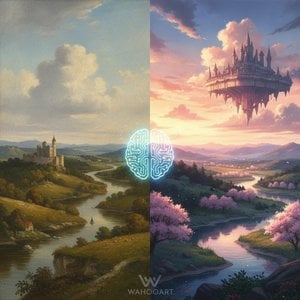
Transform your photos into high-octane action anime masterpieces with WahooArt. Our expert artists blend AI innovation with traditional oil painting to create premium, hand-painted pop culture legacies for your home. Experience museum-quality craftsmanship and a 100% satisfaction guarantee.


第一时间获取最新的艺术新闻、独家优惠及装饰灵感。
向我们介绍您的项目需求,我们的艺术专家将为您提供 3 个个性化的艺术品推荐。
由我们的专家为您精选 3 款心仪之作 —— 完全免费!


 效果预览
效果预览
 购买手绘画作
 分享
分享 分享
分享
 详情
详情

 下载
下载
 相似作品
相似作品 X射线
X射线 幻灯片播放
幻灯片播放


 展开详情
展开详情









 玻璃选项仅适用于110厘米以下的尺寸。


