
博物馆级艺术微喷或帆布版画,制作高效,并提供多种饰面选择。 ( 订购此收藏品的纯手工复刻画作 切换至数字图像销售渠道)
您可以从与原作比例一致的预设尺寸中进行选择。

请输入您所需的宽度和高度,以适配您的画框或墙面。由于印刷品只能进行裁剪,无法超出原图尺寸,因此若比例不一致,画面的一部分将会被裁切。在正式印刷之前,我们会为您发送一份数字效果图供您确认。本页面显示的图片并非最终裁剪后的效果——只有效果图才能展示真实的裁剪情况。
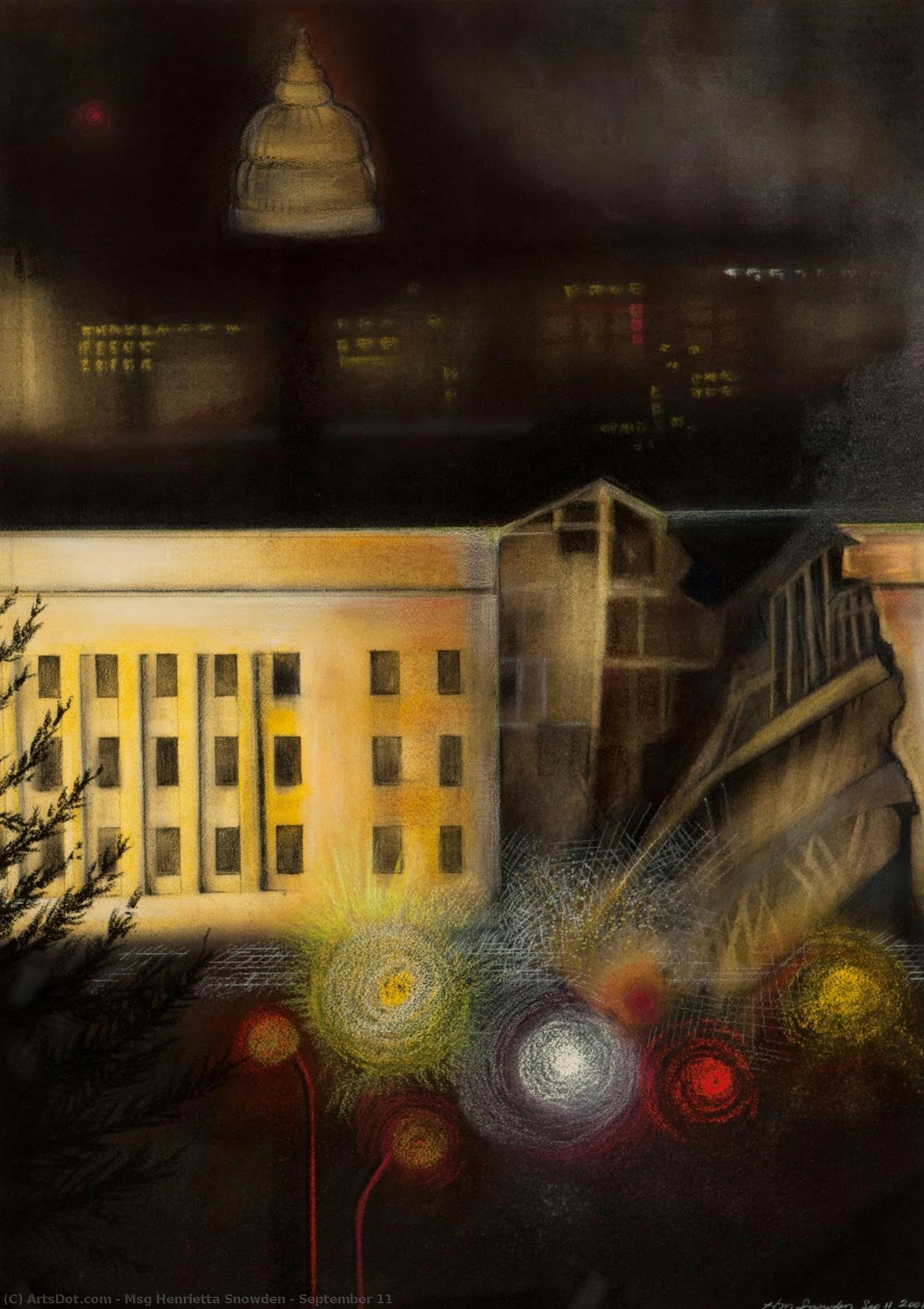
September 11
复刻品尺寸说明

The artistic journey of Henrietta Snowden is one inextricably linked to the disciplined, observant, and often heavy atmosphere of military life. Serving as a Master Sergeant and Staff Artist at the Center for Military History, Snowden does not merely observe history from the periphery; she lives within its framework. Her creative vision is forged in the crucible of the United States Army, a position that allows her to approach her subjects with an unparalleled level of empathy and authenticity. Having been deployed to NATO headquarters in England, she has cultivated a unique perspective that bridges the gap between the technical documentation of military history and the raw, human emotion that defines the soldier's experience.
Snowden’s work is characterized by a profound ability to capture the "quiet" moments of conflict—the tension, the waiting, and the psychological weight of duty. Her mastery of watercolor and colored pencil allows her to utilize muted tones and realistic details to evoke a sense of palpable atmosphere. Whether she is depicting the vastness of a deployment or the intimate loneliness of a soldier far from home, her technique serves to strip away the glory of war, leaving behind instead a poignant study of human endurance and vulnerability.
The trajectory of Snowden’s career was irrevocably altered by the seismic events of September 11th, 2001. In the immediate aftermath of the attacks, she felt a profound urgency to document the emotional landscape of a nation in shock. This led to the creation of her seminal work, “September 11,” a stark watercolor that remains one of her most powerful achievements. Through a careful use of earthy palettes and deep shadows, the painting conveys the uncertainty and fear that gripped the American consciousness during those transformative days. It is not merely a depiction of an event, but a visual distillation of a collective trauma.
This talent for storytelling through art extends into her explorations of military tradition and the evolution of the soldier's identity. In her illustrated book, “Today’s Soldier,” Snowden demonstrates a scholarly depth, meticulously tracing the history of U.S. Army uniforms from 1775 to 2001. This project highlights her ability to blend technical proficiency with historical inquiry, treating military attire not just as equipment, but as a reflection of shifting societal values and technological progress throughout American history.
Perhaps the most enduring theme in Snowden’s oeuvre is the concept of "waiting"—a central, often grueling component of military existence. In her evocative piece “Waiting to Go to War,” she utilizes watercolor and colored pencil to depict the weary reality of soldiers preparing for deployment. The artwork captures the essence of the military cliché "hurry up and wait," focusing on the quiet dread and the heavy stillness that precedes action. This theme is further explored in her deeply moving portrait, “Waiting to Phone Home.” In this work, she captures a moment of profound isolation, portraying a soldier seated in an uncomfortable space, lost in the longing for loved ones left behind.
Through these works, Snowden achieves a significant historical and artistic contribution:
Ultimately, the work of Henrietta Snowden stands as a testament to the human spirit within the machinery of war. Her art does not seek to celebrate combat, but to honor the individuals who inhabit it, ensuring that their sacrifices, their fears, and their quiet moments of resilience are etched into the visual history of the nation.

United States of America

 实景预览
实景预览
 发送
发送 分享
分享
 详情
详情 指南
指南

 下载图片
下载图片
 相似作品
相似作品 X射线
X射线 幻灯片播放
幻灯片播放 统计数据
统计数据

 阅读全文
阅读全文






































 玻璃选项仅适用于110厘米以下的尺寸。


