x
效果预览效果预览 AR 预览AR 预览 购买印刷品 购买印刷品购买图片 购买图片 分享分享
详情详情 加入收藏 加入收藏 下载下载 相似作品相似作品 X射线X射线 幻灯片播放幻灯片播放

The Risen Christ

Michelangelo Buonarroti

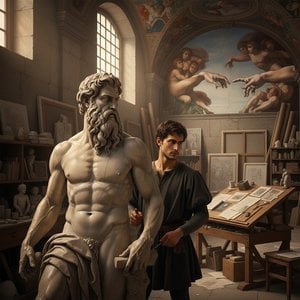
文艺复兴巨匠米开朗基罗 (1475-1564),以其《大卫》、《圣母怜子》等雕塑和西斯廷教堂天顶壁画闻名于世。他的作品融合了古典理想与人文主义精神,对西方艺术史产生了深远影响。

手工油画复制品

由我们的艺术家按需定制,为您提供您所选尺寸及画框的布面手工油画。 (购买印刷品 购买印刷品购买图片 购买图片)

P118B $10
P118H $10
P118W $10
P438Z $10
P508JH $12
P508YH $12
P805H $10
P805Z $10
P919BZ $10
P919G $10
P919XJ $10
P959ZH $10
P968JZ $12
W106C $8
W218G $10
W218JH $8
W218Y $10
W307PJ $10
W316G $10
W316PJ $8
W316Y $10
W398PJ $8
W4111J $10
W500HY $15
W500JH $15
W692G $12
W849H $8
W940BG $15
W953PJ $8

标准尺寸
定制
CM
INCH

从与原作比例一致的预设尺寸中进行选择。

宽度
高度

您可以输入自定义尺寸,以适配特定的画框或空间。如果所选尺寸与原图比例不符,我们将通过裁剪作品或添加手绘元素来扩展画面。数字样稿将在制作开始前发送给您确认。
请注意,屏幕预览无法准确反映实际的裁剪或扩展效果,只有样稿才能真实呈现最终的构图。
虽然我们提供定制尺寸服务,但为了保留原作比例,建议您从预设列表中选择尺寸。

可定制示例:将面部替换为客户照片;添加宠物(例如,将猫替换为狗);在背景中加入隐藏信息;更改背景风景或元素。
下单后,WahooArt.com 团队将通过电子邮件联系客户获取具体要求,并提供效果预览图。

全球配送(),仅需 3-4 周即可送达,无需等待标准时效的 5 周。(29 August)。品质绝不妥协。

why_choose_icon
全球免费特快专递服务
why_choose_icon
优质亚麻画布
why_choose_icon
全程运输保险
why_choose_icon
关税退款保证
why_choose_icon
色彩还原度保证
why_choose_icon
60天退货政策(仅限制造缺陷)
why_choose_icon
100%退款保证
why_choose_icon
多件购买优惠

总计金额

$ 272

reproduction

The Risen Christ

复制材质

复制品尺寸

-

最终总价

$ 272

作品概览

  • Notable elements or techniques: Light and shadow; Subtle shading & texture
  • Artistic style: Mannerism
  • Location: Royal Collection, Windsor Castle
  • Subject or theme: Religious iconography; Resurrection
  • Artist: Michelangelo Buonarroti
  • Movement: High Renaissance
  • Year: 1532

艺术知识测试

每道题只有一个正确答案。

题目 1:
What is Michelangelo Buonarroti best known for?
题目 2:
In what year was The Risen Christ painted?
题目 3:
Where is The Risen Christ currently housed?
题目 4:
What medium did Michelangelo primarily use in The Risen Christ?
题目 5:
The sculpture’s dynamic pose symbolizes:

Michelangelo Buonarroti: A Renaissance Titan

Michelangelo di Lodovico Buonarroti Simoni, born March 6, 1475, in Caprese Michelangelo, Tuscany, stands as one of the most monumental figures in Western art history. His prodigious talent for sculpture and painting cemented his legacy as an unparalleled innovator—a true embodiment of the Renaissance ideal. From humble beginnings – a family struggling to maintain solvency – Michelangelo ascended to become Florence’s foremost artist, shaping the cultural landscape of his time and influencing generations of subsequent creatives. Giorgio Vasari famously declared him “supreme in not one art alone but in all three,” encapsulating the breadth of his artistic genius.

Early Life and Training (1475-1496)

  • Michelangelo’s father, Ludovico Buonarroti Simoni, initially resisted an artistic vocation for his son, recognizing Michelangelo's exceptional aptitude for drawing.
  • At age 13, he apprenticed with Domenico Ghirlandaio in Florence, mastering fresco techniques and honing his observational skills—a formative experience that instilled a lifelong fascination with classical forms.
  • He swiftly gravitated towards sculpture, studying the sculptures of Donatello and Lorenzo Ghiberti in the Medici gardens – an encounter profoundly impacting his artistic sensibilities.

Early Period: Establishing Mastery (1490-1505)

  • Around 1496, Michelangelo received his first major commission: the sculpture of *The Pietà*, completed in 1499. This masterpiece—housing in St. Peter's Basilica—demonstrated his unparalleled ability to convey profound emotion through marble carving and captured the sublime beauty of human anatomy with breathtaking precision.
  • His subsequent landmark work was *David* (1501-1504), sculpted for Florence’s Piazza della Signoria, symbolizing Florentine republican ideals and embodying Michelangelo's mastery of idealized form.

The Risen Christ: A Study in Resurrection

Painted in 1532, The Risen Christ measures 373 x 221 cm and resides in the esteemed Royal Collection at Windsor Castle in the United Kingdom. This chalk drawing exemplifies Michelangelo’s remarkable skill in capturing religious themes with subtle shading and texture—a testament to his artistic vision.

Background and Context

Painted during a period of intense spiritual fervor following Luther's Reformation, The Risen Christ reflects Michelangelo’s engagement with humanist ideals blended with Christian iconography. Its commission stemmed from Cardinal Giovanni Gastaldi—a devout supporter of Michelangelo—who envisioned it as a centerpiece for the chapel of St. Mary Magdalene in Windsor Castle. The drawing's creation coincided with Michelangelo’s exile from Rome, marking a pivotal moment in his artistic journey and demonstrating resilience amidst adversity.

Composition and Symbolism

The central figure of Christ dominates the composition, depicted in an ascension pose—arms outstretched towards heaven and eyes gazing upwards—symbolizing the triumphant return of Jesus after his crucifixion. Surrounding figures—including St. Mary Magdalene and Nicodemus—engage in various activities—such as wiping Christ’s face and examining his wounds—adding depth to the scene without detracting from the central narrative. The dynamic posture conveys a palpable sense of movement and energy, mirroring the divine act of resurrection itself.

Artistic Techniques

Michelangelo's masterful use of chalk—a medium rarely employed by Renaissance artists—creates a dramatic effect, drawing the viewer’s gaze to Christ’s torso—which is rendered with astonishing realism through meticulous shading and textural detail. Tiny stippled strokes of chalk build up the body surface, achieving an illusion of volume that transcends mere pigment—a technique characteristic of Michelangelo's groundbreaking approach to drawing. The resulting image possesses a luminous quality—capturing the ethereal glow of divine grace.

Significance in Art History

The Risen Christ is not merely a religious icon—but rather an artistic milestone—demonstrating Michelangelo’s innovative spirit and his ability to convey profound narratives through deceptively simple techniques. It stands as a cornerstone of Renaissance sculpture—inspiring artists for centuries to come and securing its place among the most celebrated artworks of all time.

Other Notable Works by Michelangelo Buonarroti

Conclusion

The Risen Christ by Michelangelo Buonarroti embodies the artist’s unparalleled skill in portraying religious themes with breathtaking emotional depth—a testament to his enduring legacy as one of history's greatest masters. As part of the Royal Collection, it continues to captivate audiences worldwide—inspiring awe and reverence for Michelangelo’s genius. For those eager to explore more masterpieces by Michelangelo Buonarroti, visit The Royal Collection at WahooArt.

艺术家简介

米开朗基罗·博纳罗蒂:文艺复兴的化身

米开朗基罗·博纳罗蒂,一个与文艺复兴时期紧密相连的名字,几个世纪以来,他的名字代表着人类艺术潜力的巅峰。1475年3月6日出生于托斯卡纳山丘中的卡普雷塞·米开朗基罗,他的一生是天赋、雄心和神圣灵感的非凡结合。尽管最初他的父亲对他的艺术道路表示抵制,但年轻的米开朗基罗天生的绘画天赋是不容否认的,这使他踏上了重新定义雕塑、绘画和建筑界限的道路。他在多梅尼科·吉兰达伊欧手下的早期学徒生涯为他在壁画和素描方面提供了坚实的基础,但真正点燃了他艺术灵魂的是在美第奇花园中——一个古典时代的天堂。沉浸在对希腊罗马雕塑的研究中,米开朗基罗吸收了成为他风格标志的解剖学、比例和理想美的原则。这个形成期的不仅仅是技术训练;它还是对文艺复兴时期蓬勃发展的的人文主义思想的哲学沉浸,强调人类尊严和潜力,深刻地塑造了他的艺术愿景。

从《怜悯》的悲伤到《大卫》的力量

米开朗基罗在艺术界的崛起是惊人的迅速。到了1496年,他前往罗马,并获得了他的第一个主要委托:雕刻《怜悯》。这件杰作于1499年为让·德·比勒斯红衣主教完成,立即确立了米开朗基罗作为一名具有无与伦比的技能和情感深度的雕塑家。玛利亚抱着基督身体的脸庞中捕捉到的宁静之美和令人心碎的悲伤是革命性的,证明了他将冰冷的石头注入深刻的人类情感的能力。这项早期的成功为他下一次巨大的事业铺平了道路:《大卫》。这尊超过十七英尺高的雕像,由卡拉拉大理石从一块单独的大理石中雕刻出来,已成为佛罗伦萨共和国理想的象征——力量、勇气和公民美德的 defiant 体现。解剖学精度、动态姿势以及心理强度是空前的,巩固了米开朗基罗作为能够将石头变成生命的艺术大师的声誉。并非仅仅体型令人印象深刻;正是蕴含的能量感,凝固在石头的即将发生的行为,吸引着当时的观众,并继续吸引着今天的观众。

西斯廷教堂:神圣的画布

米开朗基罗最持久的遗产可能在于西斯廷教堂的墙壁之内。1508年,教皇朱利叶斯二世委托他绘制教堂的天花板——这是一项将耗费他生命中四年时间并永远改变西方艺术进程的任务。最初不情愿,认为自己主要是一名雕塑家,米开朗基罗还是接受了挑战,开始了一项宏伟的壁画周期,描绘了创世纪中的场景。在艰苦的环境下工作,有时不得不倒着工作数小时,他以令人惊叹的细节和构图巧妙地绘制了 300 多个人物。《亚当之造》无疑是教堂天花板上最著名的图像之一,捕捉了神圣火花在上帝和人类之间传递的过程——创造和潜力的有力象征。除了这个著名的面板之外,整个周期都是米开朗基罗叙事能力、解剖学掌握以及通过视觉故事讲述传达复杂的神学概念的能力的证明。与此同时,他开始为教皇朱利叶斯二世陵墓的工作——这是一个雄心勃勃的项目,但最初的宏伟愿景将未完成,尽管如此,它产生了强大的雕塑作品,如《摩西》。

建筑、风格化和持久的影响

在人生的后期,米开朗基罗的天赋扩展到建筑领域。1520年,他成为罗马圣彼得大教堂的建筑师,大大改变了布拉曼特的原始设计,采用了更具压迫性和结构上合理的计划。这种转变标志着向风格化的转变——一种以细长的形式、夸张的姿势和戏剧性的构图为特征的风格。这种风格上的进化在《最后的审判》中显而易见,《最后的审判》是在 1536 年至 1541 年间绘制在西斯廷教堂祭坛墙上的壁画。这幅画描绘了基督的再来,充满了压倒性的戏剧性和情感强度,反映了一种更动荡的精神气候。米开朗基罗的影响远远超出了他自己的生命。他对文艺复兴时期和风格化艺术运动都产生了深远的影响,以他的解剖学精度、动态构图以及对人类状况的深刻探索激励了许多代艺术家。

镌刻在时间中的遗产

1564年2月18日,米开朗基罗在罗马去世,留下了一系列无与伦比的作品,这些作品继续吸引和鼓舞人心。他仍然是艺术史上的一个高耸的人物——典型的“文艺复兴人”——他的雕塑、绘画和建筑设计已经塑造了我们对美、力量和人类潜力的理解。他的遗产不仅仅是艺术成就;它是对创造力、奉献精神和对完美的不懈追求的持久证明。《他证明了艺术可以超越单纯的再现,成为深刻的精神和情感表达的载体》。 他的天才的回声在世界各地的博物馆和教堂中回响,确保米开朗基罗·博纳罗蒂将永远被铭记为有史以来最伟大的艺术家之一。
  • 影响: 古典时代(希腊和罗马雕塑)、文艺复兴人文主义、佛罗伦萨艺术传统(多纳泰罗、马萨乔)。
  • 主要作品:《怜悯》、《大卫》、《西斯廷教堂天花板壁画》(《亚当之造》)、《最后的审判》、朱利叶斯二世陵墓。
  • 艺术风格: 最初是古典理想主义,逐渐转向充满活力和表现力的风格化。
米开朗基罗

米开朗基罗

1475 - 1564 , 意大利

艺术家简介

  • Artistic Movement Or Style: 文艺复兴时期,盛期和晚期风格
  • Artists Or Movements Influenced By This Artist:
    • 盛期文艺复兴
    • 曼陀罗主义
  • Artists Who Influenced This Artist:
    • 多纳泰罗
    • 马萨乔
  • Date Of Birth: 1475年3月6日
  • Date Of Death: 1564年2月18日
  • Full Name: 米开朗基罗·博纳罗蒂
  • Nationality: 意大利人
  • Notable Artworks:
    • 《圣母怜子像》
    • 《大卫像》
    • 西斯廷教堂天顶画
  • Place Of Birth: 卡普雷塞·米开朗琪罗, 意大利
探索按主题、风格和特征分类的艺术作品。